• Fri frakt över 249 kr
  • •
  • Snabba leveranser
  • •
  • Billiga böcker
Kundservice

Du är på sajten för privatpersoner.

Företag, bibliotek eller offentlig verksamhet?

Du handlar på classic.bokus.com, där alla dina funktioner finns intakta.
Till classic.bokus.com
Bokus logotyp. Gå till startsidan.
  • Erbjudanden
  • Student
  • Topplistor
  • Barn & ungdom
  • Bokus Play
  • E-böcker
  • Ljudböcker
  • Pocketböcker
  • Spel och pussel

Pocketfynda! Hundratals böcker för 49 kr/st →

Sidfot

Mina sidor

    Hjälp

    • Kundservice
    • Vanliga frågor och svar
    • Frakt och leverans
    • Retur vid ångerrätt
    • Reklamera vara
    • Betalning
    • Köpvillkor
    • Allmänna villkor
    • Information om webbplatsens tillgänglighet

    Om Bokus

    • Om oss
    • Pressrum
    • För studenter
    • För företag
    • För bibliotek och offentlig verksamhet
    • För leverantörer
    • Hållbarhet

    Populärt

    • Aktuella erbjudanden
    • Presentkort
    • Studentlitteratur
    • Nya böcker
    • Topplistor
    • Signerade böcker
    • Engelska böcker

    Inspiration

    • Boktips
    • BookTok
    • Barnbokskaraktärer
    • Populära författare
    Logotyp för Bokus
    Följ oss på Facebook (extern länk)Följ oss på Instagram (extern länk)Följ oss på YouTube (extern länk)Följ oss på TikTok (extern länk)
    bokus @ CookiesAnpassa cookiesIntegritetspolicyKöpvillkor
    Till Citymail hemsida (extern länk)Till Budbee hemsida (extern länk)Till Postnord hemsida (extern länk)Till Schenker hemsida (extern länk)Till Early Bird hemsida (extern länk)Till Walleys hemsida (extern länk)
    1. Naturvetenskap och teknik
    2. Matematik och naturvetenskap
    3. Biologi
    4. Biovetenskap

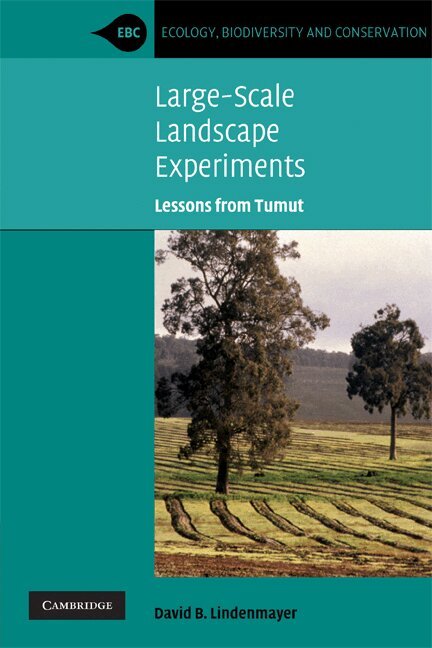
    Large-Scale Landscape Experiments

    Lessons from Tumut

    AvDavid B. Lindenmayer

    Häftad, Engelska, 2009

    Del i serien Ecology, Biodiversity and Conservation

    635 kr

    Beställningsvara. Skickas inom 7-10 vardagar. Fri frakt över 249 kr.

    Fler format och utgåvor

    Inbunden

    1 429 kr

    Beskrivning

    Landscape change and habitat fragmentation are key factors impacting biodiversity worldwide. These processes have many facets, each of which is usually studied in isolation. The Tumut Fragmentation Study has run for over 11 years and yielded extensive data on changes in both plant and animal populations in areas of native forest and pine plantation. The study is unique in the way that many different factors and processes, influencing a wide range of species groups, have been studied in the one large-scale natural experiment. Writing for academic researchers, professionals and graduate students, David Lindenmayer uses the study and other relevant research to provide an overview of the relationships between landscape change, habitat fragmentation and biodiversity conservation. Key lessons are drawn on throughout the book, on the design and implementation of large-scale ecological studies, biodiversity conservation in fragmented landscapes, and the management of plantation landscapes for enhanced nature conservation.

    Produktinformation

    • Utgivningsdatum:2009-03-05
    • Mått:152 x 228 x 15 mm
    • Vikt:480 g
    • Format:Häftad
    • Språk:Engelska
    • Serie:Ecology, Biodiversity and Conservation
    • Antal sidor:304
    • Förlag:Cambridge University Press
    • ISBN:9780521707787

    Utforska kategorier

    • Biovetenskap inom Naturvetenskap och teknik

    Mer om författaren

    David B. Lindenmayer is Professor of Conservation Science and Ecology in the Fenner School of Environment and Society at the Australian National University, Canberra.

    Recensioner i media

    'This text will prove a useful addition to the book shelves of landscape ecologists, aspiring ecologists, and conservation professionals.' Conservation Biology

    Innehållsförteckning

    • 1. The Tumut Fragmentation Study and landscape change; 2. The theory; 3. The field laboratory; 4. Setting up the study; 5. The core findings; 6. Patch use; 7. Theory against data; 8. Testing PVA models with real data; 9. Genes in the landscape; 10. Refining and extending the research program; 11. Recommendations for plantation managers; 12. Lessons on running large-scale research studies.