• Fri frakt över 249 kr
  • •
  • Snabba leveranser
  • •
  • Billiga böcker
Kundservice

Du är på sajten för privatpersoner.

Företag, bibliotek eller offentlig verksamhet?

Du handlar på classic.bokus.com, där alla dina funktioner finns intakta.
Till classic.bokus.com
Bokus logotyp. Gå till startsidan.
  • Erbjudanden
  • Nyheter
  • Student
  • Topplistor
  • Barn & ungdom
  • Bokus Play
  • E-böcker
  • Pocketböcker
  • Spel & pussel

10% rabatt på allt med kod NYSTART10 →

Sidfot

Mina sidor

    Hjälp

    • Kundservice
    • Vanliga frågor och svar
    • Frakt och leverans
    • Retur vid ångerrätt
    • Reklamera vara
    • Betalning
    • Köpvillkor
    • Allmänna villkor
    • Information om webbplatsens tillgänglighet

    Om Bokus

    • Om oss
    • Pressrum
    • För studenter
    • För företag
    • För bibliotek och offentlig verksamhet
    • För leverantörer
    • Hållbarhet

    Populärt

    • Aktuella erbjudanden
    • Presentkort
    • Studentlitteratur
    • Nya böcker
    • Topplistor
    • Signerade böcker
    • Engelska böcker

    Inspiration

    • Boktips
    • BookTok
    • Populära bokserier
    • Barnbokskaraktärer
    • Populära författare
    Logotyp för Bokus
    Följ oss på Facebook (extern länk)Följ oss på Instagram (extern länk)Följ oss på YouTube (extern länk)Följ oss på TikTok (extern länk)
    bokus @ CookiesAnpassa cookiesIntegritetspolicyKöpvillkor
    Till Citymail hemsida (extern länk)Till Budbee hemsida (extern länk)Till Postnord hemsida (extern länk)Till Schenker hemsida (extern länk)Till Early Bird hemsida (extern länk)Till Walleys hemsida (extern länk)
    1. Medicin
    2. Medicin: allmänt
    3. Samhällsmedicin och preventiv medicin
    4. Folkhälsa och hälsopedagogik

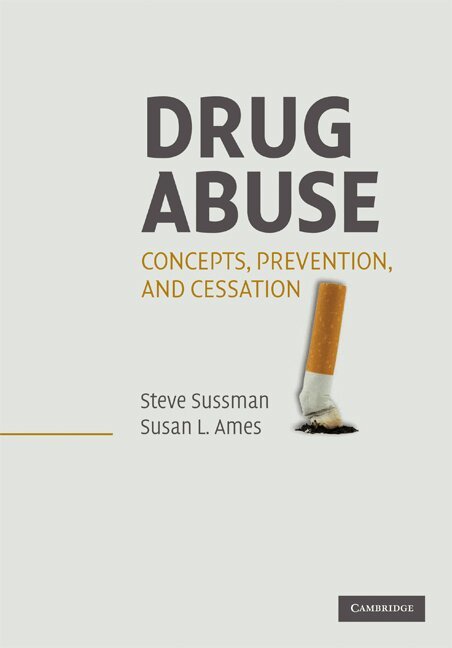
    Drug Abuse

    Concepts, Prevention, and Cessation

    AvSteve Sussman,Susan L. Ames

    Häftad, Engelska, 2008

    Del i serien Cambridge Studies on Child and Adolescent Health

    560 kr

    Beställningsvara. Skickas inom 10-15 vardagar. Fri frakt över 249 kr.

    Fler format och utgåvor

    Inbunden

    1 734 kr

    Beskrivning

    Drug Abuse: Concepts, Prevention, and Cessation serves as a comprehensive source of information on the topography of, causes of, and solutions to drug problems. The text covers conceptual issues regarding definitions of drug use, misuse, abuse, and dependence. Importantly, the text addresses a variety of theoretical bases currently applied to the development of prevention and cessation programs, specific program content from evidence-based programs, and program processes and modalities. Information regarding etiology, prevention, and cessation is neatly delineated into (a) neurobiological, (b) cognitive, (c) micro-social, and (d) macro-social/physical environmental units. The book is ideally suited as a primary source for students and professionals in chemical dependence programs, clinical and health psychology, public health, preventive medicine, nursing, sociology, and social work, among other fields, on the nature, causes, prevention, and cessation of the abuse of legal and illegal drugs.

    Produktinformation

    • Utgivningsdatum:2008-02-25
    • Mått:178 x 254 x 21 mm
    • Vikt:650 g
    • Format:Häftad
    • Språk:Engelska
    • Serie:Cambridge Studies on Child and Adolescent Health
    • Antal sidor:368
    • Förlag:Cambridge University Press
    • ISBN:9780521716154

    Utforska kategorier

    • Folkhälsa och hälsopedagogik inom Medicin

    Mer om författaren

    Steve Sussman, Ph.D., FAAHB, received his doctorate in social-clinical psychology from the University of Illinois at Chicago in 1984. He is a Professor of Preventive Medicine and Psychology at the University of Southern California. He studies the utility of empirical program development methods and multiple addictions, including tobacco and drug abuse etiology, prevention, and cessation. He has over 300 publications. His Projects include Towards No Tobacco Use, Towards No Drug Abuse, and EX, which are considered model programs at numerous agencies (e.g., CDC, NIDA, NCI, OJJDP, SAMSHA, CSAP, Colorado and Maryland Blueprints, Health Canada, U.S. Department of Education, and various state departments of education). He received the honor of Research Laureate for the American Academy of Health Behavior in 2005 and is currently President there (2007–8). Susan L. Ames, Ph.D., received her doctorate in preventive medicine from the University of Southern California in 2001. She is an assistant professor at the Institute for Prevention Research (IPR), Department of Preventive Medicine, University of Southern California. She has been co-investigator on projects with the Transdisciplinary Substance Abuse Prevention Research Center and other substance abuse prevention projects funded by the National Institute on Drug Abuse. She worked in substance abuse treatment for nearly a decade. Her research emphasis is on the mediation of implicit processes and competing cognitive, social, personality, and cultural constructs in the etiology and prevention of drug abuse and HIV-risk behavior among at-risk populations. Other major interests include neurobiological processes and brain structures associated with implicit processes and addictive behaviors. She has published in a variety of journals that emphasize the addictive process and health behaviors.

    Recensioner i media

    'The book provides a comprehensive overview of drug abuse from the perspective of different psychological disciplines and it facilitates an understanding of the 'bigger picture'.' Psychological Medicine

    Innehållsförteckning

    • Preface; Part I. Concepts and Classes of Drugs: 1. Concepts of drug, drug use, misuse, and abuse; 2. Further classifications relevant to substance abuse and dependence; 3. Types of drugs, history of drug use and misuse, and costs of drug misuse; Part II. Etiology: 4, Current multivariable models; 5. Neurobiologically relevant; 6. Cognitive processes; 7. Social interaction and social groups; 8. The large physical and social environment; 9. Assessment; Part III. Prevention: 10. Concepts of prevention; 11. Neurobiologically relevant; 12. Cognitive processes; 13. Social interaction and social groups; 14. The large social and physical environment; Part IV. Cessation: 15. Concepts of cessation; 16. Neurobiologically relevant; 17. Cognitive processes; 18. Social interaction and social groups; 19. The large social and physical environment; Part V. Conclusions and the Future: 20. Conclusions, recent, and future directions.