• Fri frakt över 249 kr
  • •
  • Snabba leveranser
  • •
  • Billiga böcker
Kundservice

Du är på sajten för privatpersoner.

Företag, bibliotek eller offentlig verksamhet?

Du handlar på classic.bokus.com, där alla dina funktioner finns intakta.
Till classic.bokus.com
Bokus logotyp. Gå till startsidan.
  • Erbjudanden
  • Nyheter
  • Student
  • Topplistor
  • Barn & ungdom
  • Bokus Play
  • E-böcker
  • Pocketböcker
  • Spel & pussel

10% studentrabatt med kod TERM26

Sidfot

Mina sidor

    Hjälp

    • Kundservice
    • Vanliga frågor och svar
    • Frakt och leverans
    • Retur vid ångerrätt
    • Reklamera vara
    • Betalning
    • Köpvillkor
    • Allmänna villkor
    • Information om webbplatsens tillgänglighet

    Om Bokus

    • Om oss
    • Pressrum
    • För studenter
    • För företag
    • För bibliotek och offentlig verksamhet
    • För leverantörer
    • Hållbarhet

    Populärt

    • Aktuella erbjudanden
    • Presentkort
    • Studentlitteratur
    • Nya böcker
    • Topplistor
    • Signerade böcker
    • Engelska böcker

    Inspiration

    • Boktips
    • BookTok
    • Populära bokserier
    • Barnbokskaraktärer
    • Populära författare
    Logotyp för Bokus
    Följ oss på Facebook (extern länk)Följ oss på Instagram (extern länk)Följ oss på YouTube (extern länk)Följ oss på TikTok (extern länk)
    bokus @ CookiesAnpassa cookiesIntegritetspolicyKöpvillkor
    Till Citymail hemsida (extern länk)Till Budbee hemsida (extern länk)Till Postnord hemsida (extern länk)Till Schenker hemsida (extern länk)Till Early Bird hemsida (extern länk)Till Walleys hemsida (extern länk)
    1. Samhälle och politik
    2. Politik och statsskick
    3. Statsvetenskap och politisk teori

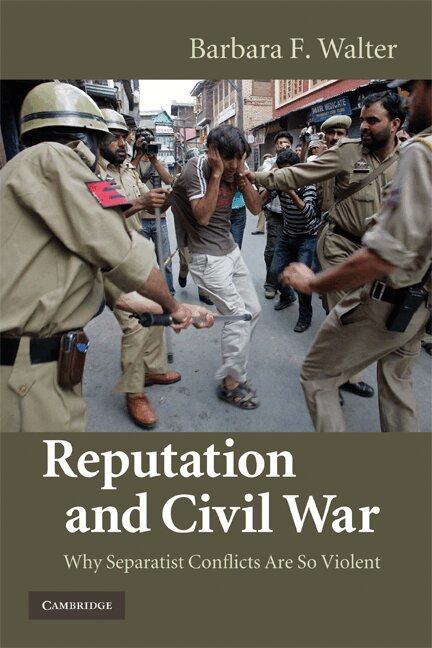
    Reputation and Civil War

    Why Separatist Conflicts Are So Violent

    AvBarbara F. Walter

    Häftad, Engelska, 2009

    463 kr

    Beställningsvara. Skickas inom 10-15 vardagar. Fri frakt över 249 kr.

    Fler format och utgåvor

    Inbunden

    1 335 kr

    Beskrivning

    Of all the different types of civil war, disputes over self-determination are the most likely to escalate into war and resist compromise settlement. Reputation and Civil War argues that this low rate of negotiation is the result of reputation building, in which governments refuse to negotiate with early challengers in order to discourage others from making more costly demands in the future. Jakarta's wars against East Timor and Aceh, for example, were not designed to maintain sovereignty but to signal to Indonesia's other minorities that secession would be costly. Employing data from three different sources - laboratory experiments on undergraduates, statistical analysis of data on self-determination movements, and qualitative analyses of recent history in Indonesia and the Philippines - Barbara F. Walter provides some of the first systematic evidence that reputation strongly influences behavior, particularly between governments and ethnic minorities fighting over territory.

    Produktinformation

    • Utgivningsdatum:2009-08-27
    • Mått:152 x 228 x 15 mm
    • Vikt:490 g
    • Format:Häftad
    • Språk:Engelska
    • Antal sidor:272
    • Förlag:Cambridge University Press
    • ISBN:9780521747295

    Utforska kategorier

    • Statsvetenskap och politisk teori inom Samhälle och politik

    Mer om författaren

    Barbara F. Walter is Professor of Political Science in the Graduate School of International Relations and Pacific Studies at the University of California, San Diego. She is the author of Committing to Peace: The Successful Settlement of Civil Wars (2001), and co-editor of Territoriality and Conflict in an Era of Globalization (Cambridge, 2006) and Civil Wars, Insecurity and Intervention (1999).

    Recensioner i media

    '… Walter shows that much of the answer lies in whether a state is faced with multiple potential challenges and therefore has to defend its reputation for holding firm. Rarely has such an important puzzle been so well explained.' Robert Jervis, Columbia University

    Innehållsförteckning

    • Figures; Tables; Maps; Part I. Theory: 1. Introduction; 2. Reputation building and self-determination movements; Part II. Empirical tests: 3. An experimental study of reputation building and deterrence; 4. Government responses to self-determination movements; 5. Ethnic groups and the decision to seek self-determination; Part III. Case studies: 6. Indonesia: many ethnic groups, few demands; 7. The Philippines: few ethnic groups, many demands; Part IV. Conclusions: 8. Reputation building and deterrence in civil wars.