• Fri frakt över 249 kr
  • •
  • Snabba leveranser
  • •
  • Billiga böcker
Kundservice

Du är på sajten för privatpersoner.

Företag, bibliotek eller offentlig verksamhet?

Du handlar på classic.bokus.com, där alla dina funktioner finns intakta.
Till classic.bokus.com
Bokus logotyp. Gå till startsidan.
  • Erbjudanden
  • Nyheter
  • Student
  • Topplistor
  • Barn & ungdom
  • Bokus Play
  • E-böcker
  • Pocketböcker
  • Spel & pussel

10% rabatt på allt med kod NYSTART10 →

Sidfot

Mina sidor

    Hjälp

    • Kundservice
    • Vanliga frågor och svar
    • Frakt och leverans
    • Retur vid ångerrätt
    • Reklamera vara
    • Betalning
    • Köpvillkor
    • Allmänna villkor
    • Information om webbplatsens tillgänglighet

    Om Bokus

    • Om oss
    • Pressrum
    • För studenter
    • För företag
    • För bibliotek och offentlig verksamhet
    • För leverantörer
    • Hållbarhet

    Populärt

    • Aktuella erbjudanden
    • Presentkort
    • Studentlitteratur
    • Nya böcker
    • Topplistor
    • Signerade böcker
    • Engelska böcker

    Inspiration

    • Boktips
    • BookTok
    • Populära bokserier
    • Barnbokskaraktärer
    • Populära författare
    Logotyp för Bokus
    Följ oss på Facebook (extern länk)Följ oss på Instagram (extern länk)Följ oss på YouTube (extern länk)Följ oss på TikTok (extern länk)
    bokus @ CookiesAnpassa cookiesIntegritetspolicyKöpvillkor
    Till Citymail hemsida (extern länk)Till Budbee hemsida (extern länk)Till Postnord hemsida (extern länk)Till Schenker hemsida (extern länk)Till Early Bird hemsida (extern länk)Till Walleys hemsida (extern länk)
    1. Ekonomi och Ledarskap
    2. Nationalekonomi
    3. Ekonomisk politik

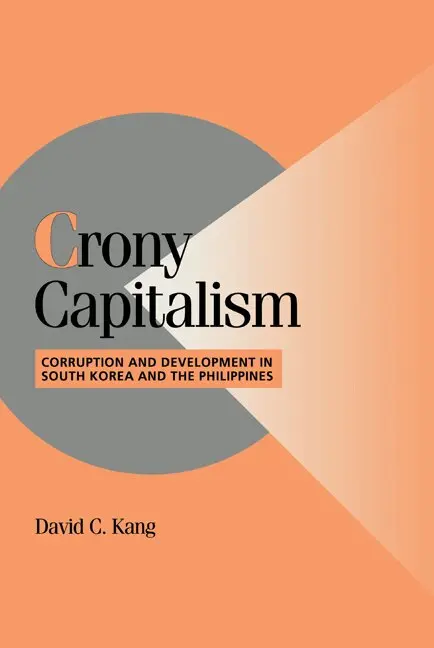
    Crony Capitalism

    Corruption and Development in South Korea and the Philippines

    AvDavid C. Kang,Peter Lange

    Inbunden, Engelska, 2002

    Del i serien Cambridge Studies in Comparative Politics

    1 143 kr

    Beställningsvara. Skickas inom 10-15 vardagar. Fri frakt över 249 kr.

    Fler format och utgåvor

    Häftad

    364 kr

    Beskrivning

    Why has the literature on Asian development not addressed the issue of money politics in Korea? How can we reconcile the view of an efficient developmental state in Korea before 1997 with reports of massive corruption and inefficiency in that same country in 1998 and 1999? Politics is central to the answer. In this book the author makes two arguments. First, both Korea and the Philippines experienced significant corruption throughout the post-independence era. Second, political - not economic - considerations dominated policy making in both countries. Focusing on the exchange of favors for bribes between state and business, the author argues that politics drove policy choices, that bureaucrats were not autonomous from political interference in setting policy, and that business and political elites wrestled with each other over who would reap the rents to be had. Even in Korea, corruption was far greater than the conventional wisdom allows.

    Produktinformation

    • Utgivningsdatum:2002-01-24
    • Mått:157 x 237 x 17 mm
    • Vikt:433 g
    • Format:Inbunden
    • Språk:Engelska
    • Serie:Cambridge Studies in Comparative Politics
    • Antal sidor:222
    • Förlag:Cambridge University Press
    • ISBN:9780521808170

    Utforska kategorier

    • Ekonomisk politik inom Ekonomi och Ledarskap

    Recensioner i media

    'This book challenges the political causes of developmental failures. It has the merit of being concise while presenting a forceful argument … Kang handles the Korean-Philippine comparison with great assurance, and his book will interest not only political economists specializing in East Asia, but also those whose geographical focus is elsewhere.' Journal of Public Policy

    Innehållsförteckning

    • List of figures; List of tables; Acknowledgements; 1. The puzzle and the theory; 2. Comparing Korea and the Philippines; 3. Institutions: bureaucrats and rulers; 4. Mutual Hostages in Korea; 5. Bandwagon politics in the Philippines; 6. Democracy in the 1980s and the financial crisis of 1997; 7. Conclusion: corruption and development; Index.