• Fri frakt över 249 kr
  • •
  • Snabba leveranser
  • •
  • Billiga böcker
Kundservice

Du är på sajten för privatpersoner.

Företag, bibliotek eller offentlig verksamhet?

Du handlar på classic.bokus.com, där alla dina funktioner finns intakta.
Till classic.bokus.com
Bokus logotyp. Gå till startsidan.
  • Erbjudanden
  • Nyheter
  • Student
  • Topplistor
  • Barn & ungdom
  • Bokus Play
  • E-böcker
  • Pocketböcker
  • Spel & pussel

10% rabatt på allt med kod: NYSTART10 →

Sidfot

Mina sidor

    Hjälp

    • Kundservice
    • Vanliga frågor och svar
    • Frakt och leverans
    • Retur vid ångerrätt
    • Reklamera vara
    • Betalning
    • Köpvillkor
    • Allmänna villkor
    • Information om webbplatsens tillgänglighet

    Om Bokus

    • Om oss
    • Pressrum
    • För studenter
    • För företag
    • För bibliotek och offentlig verksamhet
    • För leverantörer
    • Hållbarhet

    Populärt

    • Aktuella erbjudanden
    • Presentkort
    • Studentlitteratur
    • Nya böcker
    • Topplistor
    • Signerade böcker
    • Engelska böcker

    Inspiration

    • Boktips
    • BookTok
    • Populära bokserier
    • Barnbokskaraktärer
    • Populära författare
    Logotyp för Bokus
    Följ oss på Facebook (extern länk)Följ oss på Instagram (extern länk)Följ oss på YouTube (extern länk)Följ oss på TikTok (extern länk)
    bokus @ CookiesAnpassa cookiesIntegritetspolicyKöpvillkor
    Till Citymail hemsida (extern länk)Till Budbee hemsida (extern länk)Till Postnord hemsida (extern länk)Till Schenker hemsida (extern länk)Till Early Bird hemsida (extern länk)Till Walleys hemsida (extern länk)
    1. Historia och arkeologi
    2. Historia
    3. Europas historia

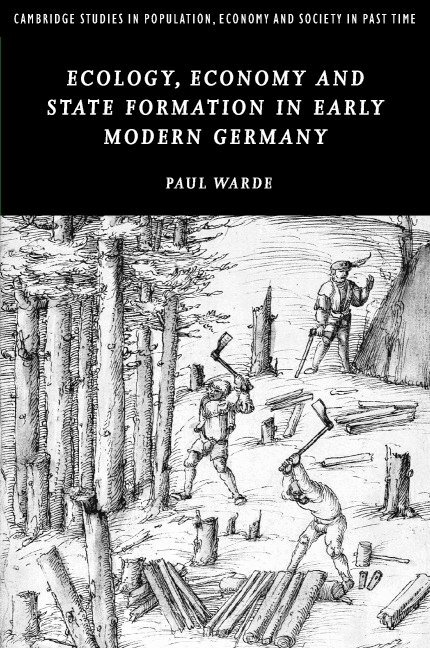
    Ecology, Economy and State Formation in Early Modern Germany

    AvPaul Warde

    Inbunden, Engelska, 2006

    Del 41 i serien Cambridge Studies in Population, Economy and Society in Past Time

    1 582 kr

    Beställningsvara. Skickas inom 10-15 vardagar. Fri frakt över 249 kr.

    Fler format och utgåvor

    Häftad

    615 kr

    Beskrivning

    This is an innovative analysis of the agrarian world and growth of government in early modern Germany through the medium of pre-industrial society's most basic material resource, wood. Paul Warde offers a regional study of south-west Germany from the late fifteenth to the early eighteenth century, demonstrating the stability of the economy and social structure through periods of demographic pressure, warfare and epidemic. He casts light on the nature of 'wood shortages' and societal response to environmental challenge, and shows how institutional responses largely based on preventing local conflict were poor at adapting to optimise the management of resources. Warde further argues for the inadequacy of models that oppose the 'market' to a 'natural economy' in understanding economic behaviour. This is a major contribution to debates about the sustainability of peasant society in early modern Europe, and to the growth of ecological approaches to history and historical geography.

    Produktinformation

    • Utgivningsdatum:2006-06-29
    • Mått:160 x 235 x 32 mm
    • Vikt:770 g
    • Format:Inbunden
    • Språk:Engelska
    • Serie:Cambridge Studies in Population, Economy and Society in Past Time
    • Antal sidor:412
    • Förlag:Cambridge University Press
    • ISBN:9780521831925

    Utforska kategorier

    • Europas historia inom Historia och arkeologi

    Mer om författaren

    Paul Warde is Lecturer in History at the University of Cambridge.

    Recensioner i media

    "the implications of Warde's conclusions for how we think about peasant economic activity, for the nature of rhetoric emplyed in disputes within the village commune, and for the interaction of the center and localities in the formation of the early modern territorial state in Europe are ample rewards for the perseverance of the nonspecialist reader." - Geoffrey Dipple, Augustana College

    Innehållsförteckning

    • List of figures; List of maps; List of tables; Acknowledgements; Glossary; List of abbreviations; Introduction; 1. The peasant dynamic; 2. Power and property; 3. The regulative drive; 4. From clearance to crisis?; 5. The two ecologies; Conclusion; Bibliography; Index.