• Fri frakt över 249 kr
  • •
  • Snabba leveranser
  • •
  • Billiga böcker
Kundservice

Du är på sajten för privatpersoner.

Företag, bibliotek eller offentlig verksamhet?

Du handlar på classic.bokus.com, där alla dina funktioner finns intakta.
Till classic.bokus.com
Bokus logotyp. Gå till startsidan.
  • Erbjudanden
  • Nyheter
  • Student
  • Topplistor
  • Barn & ungdom
  • Bokus Play
  • E-böcker
  • Pocketböcker
  • Spel & pussel

10% studentrabatt med kod TERM26

Sidfot

Mina sidor

    Hjälp

    • Kundservice
    • Vanliga frågor och svar
    • Frakt och leverans
    • Retur vid ångerrätt
    • Reklamera vara
    • Betalning
    • Köpvillkor
    • Allmänna villkor
    • Information om webbplatsens tillgänglighet

    Om Bokus

    • Om oss
    • Pressrum
    • För studenter
    • För företag
    • För bibliotek och offentlig verksamhet
    • För leverantörer
    • Hållbarhet

    Populärt

    • Aktuella erbjudanden
    • Presentkort
    • Studentlitteratur
    • Nya böcker
    • Topplistor
    • Signerade böcker
    • Engelska böcker

    Inspiration

    • Boktips
    • BookTok
    • Populära bokserier
    • Barnbokskaraktärer
    • Populära författare
    Logotyp för Bokus
    Följ oss på Facebook (extern länk)Följ oss på Instagram (extern länk)Följ oss på YouTube (extern länk)Följ oss på TikTok (extern länk)
    bokus @ CookiesAnpassa cookiesIntegritetspolicyKöpvillkor
    Till Citymail hemsida (extern länk)Till Budbee hemsida (extern länk)Till Postnord hemsida (extern länk)Till Schenker hemsida (extern länk)Till Early Bird hemsida (extern länk)Till Walleys hemsida (extern länk)
    1. Historia och arkeologi
    2. Historia
    3. Europas historia

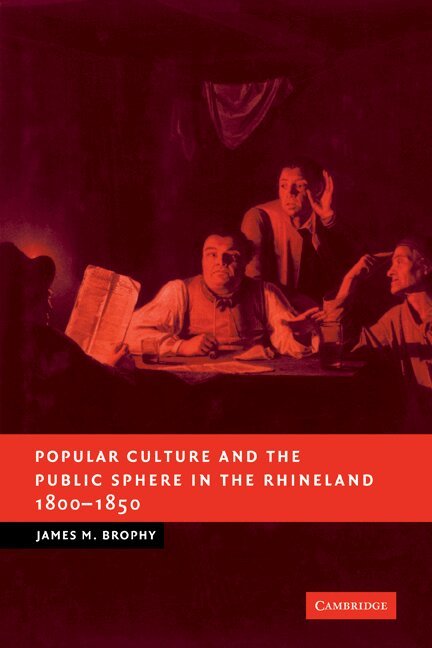
    Popular Culture and the Public Sphere in the Rhineland, 1800-1850

    AvJames M. Brophy

    Inbunden, Engelska, 2007

    Del i serien New Studies in European History

    1 002 kr

    Beställningsvara. Skickas inom 10-15 vardagar. Fri frakt över 249 kr.

    Fler format och utgåvor

    Häftad

    603 kr

    Beskrivning

    The age of revolution challenged the ancien régime's political world, introducing Europeans to fresh ideals of citizenship. German society was no less affected. Following the Napoleonic era, a political culture of partisan choice undermined the official restoration of absolutism. Bourgeois and popular classes took part in the political landscape of civil society, producing an impressive social base for participatory politics by the 1830s. Because of severe restrictions on speech and assembly, ordinary Germans formed political opinions in irregular ways. This book looks at the sites and forms of culture that facilitated political communication. With chapters devoted to reading, singing, public space, carnival, violence and religion, James Brophy argues that popular culture played a critical role in linking ordinary Rhinelanders to the public sphere. Moving beyond conventional explanations of opinion formation, he exposes the broad cultural infrastructure that enabled popular classes to join the political nation.

    Produktinformation

    • Utgivningsdatum:2007-08-09
    • Mått:160 x 234 x 27 mm
    • Vikt:752 g
    • Format:Inbunden
    • Språk:Engelska
    • Serie:New Studies in European History
    • Antal sidor:384
    • Förlag:Cambridge University Press
    • ISBN:9780521847698

    Utforska kategorier

    • Europas historia inom Historia och arkeologi

    Mer om författaren

    James Brophy is Associate Professor of History at the University of Delaware. He is the author of Capitalism, Politics, and Railroads in Prussia, 1830-1870 (1998) and is co-editor of the primary source reader, Perspectives from the Past: Readings in Western Civilizations (3d edition, 2005).

    Recensioner i media

    Reviews of the hardback: 'Throughout the book, the author demonstrates the interconnectedness of bourgeois and plebeian worlds in the formation of opinion. How did common people come by political information, learn to grasp post-revolutionary ideas and ideologies, and become part of civil society? What was the process by which they became citizens in the classical political sense? An impressive array of archival and published material from the formerly French Rhineland has been marshalled …' Journal of Central European History

    Innehållsförteckning

    • Introduction: popular culture and the public sphere; 1. Reading; 2. Singing; 3. Public space; 4. Carnival; 5. Tumult; 6. Religion; Conclusion: joining the political nation; Bibliography; Index.