• Fri frakt över 249 kr
  • •
  • Snabba leveranser
  • •
  • Billiga böcker
Kundservice

Du är på sajten för privatpersoner.

Företag, bibliotek eller offentlig verksamhet?

Du handlar på classic.bokus.com, där alla dina funktioner finns intakta.
Till classic.bokus.com
Bokus logotyp. Gå till startsidan.
  • Erbjudanden
  • Nyheter
  • Student
  • Topplistor
  • Barn & ungdom
  • Bokus Play
  • E-böcker
  • Pocketböcker
  • Spel & pussel

Må bättre, för mindre! Upp till 50% rabatt på hälsoböcker

Sidfot

Mina sidor

    Hjälp

    • Kundservice
    • Vanliga frågor och svar
    • Frakt och leverans
    • Retur vid ångerrätt
    • Reklamera vara
    • Betalning
    • Köpvillkor
    • Allmänna villkor
    • Information om webbplatsens tillgänglighet

    Om Bokus

    • Om oss
    • Pressrum
    • För studenter
    • För företag
    • För bibliotek och offentlig verksamhet
    • För leverantörer
    • Hållbarhet

    Populärt

    • Aktuella erbjudanden
    • Presentkort
    • Studentlitteratur
    • Nya böcker
    • Topplistor
    • Signerade böcker
    • Engelska böcker

    Inspiration

    • Boktips
    • BookTok
    • Populära bokserier
    • Barnbokskaraktärer
    • Populära författare
    Logotyp för Bokus
    Följ oss på Facebook (extern länk)Följ oss på Instagram (extern länk)Följ oss på YouTube (extern länk)Följ oss på TikTok (extern länk)
    bokus @ CookiesAnpassa cookiesIntegritetspolicyKöpvillkor
    Till Citymail hemsida (extern länk)Till Budbee hemsida (extern länk)Till Postnord hemsida (extern länk)Till Schenker hemsida (extern länk)Till Early Bird hemsida (extern länk)Till Walleys hemsida (extern länk)
    1. Historia och arkeologi
    2. Historia
    3. Asiens historia

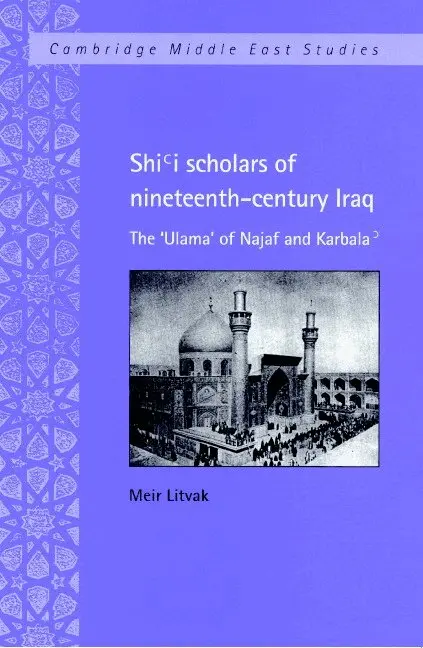
    Shi'i Scholars of Nineteenth-Century Iraq

    The 'Ulama' of Najaf and Karbala'

    AvMeir Litvak,Charles Tripp

    Häftad, Engelska, 2002

    Del 10 i serien Cambridge Middle East Studies

    781 kr

    Beställningsvara. Skickas inom 10-15 vardagar. Fri frakt över 249 kr.

    Fler format och utgåvor

    Inbunden

    1 609 kr

    Beskrivning

    In the nineteenth century, the shrine cities of Najaf and Karbala in Ottoman Iraq emerged as the most important Shi'i centres of learning. In a major contribution to the study of pre-modern Middle Eastern religious institutions, Meir Litvak analyses the social and political dynamics of these communities. Tracing the historical evolution of Shi'i leadership, he explores the determinants of social status amongst the ulama, the concept of patronage, the structure of learning, questions of ethnicity, and financial matters. He also assesses the role of the ulama as communal leaders who, in the face of a hostile Sunni government in Baghdad, were often obliged to adopt a more quietest political stance than their counterparts in Iran. This is an important book which sheds light on the formation of contemporary Shi'ism and the surrounding debates.

    Produktinformation

    • Utgivningsdatum:2002-05-02
    • Mått:155 x 230 x 17 mm
    • Vikt:420 g
    • Format:Häftad
    • Språk:Engelska
    • Serie:Cambridge Middle East Studies
    • Antal sidor:272
    • Förlag:Cambridge University Press
    • ISBN:9780521892964

    Utforska kategorier

    • Asiens historia inom Historia och arkeologi

    Recensioner i media

    "Litvak has made an important and original contribution to our understanding of nineteenth-century Iraqi Shi'ism, and alo to the relations of the shrine cities with both Istanbul and Tehran...I learned a great deal from this balanced, nuanced, and carefully argued book." MESA Bulletin, Peter Sluglett, University of Utah

    Innehållsförteckning

    • Acknowledgements; Note on transliteration; List of abbreviations; Map; Introduction; Part I. The Community: Learning and Leadership: 1. The community of learning: concept and organization; 2. Leadership in the age of multiple centers; 3. Monopolization of leadership in Najaf; 4. Diffusion, centralization and politicization; 5. Determinants of status and leadership; Part II. The 'Ulama' Between the Ottomans and Qajars: 6. The shrine cities, the Mamluks and Iran; 7. The 'ulama' and the reassertion of direct Ottoman control; 8. The 'ulama' and Ottoman centralization policy; 9. The changing political triangle, 1875–1904; Conclusion; Appendix; Notes; Glossary; Bibliography; Index.