• Fri frakt över 249 kr
  • •
  • Snabba leveranser
  • •
  • Billiga böcker
Kundservice

Du är på sajten för privatpersoner.

Företag, bibliotek eller offentlig verksamhet?

Du handlar på classic.bokus.com, där alla dina funktioner finns intakta.
Till classic.bokus.com
Bokus logotyp. Gå till startsidan.
  • Erbjudanden
  • Nyheter
  • Student
  • Topplistor
  • Barn & ungdom
  • Bokus Play
  • E-böcker
  • Pocketböcker
  • Spel & pussel

Må bättre, för mindre! Upp till 50% rabatt på hälsoböcker

Sidfot

Mina sidor

    Hjälp

    • Kundservice
    • Vanliga frågor och svar
    • Frakt och leverans
    • Retur vid ångerrätt
    • Reklamera vara
    • Betalning
    • Köpvillkor
    • Allmänna villkor
    • Information om webbplatsens tillgänglighet

    Om Bokus

    • Om oss
    • Pressrum
    • För studenter
    • För företag
    • För bibliotek och offentlig verksamhet
    • För leverantörer
    • Hållbarhet

    Populärt

    • Aktuella erbjudanden
    • Presentkort
    • Studentlitteratur
    • Nya böcker
    • Topplistor
    • Signerade böcker
    • Engelska böcker

    Inspiration

    • Boktips
    • BookTok
    • Populära bokserier
    • Barnbokskaraktärer
    • Populära författare
    Logotyp för Bokus
    Följ oss på Facebook (extern länk)Följ oss på Instagram (extern länk)Följ oss på YouTube (extern länk)Följ oss på TikTok (extern länk)
    bokus @ CookiesAnpassa cookiesIntegritetspolicyKöpvillkor
    Till Citymail hemsida (extern länk)Till Budbee hemsida (extern länk)Till Postnord hemsida (extern länk)Till Schenker hemsida (extern länk)Till Early Bird hemsida (extern länk)Till Walleys hemsida (extern länk)
    1. Naturvetenskap och teknik
    2. Matematik och naturvetenskap
    3. Naturvetenskap:allmänt
    4. Populärvetenskap

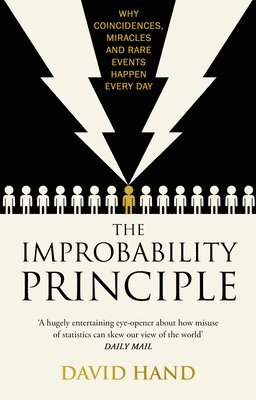
    Improbability Principle

    Why coincidences, miracles and rare events happen all the time

    AvDavid Hand

    Häftad, Engelska, 2015

    144 kr

    Skickas . Fri frakt över 249 kr.

    Fler format och utgåvor

    E-bok

    111 kr

    Beskrivning

    Why is it that incredibly unlikely phenomena actually happen quite regularly and why should we, in fact, expect such things to happen? Here, in this highly original book - aimed squarely at anyone with an interest in coincidences, probability or gambling - eminent statistician David Hand answers this question by weaving together various strands of probability into a unified explanation, which he calls the improbability principle.This is a book that will appeal not only to those who love stories about startling coincidences and extraordinarily rare events, but also to those who are interested in how a single bold idea links areas as diverse as gambling, the weather, airline disasters and creative writing as well as the origin of life and even the universe. The Improbability Principle will change your perspective on how the world works – and tell you what the Bible code and Shakespeare have in common, how to win the lottery, why Apple's song shuffling was made less random to seem more random. Oh and why lightning does in fact strike twice...

    Produktinformation

    • Utgivningsdatum:2015-01-29
    • Mått:127 x 199 x 20 mm
    • Vikt:231 g
    • Format:Häftad
    • Språk:Engelska
    • Antal sidor:320
    • Förlag:Transworld Publishers Ltd
    • ISBN:9780552170192

    Utforska kategorier

    • Populärvetenskap inom Naturvetenskap och teknik

    Mer om författaren

    DAVID HAND is an emeritus professor of mathematics and senior research investigator at Imperial College, London, a former president of the Royal Statistical Society and chief scientific advisor to Winton Capital, Europe’s most successful algorithmic trading hedge fund. He is the author of seven books including two popular titles (The Information Generation: How Data Rule Our World (Oneworld, 2006) and Statistics: A Very Short Introduction (Oxford University Press, 2008)). He is also the coauthor or editor/coeditor of several other academic titles, has published some 300 scientific papers and written popular articles for publications ranging from Mathematics Today to the Guardian.

    Recensioner i media

    A hugely entertaining eye-opener about how misuse of statistics can skew our view of the world