• Fri frakt över 249 kr
  • •
  • Snabba leveranser
  • •
  • Billiga böcker
Kundservice

Du är på sajten för privatpersoner.

Företag, bibliotek eller offentlig verksamhet?

Du handlar på classic.bokus.com, där alla dina funktioner finns intakta.
Till classic.bokus.com
Bokus logotyp. Gå till startsidan.
  • Erbjudanden
  • Nyheter
  • Student
  • Topplistor
  • Barn & ungdom
  • Bokus Play
  • E-böcker
  • Pocketböcker
  • Spel & pussel

10% rabatt på allt med kod: NYSTART10 →

Sidfot

Mina sidor

    Hjälp

    • Kundservice
    • Vanliga frågor och svar
    • Frakt och leverans
    • Retur vid ångerrätt
    • Reklamera vara
    • Betalning
    • Köpvillkor
    • Allmänna villkor
    • Information om webbplatsens tillgänglighet

    Om Bokus

    • Om oss
    • Pressrum
    • För studenter
    • För företag
    • För bibliotek och offentlig verksamhet
    • För leverantörer
    • Hållbarhet

    Populärt

    • Aktuella erbjudanden
    • Presentkort
    • Studentlitteratur
    • Nya böcker
    • Topplistor
    • Signerade böcker
    • Engelska böcker

    Inspiration

    • Boktips
    • BookTok
    • Populära bokserier
    • Barnbokskaraktärer
    • Populära författare
    Logotyp för Bokus
    Följ oss på Facebook (extern länk)Följ oss på Instagram (extern länk)Följ oss på YouTube (extern länk)Följ oss på TikTok (extern länk)
    bokus @ CookiesAnpassa cookiesIntegritetspolicyKöpvillkor
    Till Citymail hemsida (extern länk)Till Budbee hemsida (extern länk)Till Postnord hemsida (extern länk)Till Schenker hemsida (extern länk)Till Early Bird hemsida (extern länk)Till Walleys hemsida (extern länk)
    1. Filosofi och religion
    2. Religion och tro
    3. Kristendom
    4. Biblar

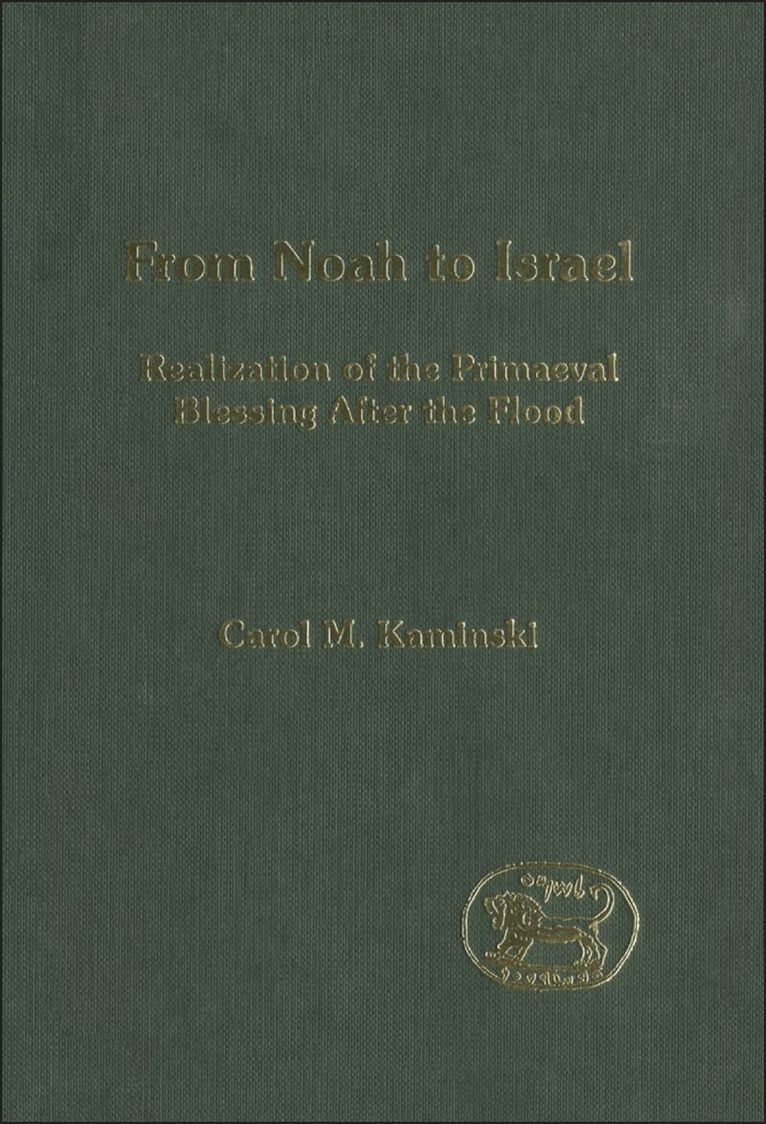
    From Noah to Israel

    Realization of the Primaeval Blessing After the Flood

    AvCarol M. Kaminski,Andrew Mein

    Inbunden, Engelska, 2005

    Del i serien Library of Hebrew Bible/Old Testament Studies

    2 713 kr

    Beställningsvara. Skickas inom 10-15 vardagar. Fri frakt över 249 kr.

    Fler format och utgåvor

    E-bok

    2 942 kr

    Beskrivning

    The primaeval blessing, 'Be fruitful and multiply, and fill the earth,' first announced to humankind in Genesis 1.28 is renewed to Noah and his sons after the flood in Genesis 9.1. There is widespread scholarly consensus that the ensuing dispersion in Genesis 10.1-32 and 11.1-9 is the means by which the creation blessing is fulfilled. Kaminski argues that the primeval blessing is not fulfilled in the Table of Nations and that Yahweh's scattering Noah's descendants in the Babel story does not contribute positively to the creation theme. Rather, the creation blessing is being taken up in the primary line of Shem (Genesis 11.10-26), which leads directly to Abraham. She further suggests that divine grace is not absent after the Babel judgment, as is commonly assumed, but is at work in the Shemite genealogy. She argues that the primeval blessing, which is unfulfilled in the primaeval history, is taken up by Abraham and his descendants by means of a divine promise. While the blessing is in the process of being realised in the patriarchal narratives, it is not fulfilled. The multiplication theme is resumed, however, in Exodus 1.7, which describes Israel's proliferation in Egypt.This is the first indication that the creation blessing is fulfilled. Realisation of the primaeval blessing progresses after the flood, therefore, from Noah to Israel. Yet God's blessing on Israel is not for their sake alone - it is the means through which the divine intention for creation will be restored to the world. JSOTS413

    Produktinformation

    • Utgivningsdatum:2005-01-01
    • Mått:156 x 234 x 14 mm
    • Vikt:390 g
    • Format:Inbunden
    • Språk:Engelska
    • Serie:Library of Hebrew Bible/Old Testament Studies
    • Antal sidor:168
    • Förlag:Bloomsbury Publishing PLC
    • ISBN:9780567083586

    Utforska kategorier

    • Biblar inom Filosofi och religion

    Mer om författaren

    Carol M. Kaminski (Ph.D., Cambridge) is Associate Professor of Old Testament at Gordon Conwell Theological Seminary Massachusetts, USA. She is the author of From Noah to Israel: Realization of the Primaeval Blessing After the Flood (T&T Clark, 2004).

    Recensioner i media

    "Kaminski addresses the blessing aspect of the divine command by investigating the passage as a whole rather than its Yahwistic and Priestly components.... The argument in this book is clearly made, yet quite technical in approach." -The Bible Today, April/May 2006

    Innehållsförteckning

    • Introduction; 1. Methodology; 2. The Import of the Primeval Blessing; Chapter 1; Is The Dispersal In Gen. 9:19 To Be Interpreted Positively? 1. Introduction; 2. The Meaning of the Command to "Fill the Earth"; 2.1 Gen. 1:28 In its Literary Context; 2.2 The Repetition of the Primeval Blessing in Gen. 9:1 and 9:7; 3. Language used in Gen. 9:19; 4. The Meaning of the Verb Jpn in Gen. 9:19; 5. Early and More Recent Translations of Jpn in Gen. 9:19; 6. Translations of Gen. 9:19 in Commentaries; 7. Conclusion; Chapter 2; Are The Babelites Rejecting The Command To Fill The Earth? 1. Scholarly Views Regarding the Actions of the Babelites; 2. The Meaning and Import of the Conjunction /P# in Gen. 11:4; 3. Are the Builders Fearful of the Primeval Commands? 3.1 The Primeval Commands are God's Blessing; 3.2 Did the Babelites Perceive God's Blessing in a Negative Light? 4. Is the Scattering Motif to be Identified with Filling the Earth? 5. Conclusion; Chapter 3; Does YHWH's Scattering Noah's Descendants Fulfil The Primeval Blessing? 1. Scholarly Views of YHWH's Scattering Noah's Descendants; 2. Scattering and the Curses of the Mosaic Covenant; 3. Scattering and Judgment; 3.1 Jacob's "Scattering" Simeon and Levi in Gen. 49:7; 4. Lack of Attention to the Language of "Scattering"; 5. Is Scattering to be Understood Positively because of the Positive Context? 5.1 Does Jpn in Gen. 9:19 have "Positive" Connotations? 5.2 Is Jpn in Gen. 9:19 a Leitwort? 5.3 Does Jwp in Gen. 10:18 have "Positive" Connotations? 6. YHWH's Scattering the Babelites and the Primeval Blessing; 6.1 The Babel Story and the Exite; 7. Conclusion; Chapter 4; Is The Primeval Blessing Fulfilled In The Table Of Nations? 1. Scholarly Views of the Primeval Blessing in Relation to the Table; 2. Is Language from the Primeval Blessing used in the Table of Nations? 3. The Meaning of drp in Gen. 10:5 and 10:32,; 4. Translations of drp in Gen. 10:5 and Gen. 10:32; 5. Translations of drp in Commentaries; 6. James Moffatt's Translation of Gen. 10:5 and 10:32; 7. Gen. 10:5 and 10:32 in An American Translation; 8. Leupold's Genesis Commentary and Translation of Gen. 10:5 and 10:32; 9. Implications of English Translations for Interpretation; 10. Support for the Meaning of drp as "Separate" or "Divide"; 11. Conclusion; Chapter 5; The Primeval Blessing And The Shemite Genealogy; 1. The Placement of Shem's Genealogy in the Table of Nations; 2. Is the Reversal of Order in Gen. 10:1-32 Theologically Significant? 3. Presentation of the Secondary Lines First and the Main Line Last; 4. Presentation of Genealogies from Genesis in 1 Chron. 1; 5. The Main Line of Shem and the Primeval Blessing; 6. Identification of the Table; 7. Steinberg's Assessment of Gen. 11:10-26; 8. The Shemite Genealogy (Gen. 11:10-26) and the Primeval Blessing; 9. Structural Analysis: the Relationship of Gen. 5:1-32 and 11:10-26; 10. Conclusion; Chapter 6; Does The Primeval History End On A Note Of Judgment? 1. Introduction; 2. Chronological Considerations: Gen. 10:1-32 and 11:1-9; 2.1 Gen. 11:1-9 in Its Literary Context; 2.2 Are the Two Texts Reconcilable? 2.3 Is the "Dischronology" of Gen. 10:1-32 and 11:1-9 Problematic? 2.4 Divine Providence; 3. Does Gen. 10:1-32 Contribute to the Judgment-Grace Schema? 4. How Does the Primeval History Conclude? 5. Conclusion; Chapter 7; Does The Promise Of Increase To The Patriarchs Contribute To The Realisation Of The Primeval Blessing After The Flood? 1. Abram as the Goal of the Shemite Genealogy (Gen. 11:10-26); 2. The Primeval Blessing is Reaffirmed to Abraham's Progeny; 3. What is the Significance of the Promise of Increase Given to the Patriarchs? 3.1 Weimar's Approach; 3.2 Approaches of Scharbert and Harland; 3.3 God's Blessing on the Nations and His Blessing on Israel through Abraham; 3.4 The Outworking of the Primeval Blessing in Gen. 1-11; 4. The Promise of Increase to the Patriarchs Has the Divine Guarantee; 4.1 The Promise of Increase under Threat; 4.2 Does Sin Pose a Threat to the Realisation of the Promise of Increase? 4.3 God's Faithfulness to his Promise of Increase in spite of the Patriarchs; 5. God's Intention in Creation Advances through the Divine Promise; 6. Conclusion; Chapter 8; Realisation Of The Primeval Blessing Through Israel; 1. The Twelve Sons of Jacob as Recipients of the Promise of Increase; 2. Jacob's Twelve Sons: the Culmination of the Genealogical Schema; 3. Realisation of the Promise of Increase through Jacob's Twelve Sons; 4. The Primeval Blessing and Israel; 4.1 Reaffirmation of the Primeval Commands to Israel in Gen. 35:11; 4.2 Reissuing of the Primeval Commands to Noah (9:1) and Israel (35:11); 5. The Seventy Descendants of Israel (Gen. 46:8-27) and the Promise of Increase; 6. Initial Fulfillment of the Blessing to Israel in Gen. 47:27; 7. Conclusion; Chapter 9; Fulfilment Of The Primeval Blessing Through Israel (Exod. 1:1-7); 1. The Book of Exodus as the Continuation of Genesis; 2. Does Exod. 1:7 Introduce a New Section or Does It Belong to Exod. 1:1-6? 3. Exod. 1:7 and the Promise of Increase to the Patriarchs; 4. The Import of Creation Language in Exodus 1:7; 5. Exodus 1:7 and the Primeval Blessing; 6. Exod. 1:7: Fulfilment of the Primeval Blessing in Microcosm; 7. One or Two Fulfilments of the Primeval Blessing? 8. Execution of the Primeval Commands-through Scattering or a Promise? 9. Redemption Ensures that God's Creational Work Will Advance; 10. Blessing to the Macrocosmic World through Israel; 11. Conclusion; Conclusion; 1. Summary of Argument; 2. Implications for Further Study in Genesis