• Fri frakt över 249 kr
  • •
  • Snabba leveranser
  • •
  • Billiga böcker
Kundservice

Du är på sajten för privatpersoner.

Företag, bibliotek eller offentlig verksamhet?

Du handlar på classic.bokus.com, där alla dina funktioner finns intakta.
Till classic.bokus.com
Bokus logotyp. Gå till startsidan.
  • Erbjudanden
  • Student
  • Topplistor
  • Barn & ungdom
  • Bokus Play
  • E-böcker
  • Ljudböcker
  • Pocketböcker
  • Spel och pussel

Pocketfynda! Hundratals böcker för 49 kr/st →

Sidfot

Mina sidor

    Hjälp

    • Kundservice
    • Vanliga frågor och svar
    • Frakt och leverans
    • Retur vid ångerrätt
    • Reklamera vara
    • Betalning
    • Köpvillkor
    • Allmänna villkor
    • Information om webbplatsens tillgänglighet

    Om Bokus

    • Om oss
    • Pressrum
    • För studenter
    • För företag
    • För bibliotek och offentlig verksamhet
    • För leverantörer
    • Hållbarhet

    Populärt

    • Aktuella erbjudanden
    • Presentkort
    • Studentlitteratur
    • Nya böcker
    • Topplistor
    • Signerade böcker
    • Engelska böcker

    Inspiration

    • Boktips
    • BookTok
    • Barnbokskaraktärer
    • Populära författare
    Logotyp för Bokus
    Följ oss på Facebook (extern länk)Följ oss på Instagram (extern länk)Följ oss på YouTube (extern länk)Följ oss på TikTok (extern länk)
    bokus @ CookiesAnpassa cookiesIntegritetspolicyKöpvillkor
    Till Citymail hemsida (extern länk)Till Budbee hemsida (extern länk)Till Postnord hemsida (extern länk)Till Schenker hemsida (extern länk)Till Early Bird hemsida (extern länk)Till Walleys hemsida (extern länk)
    1. Filosofi och religion
    2. Religion och tro
    3. Religion: allmänt

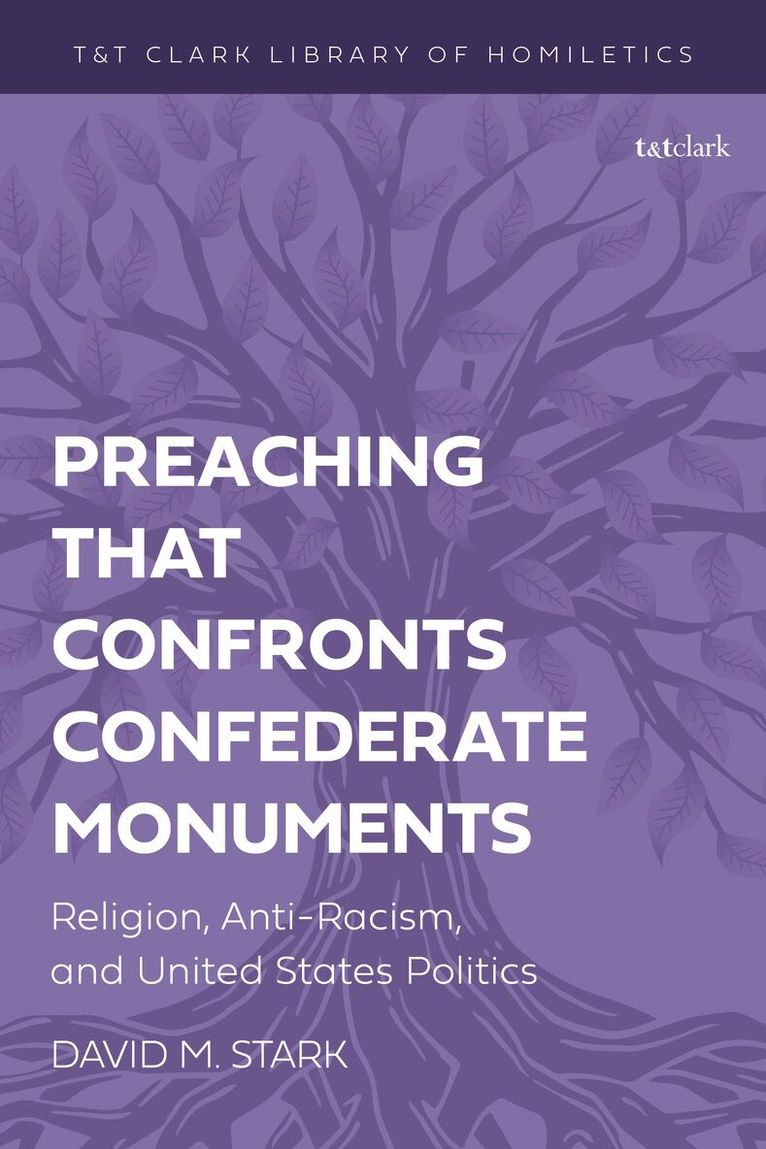
    Preaching that Confronts Confederate Monuments

    Religion, Anti-Racism, and United States Politics

    AvDavid M. Stark,Carolyn J. Sharp

    Inbunden, Engelska, 2025

    Del i serien T&T Clark Library of Homiletics

    1 250 kr

    Beställningsvara. Skickas inom 10-15 vardagar. Fri frakt över 249 kr.

    Fler format och utgåvor

    E-bok

    1 199 kr

    E-bok

    1 199 kr

    Beskrivning

    Confederate monuments preach—at times subtly, at other times overtly—about who we are, who God is, and how we should live together. David M. Stark looks at the way many Confederate monuments provided ongoing opportunities for commemorative speeches and ceremonies that would entrench racist and white supremacist ideologies in the American South. Stark examines key speeches and proclamations given around monuments to the Lost Cause, such as Julian Carr's Silent Sam speech (1913), and Archer Anderson's speech at the dedication of a monument to Robert E. Lee (1890), reading these as theological and homiletic moments. Stark then moves on to construct a homiletic that can confront such monuments and the racist preaching ideologies around them.In developing this counter-homiletic, Stark analyzes the preaching strategies written into Confederate monuments and highlights best practices from recent counter-proclamations that deconstruct the troubling rhetoric and theology of Confederate monument dedication speeches. Finally, Stark presents insights from naming commission reports and clergy interviews about the values, mission, and leadership needed to work for ongoing change.

    Produktinformation

    • Utgivningsdatum:2025-11-27
    • Mått:158 x 236 x 16 mm
    • Vikt:460 g
    • Format:Inbunden
    • Språk:Engelska
    • Serie:T&T Clark Library of Homiletics
    • Antal sidor:200
    • Förlag:Bloomsbury Publishing PLC
    • ISBN:9780567719812

    Utforska kategorier

    • Religion: allmänt inom Filosofi och religion
    • Diskriminering och rättvisa inom Samhälle och politik
    • Kristendom inom Filosofi och religion

    Mer om författaren

    David M. Stark is Assistant Professor of Homiletics and Co-director of the Truth, Racial Healing, and Transformation Center at the University of the South, USA.

    Recensioner i media

    David Stark wonderfully displays how preachers ought to think about and then preach to contemporary American racial realities in the light of the gospel. He confronts the history and present harm of Confederate monuments and shows us preachers how to help our listeners think like Christians about matters that many would rather left unsaid. A wonderful book not only on how to tell the truth about our past but also how to do this truth-telling from the pulpit.

    Innehållsförteckning

    • AcknowledgementsAbbreviations1. Introductiona. Confederate Monuments and the Churchb. Confederate Monuments within U.S. monumental culturec. Preaching and Monumentsd. Preaching Monuments2. Moving Mountains: De-centering the Presence and Preaching of Confederate Monumentsa. A Theological and Homiletical Reading of the Presence and Preaching of Confederate Monumentsb. Preaching that De-centers the Presence and Preaching of Confederate Monuments c. Moving Mountains: Preaching as Collaboration with Monument Removal, Relocation, and Recontextualization3. When the Stones Cry Out Perversely: Preaching that Confronts the Proclamation of Monuments to the Lost Causea. Orality, Monuments, and Meaning-Makingb. Rhetorical Analysis of Confederate Memorial Dedication Speeches and Resistance Speechc. Preaching to Confront Monuments to the Lost Cause4. When the Stones Cry Out Perversely: Preaching that Confronts the Proclamation of Monuments to the Lost Cause, Case Study 1: Chapel Hill, North Carolinaa. Julian Carr’s Speech at the Dedication of Silent Sam, 1913b. Contemporary Proclamation that Confronts Julian Carr’s Silent Sam Speechc. Preaching to Confront Monuments to the Lost Cause5. When the Stones Cry Out Perversely: Preaching that Confronts the Proclamation of Monuments to the Lost Cause, Case Study 2: Richmond, Virginiaa. Archer Anderson’s Speech at the dedication of the Monument to General Robert E. Lee, 1890b. Contemporary Proclamation that Confronts Archer Anderson’s Dedication Speechc. Preaching to Confront Monuments to the Lost Caused. Homiletical Reflection: Preaching as Confrontation and Change Agent6. Standing up to Nebuchadnezzar’s Statues: What Naming Commissions Can Teach Preachers about Confronting White Supremacya. A brief history of Naming Commissions in the U.S.b. Naming Commissions as Institutional Equivocationc. Naming Commissions as a Way to Mark Institutional Change d. Standing Up: Preaching toward Transformation 7. Preaching Stones, Living Monuments: A Conclusiona. (Re)membering Space: Sewanee’s Black Heritage Trailb. Bringing Monuments Home: A Pilgrimage to the Memorial for Peace and Justice c. (Re)Moving Mountains: Sermons Etched on Hand and HeartBibliographyIndex