• Fri frakt över 249 kr
  • •
  • Snabba leveranser
  • •
  • Billiga böcker
Kundservice

Du är på sajten för privatpersoner.

Företag, bibliotek eller offentlig verksamhet?

Du handlar på classic.bokus.com, där alla dina funktioner finns intakta.
Till classic.bokus.com
Bokus logotyp. Gå till startsidan.
  • Erbjudanden
  • Student
  • Topplistor
  • Barn & ungdom
  • Bokus Play
  • E-böcker
  • Ljudböcker
  • Pocketböcker
  • Spel & pussel

Upp till 25% på utvalda nyheter →

Sidfot

Mina sidor

    Hjälp

    • Kundservice
    • Vanliga frågor och svar
    • Frakt och leverans
    • Retur vid ångerrätt
    • Reklamera vara
    • Betalning
    • Köpvillkor
    • Allmänna villkor
    • Information om webbplatsens tillgänglighet

    Om Bokus

    • Om oss
    • Pressrum
    • För studenter
    • För företag
    • För bibliotek och offentlig verksamhet
    • För leverantörer
    • Hållbarhet

    Populärt

    • Aktuella erbjudanden
    • Presentkort
    • Studentlitteratur
    • Nya böcker
    • Topplistor
    • Signerade böcker
    • Engelska böcker

    Inspiration

    • Boktips
    • BookTok
    • Populära bokserier
    • Barnbokskaraktärer
    • Populära författare
    Logotyp för Bokus
    Följ oss på Facebook (extern länk)Följ oss på Instagram (extern länk)Följ oss på YouTube (extern länk)Följ oss på TikTok (extern länk)
    bokus @ CookiesAnpassa cookiesIntegritetspolicyKöpvillkor
    Till Citymail hemsida (extern länk)Till Budbee hemsida (extern länk)Till Postnord hemsida (extern länk)Till Schenker hemsida (extern länk)Till Early Bird hemsida (extern länk)Till Walleys hemsida (extern länk)
    1. Psykologi och pedagogik
    2. Psykologi
    3. Barnpsykologi och utvecklingspsykologi

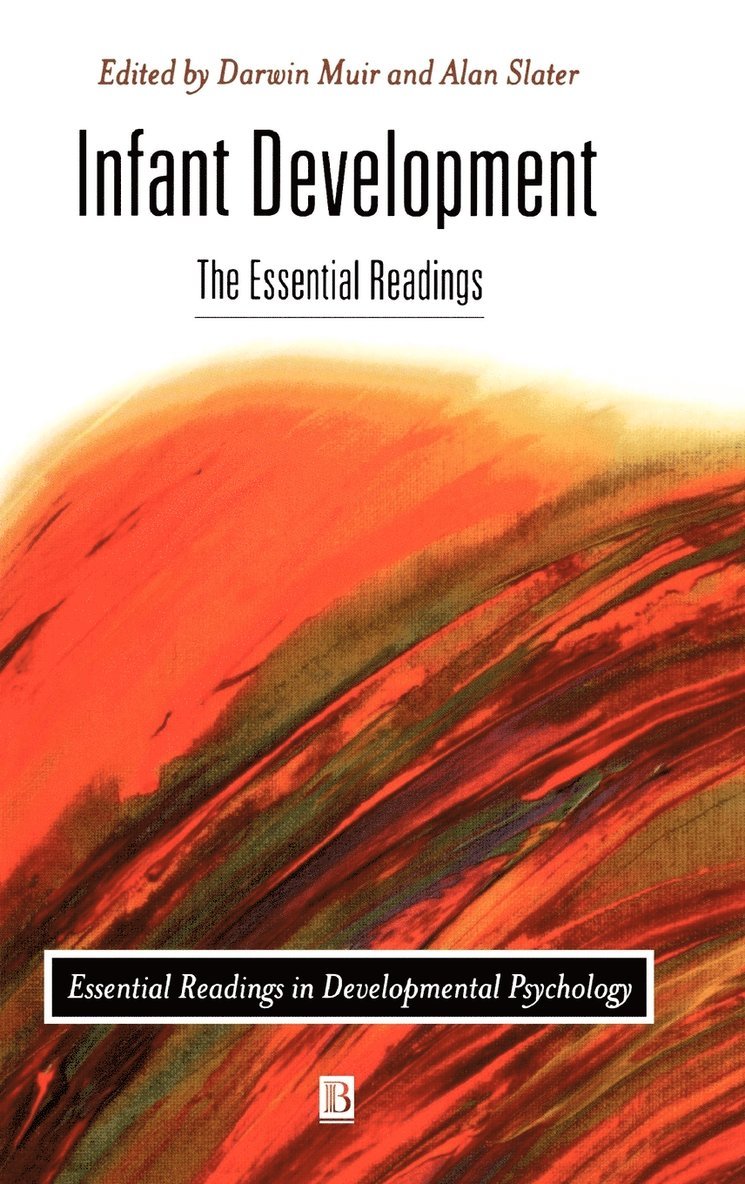
    Infant Development

    The Essential Readings

    AvMUIR,Slater A

    Inbunden, Engelska, 2000

    Del i serien Essential Readings in Developmental Psychology

    1 789 kr

    Beställningsvara. Skickas inom 5-8 vardagar. Fri frakt över 249 kr.

    Fler format och utgåvor

    Häftad

    658 kr

    Beskrivning

    Infant Development: The Essential Readings provides students with a selection of some of the key articles by key researchers in this core area of developmental psychology and introduces the reader to the field of infancy research and to some of the current, lively controversies within this area.

    Produktinformation

    • Utgivningsdatum:2000-02-12
    • Mått:150 x 250 x 15 mm
    • Vikt:737 g
    • Format:Inbunden
    • Språk:Engelska
    • Serie:Essential Readings in Developmental Psychology
    • Antal sidor:403
    • Förlag:John Wiley and Sons Ltd
    • ISBN:9780631217466

    Utforska kategorier

    • Barnpsykologi och utvecklingspsykologi inom Psykologi och pedagogik

    Mer om författaren

    Darwin Muir is Professor of Psychology at Queen's University, Ontario. Alan Slater is Senior Lecturer in the School of Psychology at the University of Exeter.They are co-editors of the recently published Blackwell Reader in Developmental Psychology.

    Recensioner i media

    "What stands out is the excellent and up-to-date selection of essays in the volume on infant development which offered a very good balance between theory and empirical research." Infancia y Aprendizaje, vol 24(1), 2001."If you have the time, read it. If you do not have the time, find it somehow". Ruth Coppard, Educational Psychology in Practice, Vol 18, 2002 "Infant Development: The Essential Readings is accessible to the reader, illustrates the current work and controversies in the field, and shows diversity of research topics, according to the general definition of the parameters of the field. It is an informative source of information for anyone interested in learning about current research in infant developmental psychology. The editors have succeeded in the important task of providing an update on the research that has occurred in the past decade. Very few books with comparable information have been published since the 1980s. Although there are many volumes that focus on a narrower aspect of recent infant developmental research and many more than explain theories and applications of research to parents, this book discusses the theories and provides comprehensive and contextual information on a wider range of research in the field." Sarah Duman, University of Southern California, APA Review of Books, December 2003

    Innehållsförteckning

    • Preface. Acknowledgments.Introduction.Infancy Research: History and Methods: Darwin Muir and Alan Slater.Part I: Theoretical Issues.Introduction.Why Do Infants Do What They Do?.Introduction.1. Shifting the Focus From What to Why: C. Rovee-Collier.The Origins of Knowledge: Nature versus Nurture.Introduction.2. Nativism, Empiricism, and the Origins of Knowledge: E.S. Spelke.Connectionist Modeling.Introduction.3. Connectionist Modeling and Infant Development: D.Mareschal.Part II: Sensation and Perception.Introduction.Fetal Sensitivity to Touch.Introduction.4. Maturation of Human Fetal Responses to Vibroacoustic Stimulation: B.S. Kisilevsky, D.W. Muir, and J.A. Low.Early Visual perception.Introduction.5. Visual perception in the Young Infant: Early Organization and Rapid Learning: A. Slater.Intermodal Perception.Introduction.6. Increasing Specificity in the Development of Intermodal Perception: L. Bahrick. Social Perception.Introduction.7. Look at Me: Five-Month-Old Infants' Sensitivity to Very Small Deviations in Eye-Gaze During Social Interactions: L.A. Symons, S.M. Hains, and D.W. Muir.Speech Perception.Introduction.8. Becoming a Native Listener: J.F. Werker.Part III: Cognitive Development.Introduction.Newborn Imitation.Introduction.9a. Imitation of Facial and Manual Gestures by Human Neonates: A.N. Meltzoff, and M.K Moore.9b. Resolving the Debate about Early Imitation: A.N. Meltzoff, and M.K. Moore.Infant Counting.Introduction.10. Addition and Subtraction by Human Infants: K. Wynn.Learning About the Physical World.Introduction.11. How Do Infants learn About the Physical World? R. Baillargeon.The A-not-B Error.Introduction.12. Why Do Infants Make A-not-B Errors in a Search Task, Yet Show Memory for the Location of Hidden Objects in a Nonsearch Task? A. Ahmed, and T. Ruffman.Predicting Later Intelligence.Introduction.13. Why Does Infant Attention Predict Adolescent Intelligence? M. Sigman, S.E. Cohen, and L. Beckwith.Part IV: Social Development and Communication:.Introduction.Infant-Directed Speech.Introduction.14. Infant Responses to Prototypical melodic Contours in Parental Speech: M. Papoušek, M.H. Bornstein, C. Nuzzo, H. Papoušek, and D. Symmes.15. Early Word Comprehension in 6-Moth-Olds: R. Tincoff, and P.W. Jusczyk.Social Referencing.Introduction.16. Maternal Emotional Signaling: Its Effect on the Visual Cliff Behavior of 1-Year-Olds: J.F. Sorce, R.N. Emde, J. Campos, and M.D. Klinnert.Infant Understanding of Others' Intentions and Theory of Mind.Introduction.17. Fourteen-Through 18-Month-Old Infants.Differentially Imitate Intentional and Accidental Actions: M. Carpenter, N. Akhtar, and M. Tomasello.Social Attachments.Introduction.18. Stability and Transmission of Attachment across Three Generations: D. Benoit, and K. Parker.Infants with Autism.Introduction.19. An Experimental Investigation of Social-Cognitive Abilities in Infants with Autism: Clinical Implications: T. Charman, J. Swettenham, S. Baron-Cohen, A. Cox, G. Baird, and A. Drew.Index.