• Fri frakt över 249 kr
  • •
  • Snabba leveranser
  • •
  • Billiga böcker
Kundservice

Du är på sajten för privatpersoner.

Företag, bibliotek eller offentlig verksamhet?

Du handlar på classic.bokus.com, där alla dina funktioner finns intakta.
Till classic.bokus.com
Bokus logotyp. Gå till startsidan.
  • Erbjudanden
  • Nyheter
  • Student
  • Topplistor
  • Barn & ungdom
  • Bokus Play
  • E-böcker
  • Pocketböcker
  • Spel & pussel

10% rabatt på allt med kod: NYSTART10 →

Sidfot

Mina sidor

    Hjälp

    • Kundservice
    • Vanliga frågor och svar
    • Frakt och leverans
    • Retur vid ångerrätt
    • Reklamera vara
    • Betalning
    • Köpvillkor
    • Allmänna villkor
    • Information om webbplatsens tillgänglighet

    Om Bokus

    • Om oss
    • Pressrum
    • För studenter
    • För företag
    • För bibliotek och offentlig verksamhet
    • För leverantörer
    • Hållbarhet

    Populärt

    • Aktuella erbjudanden
    • Presentkort
    • Studentlitteratur
    • Nya böcker
    • Topplistor
    • Signerade böcker
    • Engelska böcker

    Inspiration

    • Boktips
    • BookTok
    • Populära bokserier
    • Barnbokskaraktärer
    • Populära författare
    Logotyp för Bokus
    Följ oss på Facebook (extern länk)Följ oss på Instagram (extern länk)Följ oss på YouTube (extern länk)Följ oss på TikTok (extern länk)
    bokus @ CookiesAnpassa cookiesIntegritetspolicyKöpvillkor
    Till Citymail hemsida (extern länk)Till Budbee hemsida (extern länk)Till Postnord hemsida (extern länk)Till Schenker hemsida (extern länk)Till Early Bird hemsida (extern länk)Till Walleys hemsida (extern länk)
    1. Naturvetenskap och teknik
    2. Matematik och naturvetenskap
    3. Biologi
    4. Zoologi

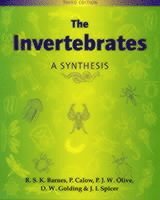
    Invertebrates

    A Synthesis

    AvR. S. K. Barnes,Peter P. Calow

    Häftad, Engelska, 2001

    1 008 kr

    Beställningsvara. Skickas inom 5-8 vardagar. Fri frakt över 249 kr.

    Beskrivning

    The majority of undergraduate texts in invertebrate zoology (of which there are many) fall into one of two categories. They either offer a systematic treatment of groups of animals phylum by phylum, or adopt a functional approach to the various anatomical and physiological systems of the better known species. The Invertebrates is the first and only textbook to integrate both approaches and thus meet the modern teaching needs of the subject. This is the only invertebrate textbook to integrate systematics and functional approaches.The molecular systematics sections have been completely updated for the new edition.Strong evolutionary theme which reflects the importance of molecular techniques throughout.Distills the essential characteristics of each invertebrate group and lists diagnostic features to allow comparisons between phyla. New phyla have been added for the new edition.Stresses comparisons in physiology, reproduction and development.Improved layout and illustration quality.Second edition has sold 14000 copies.Nature of the first edition:'Students will like this book. It deserves to succeed.'

    Produktinformation

    • Utgivningsdatum:2001-08-17
    • Mått:220 x 277 x 27 mm
    • Vikt:1 588 g
    • Format:Häftad
    • Språk:Engelska
    • Antal sidor:512
    • Upplaga:3
    • Förlag:John Wiley and Sons Ltd
    • ISBN:9780632047611

    Utforska kategorier

    • Zoologi inom Naturvetenskap och teknik
    • Djurböcker inom Djur och Natur

    Mer om författaren

    R. S. K. Barnes is the author of The Invertebrates: A Synthesis, 3rd Edition, published by Wiley. Peter P. Calow is the author of The Invertebrates: A Synthesis, 3rd Edition, published by Wiley.

    Recensioner i media

    "I can not recomment this book highly enough. It should be in the library of every school and university and I think all biologists would benefit from having a copy in their personal collection."--Peter Bowen-Walker, Journal of Biological Education, 2002"This edition of a very useful text contains new research adding to our knowledge of invertebrates, and many chapters have been updated and rewritten. [...] Zoology students will welcome this new edition." (Aslib Book Guide, Dec 2001) "Essentially, this is a simple text. It aims to bring together all invertebrates and describe them in terms of their differences (phyla) and common elements (functions). Although the text needs to be precise, it is clear and the diagrams are very good. This is an excellent reference text which should find its way into field centres and school/college libraries." (TEGNews, Dec 2001) "When it comes to the invertebrates the position is much less clear cut. There are many gaps in our knowledge and so often the evolutionary relationships between the phyla are neglected. It is also a difficult area of zoology because many of the key organisms are unfamiliar ones, but in this book the subject is dealt with very clearly. It is a bold step to put it at the beginning, because there are many unfamiliar terms and concepts not covered until later in the book, but I think it works, not least because it gives the subject the importance it deserves. The book ought to become the standard text for invertebrate courses." (New Scientist, Sept. 1993) "... a good student-orientated introductory text which is attractive, liveley and informative. I am sure it will continue to be a favourite..." (Journal of Animal Ecology, 1994)

    Innehållsförteckning

    • Preface, viiPart 1: Evolutionary Introduction1 Introduction: Basic Approach and Principles, 31.1 Why invertebrates? 31.2 Properties of living things, 41.3 Origins of life, 61.4 Levels of organismic organization, 71.5 Prospects, 71.6 Further reading, 82 The Evolutionary History and Phylogeny of the Invertebrates, 92.1 Introduction, 92.2 The simplest animals, 112.3 The bilaterally-symmetrical animals, 162.4 Interrelationships of the superphyla, 252.5 The origin, radiation and extinction of animal groups, 262.6 Biodiversity, 332.7 Further reading, 34Part 2: The Invertebrate Phyla3 Parallel Approaches to Animal Multicellularity, 393.1 'The Protozoa', 393.2 Superphylum PARAZOA (sponges), 463.3 Superphylum PHAGOCYTELLOZOA, 533.4 Superphylum RADIATA, 543.5 Superphylum MESOZOA, 653.6 Superphylum BILATERIA, 683.7 Further reading, 784 The Worms, 804.1 Phylum NEMERTEA (ribbon- or proboscis-worms), 814.2 Phylum GNATHOSTOMULA, 834.3 Phylum GASTROTRICHA, 844.4 Phylum NEMATODA, 864.5 Phylum NEMATOMORPHA (horsehair worms), 904.6 Phylum KINORHYNCHA, 924.7 Phylum LORICIFERA, 944.8 Phylum PRIAPULA, 954.9 Phylum ROTIFERA, 964.10 Phylum ACANTHOCEPHALA, 994.11 Phylum SIPUNCULA, 1014.12 Phylum ECHIURA, 1024.13 Phylum POGONOPHORA, 1034.14 Phylum ANNELIDA, 1054.15 Worms of uncertain phylum, 1164.16 Further reading, 1175 The Molluscs, 1185.1 Phylum MOLLUSCA, 1185.2 Further reading, 1326 The Lophophorates, 1346.1 Phylum PHORONA, 1346.2 Phylum BRACHIOPODA (lamp-shells), 1366.3 Phylum BRYOZOA, 1376.4 Phylum ENTOPROCTA, 1426.5 Phylum CYCLIOPHORA, 1436.6 Further reading, 1457 The Deuterostomes, 1467.1 Phylum CHAETOGNATHA (arrow-worms), 1467.2 Phylum HEMICHORDATA, 1477.3 Phylum ECHINODERMATA, 1517.4 Phylum CHORDATA, 1597.5 Further reading, 1678 Invertebrates with Legs: the Arthropods and Similar Groups, 1688.1 Phylum TARDIGRADA (water bears), 1698.2 Phylum PENTASTOMA (tongue-worms), 1718.3 Phylum ONYCHOPHORA, 1728.4 Phylum CHELICERATA, 1748.5 Phylum UNIRAMIA, 1798.6 Phylum CRUSTACEA, 1918.7 Further reading, 205Part 3: Invertebrate Functional Biology9 Feeding, 2099.1 Introduction: the evolution of animal modes of feeding, 2099.2 Types of animal feeding: patterns of acquisition and processing, 2179.3 Costs and benefits of feeding: optimal foraging, 2269.4 Conclusions, 2369.5 Further reading, 23610 Mechanics and Movement (Locomotion), 23810.1 Introduction, 23810.2 The generation of forces by animal cells, 24110.3 Ciliary locomotion, 24410.4 Muscular activity and skeletal systems, 24710.5 Burrowing, creeping, crawling, walking and running: locomotion over and through a solid substrate, 25010.6 Swimming and flying, 25910.7 Conclusions, 27010.8 Further reading, 27011 Respiration, 27211.1 Central importance of ATP in respiration, 27211.2 Backbone of catabolism, 27211.3 Generating ATP without O2, 27211.4 Uptake of O2, 27411.5 Measuring metabolism, 28011.6 Factors influencing respiration, 28211.7 Conclusions, 28711.8 Further reading, 28712 Excretion, Ionic and Osmotic Regulation, and Buoyancy, 28912.1 Excretion, 28912.2 Osmotic and ionic regulation, 29012.3 Excretory systems, 29612.4 Conclusions, 30012.5 Further reading, 30013 Defence, 30213.1 Classification of threats, 30213.2 Defence, 30213.3 Conclusions, 31513.4 Further reading, 31514 Reproduction and Life Cycles, 31714.1 Introduction, 31714.2 The significance of sexual and asexual reproduction, 32314.3 The organization of sexual reproduction and life histories: reproductive traits and functions, 33814.4 The control of reproductive processes, 34414.5 Reproduction and resource allocation, 35514.6 Conclusions, 36114.7 Further reading, 36215 Development, 36415.1 Oogenesis: the storage of developmental information, 36515.2 Patterns of early development, 37315.3 Experimental embryology of invertebrates: the determination of cell fate, 38015.4 The developmental genetics of Drosophila melanogaster, 38915.5 Larval development and metamorphosis, 40315.6 Regeneration, 40715.7 Conclusion: invertebrate development and the genetic programme, 40915.8 Further reading, 41216 Control Systems, 41316.1 Potentials, 41416.2 Neurones and their connections, 41816.3 Organization of nervous systems, 42216.4 Receptors, 43016.5 Vision, 43316.6 Sensory processing, 43616.7 Spontaneity, 44116.8 Neural bases of behaviour, 44316.9 Organization of motor output, 44716.10 Chemical communication, 45016.11 Roles of endocrine systems, 45416.12 Applications, 46016.13 Conclusion, 46316.14 Further reading, 46317 Basic Principles Revisited, 46417.1 Basic physiological features of phenotypes, 46417.2 The primacy of replication and reproduction, 46517.3 Ontogeny, 46517.4 Ontogeny and phylogeny, 46717.5 Size and shape – scaling, 46917.6 Further reading, 470Glossary, 471Illustration Sources, 478Index, 483