• Fri frakt över 249 kr
  • •
  • Snabba leveranser
  • •
  • Billiga böcker
Kundservice

Du är på sajten för privatpersoner.

Företag, bibliotek eller offentlig verksamhet?

Du handlar på classic.bokus.com, där alla dina funktioner finns intakta.
Till classic.bokus.com
Bokus logotyp. Gå till startsidan.
  • Erbjudanden
  • Nyheter
  • Student
  • Topplistor
  • Barn & ungdom
  • Bokus Play
  • E-böcker
  • Pocketböcker
  • Spel & pussel

10% studentrabatt med kod TERM26

Sidfot

Mina sidor

    Hjälp

    • Kundservice
    • Vanliga frågor och svar
    • Frakt och leverans
    • Retur vid ångerrätt
    • Reklamera vara
    • Betalning
    • Köpvillkor
    • Allmänna villkor
    • Information om webbplatsens tillgänglighet

    Om Bokus

    • Om oss
    • Pressrum
    • För studenter
    • För företag
    • För bibliotek och offentlig verksamhet
    • För leverantörer
    • Hållbarhet

    Populärt

    • Aktuella erbjudanden
    • Presentkort
    • Studentlitteratur
    • Nya böcker
    • Topplistor
    • Signerade böcker
    • Engelska böcker

    Inspiration

    • Boktips
    • BookTok
    • Populära bokserier
    • Barnbokskaraktärer
    • Populära författare
    Logotyp för Bokus
    Följ oss på Facebook (extern länk)Följ oss på Instagram (extern länk)Följ oss på YouTube (extern länk)Följ oss på TikTok (extern länk)
    bokus @ CookiesAnpassa cookiesIntegritetspolicyKöpvillkor
    Till Citymail hemsida (extern länk)Till Budbee hemsida (extern länk)Till Postnord hemsida (extern länk)Till Schenker hemsida (extern länk)Till Early Bird hemsida (extern länk)Till Walleys hemsida (extern länk)
    1. Filosofi och religion
    2. Filosofi
    3. Filosofiska discipliner
    • -10% student

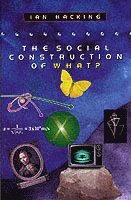
    Social Construction of What?

    AvIan Hacking

    Häftad, Engelska, 2000

    345 kr

    Beställningsvara. Skickas inom 5-8 vardagar. Fri frakt över 249 kr.

    Beskrivning

    Lost in the raging debate over the validity of social construction is the question of what, precisely, is being constructed. Facts, gender, quarks, reality? Is it a person? An object? An idea? A theory? Each entails a different notion of social construction, Ian Hacking reminds us. His book explores an array of examples to reveal the deep issues underlying contentious accounts of reality.Especially troublesome in this dispute is the status of the natural sciences, and this is where Hacking finds some of his most telling cases, from the conflict between biological and social approaches to mental illness to vying accounts of current research in sedimentary geology. He looks at the issue of child abuse—very much a reality, though the idea of child abuse is a social product. He also cautiously examines the ways in which advanced research on new weapons influences not the content but the form of science. In conclusion, Hacking comments on the “culture wars” in anthropology, in particular a spat between leading ethnographers over Hawaii and Captain Cook. Written with generosity and gentle wit by one of our most distinguished philosophers of science, this wise book brings a much needed measure of clarity to current arguments about the nature of knowledge.

    Produktinformation

    • Utgivningsdatum:2000-11-15
    • Mått:150 x 230 x 15 mm
    • Vikt:365 g
    • Format:Häftad
    • Språk:Engelska
    • Antal sidor:272
    • Förlag:Harvard University Press
    • ISBN:9780674004122
    • Utmärkelser:Nominated for Rachel Carson Prize & Ludwik Fleck Prize 2001

    Ingår i kampanjer

    -10% student

    Utforska kategorier

    • Filosofiska discipliner inom Filosofi och religion
    • Litteraturteori inom Skönlitteratur

    Mer om författaren

    Ian Hacking was University Professor Emeritus at the University of Toronto. He held the Chair of Philosophy and History of Concepts at the Collège de France.

    Recensioner i media

    [A] spirited and eminently readable book… Hacking’s book is an admirable example of both useful debunking and thoughtful and original philosophizing—an unusual combination of good sense and technical sophistication. After he has said his say about the science wars, Hacking concludes with fascinating essays on, among other things, fashions in mental disease, the possible genesis of dolomitic rock from the activity of nanobacteria, government financing of weapons research, and the much-discussed question of whether the Hawaiians thought Captain Cook was a god. In each he makes clear the contingency of the questions scientists find themselves asking, and the endless complexity of the considerations that lead them to ask one question rather than another. The result helps the reader see how little light is shed on actual scientific controversies by either traditionalist triumphalists or postmodern unmaskers.

    Betyg & recensioner

    4/5