• Fri frakt över 249 kr
  • •
  • Snabba leveranser
  • •
  • Billiga böcker
Kundservice

Du är på sajten för privatpersoner.

Företag, bibliotek eller offentlig verksamhet?

Du handlar på classic.bokus.com, där alla dina funktioner finns intakta.
Till classic.bokus.com
Bokus logotyp. Gå till startsidan.
  • Erbjudanden
  • Nyheter
  • Student
  • Topplistor
  • Barn & ungdom
  • Bokus Play
  • E-böcker
  • Pocketböcker
  • Spel & pussel

10% rabatt på allt med kod NYSTART10 →

Sidfot

Mina sidor

    Hjälp

    • Kundservice
    • Vanliga frågor och svar
    • Frakt och leverans
    • Retur vid ångerrätt
    • Reklamera vara
    • Betalning
    • Köpvillkor
    • Allmänna villkor
    • Information om webbplatsens tillgänglighet

    Om Bokus

    • Om oss
    • Pressrum
    • För studenter
    • För företag
    • För bibliotek och offentlig verksamhet
    • För leverantörer
    • Hållbarhet

    Populärt

    • Aktuella erbjudanden
    • Presentkort
    • Studentlitteratur
    • Nya böcker
    • Topplistor
    • Signerade böcker
    • Engelska böcker

    Inspiration

    • Boktips
    • BookTok
    • Populära bokserier
    • Barnbokskaraktärer
    • Populära författare
    Logotyp för Bokus
    Följ oss på Facebook (extern länk)Följ oss på Instagram (extern länk)Följ oss på YouTube (extern länk)Följ oss på TikTok (extern länk)
    bokus @ CookiesAnpassa cookiesIntegritetspolicyKöpvillkor
    Till Citymail hemsida (extern länk)Till Budbee hemsida (extern länk)Till Postnord hemsida (extern länk)Till Schenker hemsida (extern länk)Till Early Bird hemsida (extern länk)Till Walleys hemsida (extern länk)
    1. Samhälle och politik
    2. Samhälle och kultur
    3. Kultur och medier
    4. Kulturvetenskap

    Juridical Unconscious

    Trials and Traumas in the Twentieth Century

    AvShoshana Felman

    Häftad, Engelska, 2002

    343 kr

    Beställningsvara. Skickas inom 5-8 vardagar. Fri frakt över 249 kr.

    Beskrivning

    Death, wrote Walter Benjamin, lends storytellers all their authority. How do trials, in turn, borrow their authority from death? This book offers a groundbreaking account of the surprising interaction between trauma and justice. Moving from texts by Arendt, Benjamin, Freud, Zola, and Tolstoy to the Dreyfus and Nuremberg trials, as well as the trials of O. J. Simpson and Adolf Eichmann, Shoshana Felman argues that the adjudication of collective traumas in the twentieth century transformed both culture and law. This transformation took place through legal cases that put history itself on trial, and that provided a stage for the expression of the persecuted--the historically "expressionless."Examining legal events that tried to repair the crimes and injuries of history, Felman reveals the "juridical unconscious" of trials and brilliantly shows how this juridical unconscious is bound up with the logic of the trauma that a trial attempts to articulate and contain but so often reenacts and repeats. Her book gives the drama of the law a new jurisprudential dimension and reveals the relation between law and literature in a new light.

    Produktinformation

    • Utgivningsdatum:2002-11-30
    • Mått:140 x 210 x 19 mm
    • Vikt:363 g
    • Format:Häftad
    • Språk:Engelska
    • Antal sidor:272
    • Förlag:Harvard University Press
    • ISBN:9780674009516
    • Utmärkelser:Nominated for James Russell Lowell Prize 2002

    Utforska kategorier

    • Kulturvetenskap inom Samhälle och politik
    • Historia: särskilda händelser och ämnen inom Historia och arkeologi
    • Juridik: metod och teori inom Juridik

    Mer om författaren

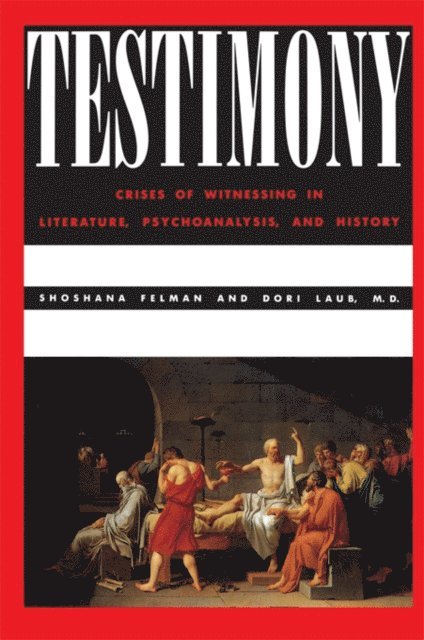
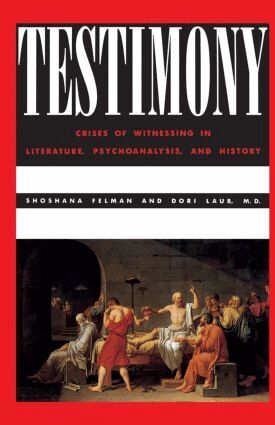
    Shoshana Felman is the Thomas E. Donnelly Professor of French and Comparative Literature at Yale University. Her books include Testimony: Crises of Witnessing in Literature, Psychoanalysis and History.

    Recensioner i media

    I have always been an unconditional admirer of Shoshana Felman's critical writing. I don't recall ever having read a flat or flabby paragraph from her pen; rather, she hones her writing so perfectly that it enables her to make the most sensitive arguments in the strongest and clearest way. Her interest has always been in the coming to expression, under various names (madness, woman, trauma…) of what she here ends up calling, after Walter Benjamin, the "expressionless." In that respect her new book, as firmly and subtly written and as absorbing as her previous ones, forms something of a "capstone" to her work. She turns here to trials, and specifically to trials that are perceived as historic; such trials, she argues, are in a complex relation to collective traumas that they partially serve to contain and even silence, but which can also emerge from invisibility in them, sometimes transforming the law itself in the process.

    Innehållsförteckning

    • Acknowledgments Introduction 1. The Storyteller's Silence: Walter Benjamin's Dilemma of Justice 2. Forms of Judicial Blindness, or the Evidence of What Cannot Be Seen: Traumatic Narratives and Legal Repetitions in the O. J. Simpson Case and in Tolstoy's The Kreutzer Sonata 3. Theaters of Justice: Arendt in Jerusalem, the Eichmann Trial, and the Redefinition of Legal Meaning in the Wake of the Holocaust 4. A Ghost in the House of Justice: Death and the Language of the Law Abbreviations Notes Index