• Fri frakt över 249 kr
  • •
  • Snabba leveranser
  • •
  • Billiga böcker
Kundservice

Du är på sajten för privatpersoner.

Företag, bibliotek eller offentlig verksamhet?

Du handlar på classic.bokus.com, där alla dina funktioner finns intakta.
Till classic.bokus.com
Bokus logotyp. Gå till startsidan.
  • Erbjudanden
  • Nyheter
  • Student
  • Topplistor
  • Barn & ungdom
  • Bokus Play
  • E-böcker
  • Pocketböcker
  • Spel & pussel

10% rabatt på allt med kod: NYSTART10 →

Sidfot

Mina sidor

    Hjälp

    • Kundservice
    • Vanliga frågor och svar
    • Frakt och leverans
    • Retur vid ångerrätt
    • Reklamera vara
    • Betalning
    • Köpvillkor
    • Allmänna villkor
    • Information om webbplatsens tillgänglighet

    Om Bokus

    • Om oss
    • Pressrum
    • För studenter
    • För företag
    • För bibliotek och offentlig verksamhet
    • För leverantörer
    • Hållbarhet

    Populärt

    • Aktuella erbjudanden
    • Presentkort
    • Studentlitteratur
    • Nya böcker
    • Topplistor
    • Signerade böcker
    • Engelska böcker

    Inspiration

    • Boktips
    • BookTok
    • Populära bokserier
    • Barnbokskaraktärer
    • Populära författare
    Logotyp för Bokus
    Följ oss på Facebook (extern länk)Följ oss på Instagram (extern länk)Följ oss på YouTube (extern länk)Följ oss på TikTok (extern länk)
    bokus @ CookiesAnpassa cookiesIntegritetspolicyKöpvillkor
    Till Citymail hemsida (extern länk)Till Budbee hemsida (extern länk)Till Postnord hemsida (extern länk)Till Schenker hemsida (extern länk)Till Early Bird hemsida (extern länk)Till Walleys hemsida (extern länk)
    1. Ekonomi och Ledarskap
    2. Industrier och branscher

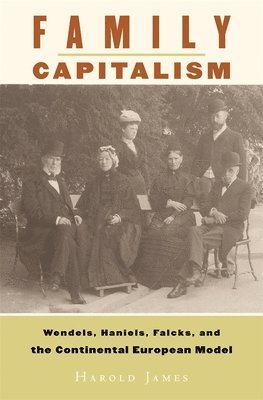
    Family Capitalism

    Wendels, Haniels, Falcks, and the Continental European Model

    AvHarold James

    Inbunden, Engelska, 2006

    469 kr

    Beställningsvara. Skickas inom 10-15 vardagar. Fri frakt över 249 kr.

    Beskrivning

    This history of three powerful family firms located in different European countries takes place over a period of more than two hundred years. The interplay and the changing social and legal arrangements of the families shaped the development of a European capitalism quite different from the Anglo-American variety.Qualifying claims by Alfred Chandler and David Landes that family firms tend to be dysfunctional, Harold James shows how and why these steel and engineering firms were successful over long periods of time. Indeed, he sees the family enterprise as particularly conducive to managing risk during periods of upheaval and uncertainty when both states and markets are disturbed. He also identifies the key roles played by women executives during such times. In Family Capitalism, James tells how "iron masters" of a classical industrial cast were succeeded by new generations who wanted to shift to information-age systems technologies, and how families and firms wrestled with social and economic changes that occasionally tore them apart. Finally, the author shows how the trajectories of the firms were influenced by political, military, economic, and social events and how these firms illuminate a European model of "relationship capitalism."

    Produktinformation

    • Utgivningsdatum:2006-03-31
    • Mått:156 x 235 x 44 mm
    • Vikt:771 g
    • Format:Inbunden
    • Språk:Engelska
    • Antal sidor:448
    • Förlag:Harvard University Press
    • ISBN:9780674021815
    • Utmärkelser:Nominated for Best Book Award in European Politics and Society 2007

    Utforska kategorier

    • Industrier och branscher inom Ekonomi och Ledarskap
    • Industrialismen och industrihistoria inom Historia och arkeologi

    Mer om författaren

    Harold James is the Claude and Lore Kelly Professor in European Studies and Professor of History and International Affairs at Princeton University.

    Recensioner i media

    In the beginning was the family firm. However, many theories of managerial capitalism have theorized the downfall of the family firm by focusing on its disadvantages. Yet families still own and control a significant proportion of even large, internationally-active corporations. By contrast, in Family Capitalism, Harold James highlights many of the strengths of family firms, particularly during periods of crisis or restructuring. At times, families offer a bedrock of trust, values, and long-term continuity. In Family Capitalism, James provides an excellent and insightful story of three major steel companies, de Wendel, Haniel, and Falck, reaching over two centuries. It contributes to the growing field of comparative history and manages to look at long-term continuities in European business development rather than confining the story to classic chronological breaks. The family firm is likely to maintain its significant presence well into the future.