• Fri frakt över 249 kr
  • •
  • Snabba leveranser
  • •
  • Billiga böcker
Kundservice

Du är på sajten för privatpersoner.

Företag, bibliotek eller offentlig verksamhet?

Du handlar på classic.bokus.com, där alla dina funktioner finns intakta.
Till classic.bokus.com
Bokus logotyp. Gå till startsidan.
  • Erbjudanden
  • Nyheter
  • Student
  • Topplistor
  • Barn & ungdom
  • Bokus Play
  • E-böcker
  • Pocketböcker
  • Spel & pussel

10% rabatt på allt med kod: NYSTART10 →

Sidfot

Mina sidor

    Hjälp

    • Kundservice
    • Vanliga frågor och svar
    • Frakt och leverans
    • Retur vid ångerrätt
    • Reklamera vara
    • Betalning
    • Köpvillkor
    • Allmänna villkor
    • Information om webbplatsens tillgänglighet

    Om Bokus

    • Om oss
    • Pressrum
    • För studenter
    • För företag
    • För bibliotek och offentlig verksamhet
    • För leverantörer
    • Hållbarhet

    Populärt

    • Aktuella erbjudanden
    • Presentkort
    • Studentlitteratur
    • Nya böcker
    • Topplistor
    • Signerade böcker
    • Engelska böcker

    Inspiration

    • Boktips
    • BookTok
    • Populära bokserier
    • Barnbokskaraktärer
    • Populära författare
    Logotyp för Bokus
    Följ oss på Facebook (extern länk)Följ oss på Instagram (extern länk)Följ oss på YouTube (extern länk)Följ oss på TikTok (extern länk)
    bokus @ CookiesAnpassa cookiesIntegritetspolicyKöpvillkor
    Till Citymail hemsida (extern länk)Till Budbee hemsida (extern länk)Till Postnord hemsida (extern länk)Till Schenker hemsida (extern länk)Till Early Bird hemsida (extern länk)Till Walleys hemsida (extern länk)
    1. Kultur
    2. Konstböcker
    3. Konsthistoria

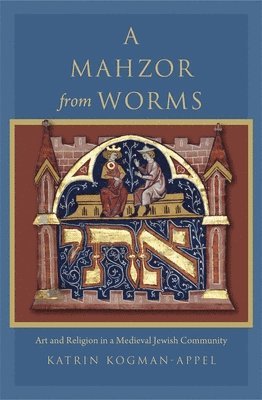
    Mahzor from Worms

    Art and Religion in a Medieval Jewish Community

    AvKatrin Kogman-Appel

    Inbunden, Engelska, 2012

    529 kr

    Beställningsvara. Skickas inom 5-8 vardagar. Fri frakt över 249 kr.

    Beskrivning

    The Leipzig Mahzor is one of the most lavish Hebrew illuminated manuscripts of all time. A prayer book used during Jewish holidays, it was produced in the Middle Ages for the Jewish community of Worms in the German Rhineland. Though Worms was a vibrant center of Judaism in the eleventh and twelfth centuries and drew celebrated rabbis, little is known about the city’s Jews in the later Middle Ages. In the pages of its famous book, Katrin Kogman-Appel discovers a portal into the life of this fourteenth-century community.Medieval mahzorim were used only for special services in the synagogue and “belonged” to the whole congregation, so their visual imagery reflected the local cultural associations and beliefs. The Leipzig Mahzor pays homage to one of Worms’s most illustrious scholars, Eleazar ben Judah. Its imagery reveals how his Ashkenazi Pietist worldview and involvement in mysticism shaped the community’s religious practice. Kogman-Appel draws attention to the Mahzor’s innovations, including its strategy for avoiding visual representation of God and its depiction of customs such as the washing of dishes before Passover, something less common in other mahzorim. In addition to decoding its iconography, Kogman-Appel approaches the manuscript as a ritual object that preserved a sense of identity and cohesion within a community facing a wide range of threats to its stability and security.This book was published with the support of the Israel Science Foundation.

    Produktinformation

    • Utgivningsdatum:2012-04-17
    • Mått:156 x 235 x 25 mm
    • Vikt:638 g
    • Format:Inbunden
    • Språk:Engelska
    • Antal sidor:308
    • Förlag:Harvard University Press
    • ISBN:9780674064546
    • Utmärkelser:Nominated for Otto Gründler Book Prize 2014

    Utforska kategorier

    • Konsthistoria inom Kultur
    • Judendom inom Filosofi och religion

    Mer om författaren

    Katrin Kogman-Appel is Evelyn Metz Memorial Research Chair in Art, Department of the Arts, at Ben-Gurion University of the Negev.

    Recensioner i media

    Katrin Kogman-Appel has established herself as perhaps the foremost expositor of medieval illuminated Hebrew manuscripts today. Her treatment of the Leipzig Mahzor demonstrates once again that she is a scholar of formidable erudition who peels away the layers of these magnificent manuscripts to reveal the rich complexity of medieval society and the important role that visual culture plays in it.