• Fri frakt över 249 kr
  • •
  • Snabba leveranser
  • •
  • Billiga böcker
Kundservice

Du är på sajten för privatpersoner.

Företag, bibliotek eller offentlig verksamhet?

Du handlar på classic.bokus.com, där alla dina funktioner finns intakta.
Till classic.bokus.com
Bokus logotyp. Gå till startsidan.
  • Erbjudanden
  • Nyheter
  • Student
  • Topplistor
  • Barn & ungdom
  • Bokus Play
  • E-böcker
  • Pocketböcker
  • Spel & pussel

10% rabatt på allt med kod NYSTART10 →

Sidfot

Mina sidor

    Hjälp

    • Kundservice
    • Vanliga frågor och svar
    • Frakt och leverans
    • Retur vid ångerrätt
    • Reklamera vara
    • Betalning
    • Köpvillkor
    • Allmänna villkor
    • Information om webbplatsens tillgänglighet

    Om Bokus

    • Om oss
    • Pressrum
    • För studenter
    • För företag
    • För bibliotek och offentlig verksamhet
    • För leverantörer
    • Hållbarhet

    Populärt

    • Aktuella erbjudanden
    • Presentkort
    • Studentlitteratur
    • Nya böcker
    • Topplistor
    • Signerade böcker
    • Engelska böcker

    Inspiration

    • Boktips
    • BookTok
    • Populära bokserier
    • Barnbokskaraktärer
    • Populära författare
    Logotyp för Bokus
    Följ oss på Facebook (extern länk)Följ oss på Instagram (extern länk)Följ oss på YouTube (extern länk)Följ oss på TikTok (extern länk)
    bokus @ CookiesAnpassa cookiesIntegritetspolicyKöpvillkor
    Till Citymail hemsida (extern länk)Till Budbee hemsida (extern länk)Till Postnord hemsida (extern länk)Till Schenker hemsida (extern länk)Till Early Bird hemsida (extern länk)Till Walleys hemsida (extern länk)
    1. Samhälle och politik
    2. Sociologi och antropologi
    3. Antropologi

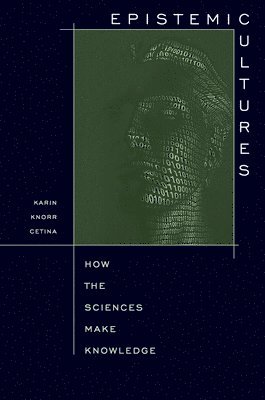
    Epistemic Cultures

    How the Sciences Make Knowledge

    AvKarin Knorr Cetina

    Häftad, Engelska, 1999

    382 kr

    Beställningsvara. Skickas inom 5-8 vardagar. Fri frakt över 249 kr.

    Beskrivning

    How does science create knowledge? Epistemic cultures, shaped by affinity, necessity, and historical coincidence, determine how we know what we know. In this book, Karin Knorr Cetina compares two of the most important and intriguing epistemic cultures of our day, those in high energy physics and molecular biology. Her work highlights the diversity of these cultures of knowing and, in its depiction of their differences--in the meaning of the empirical, the enactment of object relations, and the fashioning of social relations--challenges the accepted view of a unified science.By many accounts, contemporary Western societies are becoming "knowledge societies"--which run on expert processes and expert systems epitomized by science and structured into all areas of social life. By looking at epistemic cultures in two sample cases, this book addresses pressing questions about how such expert systems and processes work, what principles inform their cognitive and procedural orientations, and whether their organization, structures, and operations can be extended to other forms of social order.The first ethnographic study to systematically compare two different scientific laboratory cultures, this book sharpens our focus on epistemic cultures as the basis of the knowledge society.

    Produktinformation

    • Utgivningsdatum:1999-05-01
    • Mått:156 x 235 x 19 mm
    • Vikt:499 g
    • Format:Häftad
    • Språk:Engelska
    • Antal sidor:352
    • Förlag:Harvard University Press
    • ISBN:9780674258945
    • Utmärkelser:Winner of Robert K. Merton Book Award 2001

    Utforska kategorier

    • Antropologi inom Samhälle och politik
    • Filosofiska discipliner inom Filosofi och religion

    Mer om författaren

    Karin Knorr Cetina is Otto Borchert Distinguished Service Professor of Anthropology, Sociology, and Social Sciences at the University of Chicago.

    Recensioner i media

    [Karin Cetina] has studied the behavior and practices of physicists in the process of trying to acquire knowledge of the basic components of the universe, and of biologists seeking empirical knowledge of natural objects. According to Cetina, the way the two groups go about their business is fundamentally different, and this difference has something to tell us about how we know what we know...A thorough and thoughtful examination of the epistemic underpinning of a knowledge society.

    Innehållsförteckning

    • A Note on Transcription 1. Introduction 1.1. The Disunity of the Sciences 1.2. The Cultures of Knowledge Societies 1.3. Culture and Practice 1.4. The Structure of the Book 1.5. Physics Theory, and a First Look at the Field 1.6. Issues of Methodology, and More about the Field 2. What is a Laboratory? 2.1. Laboratories as Reconfigurations of Natural and Social Orders 2.2. From Laboratory to Experiment 2.3. Some Features of the Laboratory Reconsidered 3. Particle Physics and Negative Knowledge 3.1. The Analogy of the Closed Universe 3.2. A World of Signs and Secondary Appearances 3.3. The"Meaninglessness" of Measurement 3.4. The Structure of the Care of the Self 3.5. Negative Knowledge and the Liminal Approach 3.6. Moving in a Closed Universe: Unfolding, Framing, and Convoluting 4. Molecular Biology and Blind Variation 4.1. An Object-Oriented Epistemics 4.2. The Small-Science Style of Molecular Biology and the Genome Project 4.3. The Laboratory as a Two-Tier Structure 4.4."Blind" Variation and Natural Selection 4.5. The Experiential Register 4.6. Blind Variation Reconsidered 5. From Machines to Organisms: Detectors as Behavioral and Social Beings 5.1. Primitive Classifications 5.2. Detector Agency and Physiology 5.3. Detectors as Moral and Social Individuals 5.4. Live Organism or Machine? 5.5. Are There Enemies? 5.6. Physicists as Symbionts 5.7. Taxonomies of Trust 5.8. Primitive Classifications Reconsidered 6. From Organisms to Machines: Laboratories as Factories of Transgenics 6.1. A Science of Life without Nature? 6.2. Organisms as Production Sites 6.3. Cellular Machines 6.4. Industrial Production versus Natural (Re)production 6.5. Biological Machines Reconsidered 7. HEP Experiments as Post-Traditional Communitarian Structures 7.1.. Large Collaborations: A Brief History 7.2. The Erasure of the Individual as an Epistemic Subject 7.3. Management by Content 7.4. The Intersection of Management by Content and Communitarianism 7.5. Communitarian Time: Genealogical, Scheduled 8. The Multiple Ordering Frameworks of HEP Collaborations 8.1. The Birth Drama of an Experiment 8.2. Delaying the Choice, or Contests of Unfolding 8.3. Confidence Pathways and Gossip Circles 8.4. Other Ordering Frameworks 8.5. Reconfiguration Reconsidered 9. The Dual Organization of Molecular Biology Laboratories 9.1. Laboratories Structured as Individuated Units 9.2. Becoming a Laboratory Leader 9.3. The Two Levels of the Laboratory 9.4. The"Impossibility" of Cooperation in Molecular Biology 10. Toward an Understanding of Knowledge Societies: A Dialogue Notes References Index