• Fri frakt över 249 kr
  • •
  • Snabba leveranser
  • •
  • Billiga böcker
Kundservice

Du är på sajten för privatpersoner.

Företag, bibliotek eller offentlig verksamhet?

Du handlar på classic.bokus.com, där alla dina funktioner finns intakta.
Till classic.bokus.com
Bokus logotyp. Gå till startsidan.
  • Erbjudanden
  • Nyheter
  • Student
  • Topplistor
  • Barn & ungdom
  • Bokus Play
  • E-böcker
  • Pocketböcker
  • Spel & pussel

10% rabatt på allt med kod: NYSTART10 →

Sidfot

Mina sidor

    Hjälp

    • Kundservice
    • Vanliga frågor och svar
    • Frakt och leverans
    • Retur vid ångerrätt
    • Reklamera vara
    • Betalning
    • Köpvillkor
    • Allmänna villkor
    • Information om webbplatsens tillgänglighet

    Om Bokus

    • Om oss
    • Pressrum
    • För studenter
    • För företag
    • För bibliotek och offentlig verksamhet
    • För leverantörer
    • Hållbarhet

    Populärt

    • Aktuella erbjudanden
    • Presentkort
    • Studentlitteratur
    • Nya böcker
    • Topplistor
    • Signerade böcker
    • Engelska böcker

    Inspiration

    • Boktips
    • BookTok
    • Populära bokserier
    • Barnbokskaraktärer
    • Populära författare
    Logotyp för Bokus
    Följ oss på Facebook (extern länk)Följ oss på Instagram (extern länk)Följ oss på YouTube (extern länk)Följ oss på TikTok (extern länk)
    bokus @ CookiesAnpassa cookiesIntegritetspolicyKöpvillkor
    Till Citymail hemsida (extern länk)Till Budbee hemsida (extern länk)Till Postnord hemsida (extern länk)Till Schenker hemsida (extern länk)Till Early Bird hemsida (extern länk)Till Walleys hemsida (extern länk)
    1. Historia och arkeologi
    2. Historia
    3. Europas historia

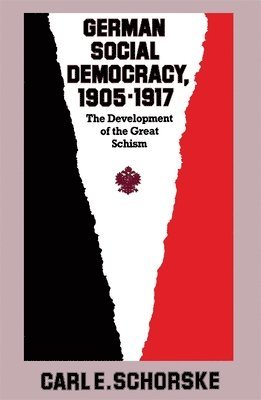
    German Social Democracy, 1905–1917

    The Development of the Great Schism

    AvCarl Emil Schorske

    Häftad, Engelska, 1983

    Del 65 i serien Harvard Historical Studies

    480 kr

    Beställningsvara. Skickas inom 10-15 vardagar. Fri frakt över 249 kr.

    Beskrivning

    No political parties of present-day Germany are separated by a wider gulf than the two parties of labor, one democratic and reformist, the other totalitarian and socialist-revolutionary. Social Democrats and Communists today face each other as bitter political enemies across the front lines of the Cold War; yet they share a common origin in the Social Democratic Party of Imperial Germany. How did they come to go separate ways? By what process did the old party break apart? How did the prewar party prepare the ground for the dissolution of the labor movement in World War I, and for the subsequent extension of Leninism into Germany? To answer these questions is the purpose of Carl Schorske’s study.

    Produktinformation

    • Utgivningsdatum:1983-01-01
    • Mått:133 x 210 x 30 mm
    • Vikt:431 g
    • Format:Häftad
    • Språk:Engelska
    • Serie:Harvard Historical Studies
    • Antal sidor:374
    • Förlag:Harvard University Press
    • ISBN:9780674351257

    Utforska kategorier

    • Europas historia inom Historia och arkeologi
    • Socialism och vänsterideologier inom Samhälle och politik

    Mer om författaren

    Carl E. Schorske was Professor of History, Princeton University.

    Recensioner i media

    A masterful study! Professor Schorske’s book combines the methodological thoroughness of a scholarly monograph with the breadth of political insight needed to investigate and explain Social Democratic history.

    Innehållsförteckning

    • PART I: THE REFORM TACTIC CHALLENGED, 1905-1907 1. Background: The Erfurt Synthesis and the Rise of Reformism. i. Toward a Revolutionary Socialist Party. ii. The Forces of Reform: The Southern Wing. iii. The Forces of Reform: The Trade-Unions. iv. Bernstein's Revisionism. v. Party Discipline and Revisionist Federalism. 2.The Impact of the Russian Revolution of 1905. i. The Intensification of Labor's Economic Struggles. ii. Restlessness in the Radical Camp. iii. The Russian Revolution, the Mass Strike, and the Trade-Unions. iv. The Battle of Jena and the Radical Victory. v. The Suffrage Crisis. vi. Mannheim: The Trade-Unions Strike Back. vii. The Radical Legacy of 1905. 3.The Elections of 1907 and the National Question. i. The Elections of 1907: The Victory of the "World-Political Idea". ii. Disunity in Defeat. iii. The Status of the National Question before 1907. iv. The Party Practitioners: Compromise with Nationalism? The International Congress: the National Question Begged. PART 2: THE CONSOLIDATION OF THE RIGHT, 1906-1909 4.The Extension of the Trade-Union Influence. i. The Fallow Years. ii. The Destruction of a Symbol. iii. Curbing the Youth Movement. iv. The Pattern of Trade-Union Conquest and Its Significance. v. The Radical Position in the Bloc Period: Kautsky's Road to Power. 5.Party Structure and Factional Power. i. Toward a Uniform Party Structure. ii. The New Bureaucracy. iii. Regional Organizations: The New Centers of Power. iv. The Party Congress: Structure and Politics. PART 3: TWO TACTICS FOR CONSTITUTIONAL REFORM,1909-1910 6. The Break-up-of the Bulow Bloc: Reformist Possibilities i. The Reich Financial Crisis and the Dissolution of the Bullow Bloc. ii. A Coalition for Reform? : The Progressives and the National Liberals. iii. Social Democracy and the Financial Reform. iv. Reformist Opportunity and the Vacillation of the Radicals. 7. The Constitutional Crisis: The Swing to the Left and the Division to the Radicals... i. The Tactic for Suffrage Reform. ii. The "Suffrage Storm" and the Division of the Radicals. iii. The Revisionist Offensive and Radical Disunity. iv. Aftermath as Magdeburg: The Triple Split. PART 4: THE DEEPENING CRISIS AND THE RECONSOLIDATION OF THE RADICALS, 1911-1914 8. The Morocco Crisis and the party Reform... i. The Morocco Crisis: Ballot Box versus Creed. ii. The Demand for the Reform of the Executive. iii. The New Executive. iv. The Deflection of Reform and the Radical Revolt. v. The Political Significance of the Reform Movement. 9. The Electoral Alliance of 1912 and the left Radical Offensive. i. The Electoral Alliance 0/ 1912. ii. Failure of the Reform Coalition: The National Liberals Move Rightward. iii. Imperialism and the "New Tactic." iv. Wormwood and Gall. 10. The Sense of Sickness and the Reconsolidation of the Radicals i. Labor on the Defensive. ii. Internal Pressures on the Trade-Unions. iii. Against Imperialism or for Reform? iv. The Doldrums. v. What Is to Be Done? vi. The Final Alignment: Reunion on the Left. vii. Toward the Independent Social Democratic Party. PART 5: THE BREAKDOWN 11. War and Schism i. August Fourth. ii. The New Position of the Labor Leaders. iii. The New Discipline and the Re-Emergence of the Opposition. iv. The Division of the Opposition Leadership; the Annexation Question. v. Economic Hardships and Political Persecution. vi. The Schism Consummated. Index