• Fri frakt över 249 kr
  • •
  • Snabba leveranser
  • •
  • Billiga böcker
Kundservice

Du är på sajten för privatpersoner.

Företag, bibliotek eller offentlig verksamhet?

Du handlar på classic.bokus.com, där alla dina funktioner finns intakta.
Till classic.bokus.com
Bokus logotyp. Gå till startsidan.
  • Erbjudanden
  • Nyheter
  • Student
  • Topplistor
  • Barn & ungdom
  • Bokus Play
  • E-böcker
  • Pocketböcker
  • Spel & pussel

10% rabatt på allt med kod NYSTART10 →

Sidfot

Mina sidor

    Hjälp

    • Kundservice
    • Vanliga frågor och svar
    • Frakt och leverans
    • Retur vid ångerrätt
    • Reklamera vara
    • Betalning
    • Köpvillkor
    • Allmänna villkor
    • Information om webbplatsens tillgänglighet

    Om Bokus

    • Om oss
    • Pressrum
    • För studenter
    • För företag
    • För bibliotek och offentlig verksamhet
    • För leverantörer
    • Hållbarhet

    Populärt

    • Aktuella erbjudanden
    • Presentkort
    • Studentlitteratur
    • Nya böcker
    • Topplistor
    • Signerade böcker
    • Engelska böcker

    Inspiration

    • Boktips
    • BookTok
    • Populära bokserier
    • Barnbokskaraktärer
    • Populära författare
    Logotyp för Bokus
    Följ oss på Facebook (extern länk)Följ oss på Instagram (extern länk)Följ oss på YouTube (extern länk)Följ oss på TikTok (extern länk)
    bokus @ CookiesAnpassa cookiesIntegritetspolicyKöpvillkor
    Till Citymail hemsida (extern länk)Till Budbee hemsida (extern länk)Till Postnord hemsida (extern länk)Till Schenker hemsida (extern länk)Till Early Bird hemsida (extern länk)Till Walleys hemsida (extern länk)
    1. Filosofi och religion
    2. Filosofi
    3. Filosofiska discipliner

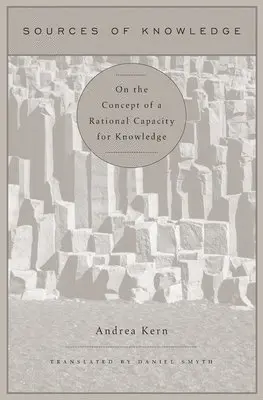
    Sources of Knowledge

    On the Concept of a Rational Capacity for Knowledge

    AvAndrea Kern

    Inbunden, Engelska, 2017

    333 kr

    Beställningsvara. Skickas inom 5-8 vardagar. Fri frakt över 249 kr.

    Beskrivning

    How can human beings, who are liable to error, possess knowledge? The skeptic finds this question impossible to answer. If we can err, then it seems the grounds on which we believe do not rule out that we are wrong. Most contemporary epistemologists agree with the skeptic that we can never believe on grounds that exclude error. Sources of Knowledge moves beyond this predicament by demonstrating that some major problems of contemporary philosophy have their roots in the lack of a metaphysical category that is fundamental to our self-understanding: the category of a rational capacity for knowledge.Andrea Kern argues that we can disarm skeptical doubt by conceiving knowledge as an act of a ratio­nal capacity. This enables us to appreciate human fallibility without falling into skepticism, for it allows us to understand how we can form beliefs about the world on grounds that exclude error. Knowledge is a fundamental capacity of the human mind. Human beings, as such, are knowers. In this way, Sources of Knowledge seeks to understand knowledge from within our self-understanding as knowers. It develops a metaphysics of the human mind as existing through knowledge of itself, which knowledge—as the human being is finite—takes the form of a capacity.Regaining the concept of a rational capacity for knowledge, Kern makes a powerful and original contribution to philosophy that reinvigorates the tradition of Aristotle and Kant—thinkers whose relevance for contemporary epistemology has yet to be fully appreciated.

    Produktinformation

    • Utgivningsdatum:2017-01-02
    • Mått:156 x 235 x 27 mm
    • Vikt:586 g
    • Format:Inbunden
    • Språk:Engelska, Tyska
    • Antal sidor:304
    • Förlag:Harvard University Press
    • ISBN:9780674416116
    • Översättare:Daniel Smyth

    Utforska kategorier

    • Filosofiska discipliner inom Filosofi och religion

    Mer om författaren

    Andrea Kern is Professor of Philosophy in the Department of Philosophy at Universität Leipzig.

    Recensioner i media

    This is an excellent book. It is lucid, forceful, and rich in thought-provoking ideas. I believe it is one of the most interesting and potentially significant contributions to the field of epistemology of the last decade. Given the richness of its discussion, however, Kern’s book will be interesting not just to professional epistemologists, but to a wide philosophical readership.