• Fri frakt över 249 kr
  • •
  • Snabba leveranser
  • •
  • Billiga böcker
Kundservice

Du är på sajten för privatpersoner.

Företag, bibliotek eller offentlig verksamhet?

Du handlar på classic.bokus.com, där alla dina funktioner finns intakta.
Till classic.bokus.com
Bokus logotyp. Gå till startsidan.
  • Erbjudanden
  • Nyheter
  • Student
  • Topplistor
  • Barn & ungdom
  • Bokus Play
  • E-böcker
  • Pocketböcker
  • Spel & pussel

10% studentrabatt med kod TERM26

Sidfot

Mina sidor

    Hjälp

    • Kundservice
    • Vanliga frågor och svar
    • Frakt och leverans
    • Retur vid ångerrätt
    • Reklamera vara
    • Betalning
    • Köpvillkor
    • Allmänna villkor
    • Information om webbplatsens tillgänglighet

    Om Bokus

    • Om oss
    • Pressrum
    • För studenter
    • För företag
    • För bibliotek och offentlig verksamhet
    • För leverantörer
    • Hållbarhet

    Populärt

    • Aktuella erbjudanden
    • Presentkort
    • Studentlitteratur
    • Nya böcker
    • Topplistor
    • Signerade böcker
    • Engelska böcker

    Inspiration

    • Boktips
    • BookTok
    • Populära bokserier
    • Barnbokskaraktärer
    • Populära författare
    Logotyp för Bokus
    Följ oss på Facebook (extern länk)Följ oss på Instagram (extern länk)Följ oss på YouTube (extern länk)Följ oss på TikTok (extern länk)
    bokus @ CookiesAnpassa cookiesIntegritetspolicyKöpvillkor
    Till Citymail hemsida (extern länk)Till Budbee hemsida (extern länk)Till Postnord hemsida (extern länk)Till Schenker hemsida (extern länk)Till Early Bird hemsida (extern länk)Till Walleys hemsida (extern länk)
    1. Naturvetenskap och teknik
    2. Matematik och naturvetenskap
    3. Biologi
    4. Däggdjur
    • -10% student

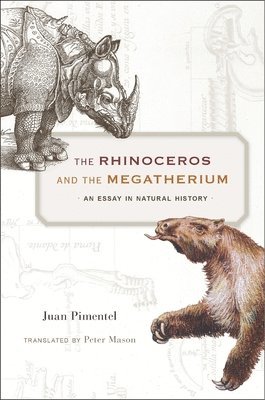
    Rhinoceros and the Megatherium

    An Essay in Natural History

    AvJuan Pimentel

    Inbunden, Engelska, 2017

    252 kr

    Beställningsvara. Skickas inom 5-8 vardagar. Fri frakt över 249 kr.

    Beskrivning

    One animal left India in 1515, caged in the hold of a Portuguese ship, and sailed around Africa to Lisbon—the first of its species to see Europe for more than a thousand years. The other crossed the Atlantic from South America to Madrid in 1789, its huge fossilized bones packed in crates, its species unknown. How did Europeans three centuries apart respond to these two mysterious beasts—a rhinoceros, known only from ancient texts, and a nameless monster? As Juan Pimentel explains, the reactions reflect deep intellectual changes but also the enduring power of image and imagination to shape our understanding of the natural world.We know the rhinoceros today as “Dürer’s Rhinoceros,” after the German artist’s iconic woodcut. His portrait was inaccurate—Dürer never saw the beast and relied on conjecture, aided by a sketch from Lisbon. But the influence of his extraordinary work reflected a steady move away from ancient authority to the dissemination in print of new ideas and images. By the time the megatherium arrived in Spain, that movement had transformed science. When published drawings found their way to Paris, the great zoologist Georges Cuvier correctly deduced that the massive bones must have belonged to an extinct giant sloth. It was a pivotal moment in the discovery of the prehistoric world.The Rhinoceros and the Megatherium offers a penetrating account of two remarkable episodes in the cultural history of science and is itself a vivid example of the scientific imagination at work.

    Produktinformation

    • Utgivningsdatum:2017-01-09
    • Mått:147 x 211 x 30 mm
    • Vikt:568 g
    • Format:Inbunden
    • Språk:Engelska
    • Antal sidor:368
    • Förlag:Harvard University Press
    • ISBN:9780674737129
    • Översättare:Peter Mason

    Ingår i kampanjer

    -10% student

    Utforska kategorier

    • Däggdjur inom Naturvetenskap och teknik
    • Däggdjur inom Djur och Natur
    • Naturvetenskapens historia inom Naturvetenskap och teknik

    Mer om författaren

    Juan Pimentel is Associate Professor of History of Science, Institute of History (CSIC), Madrid.

    Recensioner i media

    Sophisticated and provocative, this is an outstanding study of the possible ways of interpreting unknown beings through an examination of their multifaceted and presumed pasts, shedding light on the changing understanding of scientific forms over 300 years.