• Fri frakt över 249 kr
  • •
  • Snabba leveranser
  • •
  • Billiga böcker
Kundservice

Du är på sajten för privatpersoner.

Företag, bibliotek eller offentlig verksamhet?

Du handlar på classic.bokus.com, där alla dina funktioner finns intakta.
Till classic.bokus.com
Bokus logotyp. Gå till startsidan.
  • Erbjudanden
  • Nyheter
  • Student
  • Topplistor
  • Barn & ungdom
  • Bokus Play
  • E-böcker
  • Pocketböcker
  • Spel & pussel

Må bättre, för mindre! Upp till 50% rabatt på hälsoböcker

Sidfot

Mina sidor

    Hjälp

    • Kundservice
    • Vanliga frågor och svar
    • Frakt och leverans
    • Retur vid ångerrätt
    • Reklamera vara
    • Betalning
    • Köpvillkor
    • Allmänna villkor
    • Information om webbplatsens tillgänglighet

    Om Bokus

    • Om oss
    • Pressrum
    • För studenter
    • För företag
    • För bibliotek och offentlig verksamhet
    • För leverantörer
    • Hållbarhet

    Populärt

    • Aktuella erbjudanden
    • Presentkort
    • Studentlitteratur
    • Nya böcker
    • Topplistor
    • Signerade böcker
    • Engelska böcker

    Inspiration

    • Boktips
    • BookTok
    • Populära bokserier
    • Barnbokskaraktärer
    • Populära författare
    Logotyp för Bokus
    Följ oss på Facebook (extern länk)Följ oss på Instagram (extern länk)Följ oss på YouTube (extern länk)Följ oss på TikTok (extern länk)
    bokus @ CookiesAnpassa cookiesIntegritetspolicyKöpvillkor
    Till Citymail hemsida (extern länk)Till Budbee hemsida (extern länk)Till Postnord hemsida (extern länk)Till Schenker hemsida (extern länk)Till Early Bird hemsida (extern länk)Till Walleys hemsida (extern länk)
    1. Samhälle och politik
    2. Samhälle och kultur
    3. Kultur och medier
    4. Kulturvetenskap

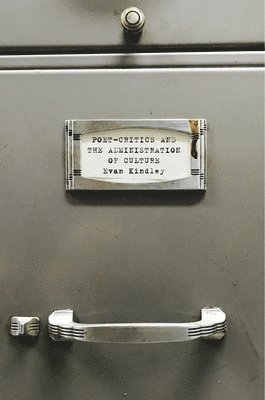
    Poet-Critics and the Administration of Culture

    AvEvan Kindley

    Inbunden, Engelska, 2017

    588 kr

    Beställningsvara. Skickas inom 10-15 vardagar. Fri frakt över 249 kr.

    Beskrivning

    The period between 1920 and 1950 saw an epochal shift in the American cultural economy. The shocks of the 1929 market crash and the Second World War decimated much of the support for high modernist literature, and writers who had relied on wealthy benefactors were forced to find new protectors from the depredations of the free market. Private foundations, universities, and government organizations began to fund the arts, and in this environment writers were increasingly obliged to become critics, elucidating and justifying their work to an audience of elite administrators.In Poet-Critics and the Administration of Culture, Evan Kindley recognizes the major role modernist poet-critics played in the transition from aristocratic patronage to technocratic cultural administration. Poet-critics developed extensive ties to a network of bureaucratic institutions and established dual artistic and intellectual identities to appeal to the kind of audiences and entities that might support their work. Kindley focuses on Anglo-American poet-critics including T. S. Eliot, Marianne Moore, W. H. Auden, Archibald MacLeish, Sterling A. Brown, and R. P. Blackmur. These artists grappled with the task of being “village explainers” (as Gertrude Stein described Ezra Pound) and legitimizing literature for public funding and consumption.Modernism, Kindley shows, created a different form of labor for writers to perform and gave them an unprecedented say over the administration of contemporary culture. The consequences for our understanding of poetry and its place in our culture are still felt widely today.

    Produktinformation

    • Utgivningsdatum:2017-09-18
    • Mått:156 x 235 x 20 mm
    • Vikt:406 g
    • Format:Inbunden
    • Språk:Engelska
    • Antal sidor:176
    • Förlag:Harvard University Press
    • ISBN:9780674980075

    Utforska kategorier

    • Kulturvetenskap inom Samhälle och politik
    • Litteraturvetenskap inom Skönlitteratur

    Mer om författaren

    Evan Kindley is Visiting Assistant Professor of Literature at Claremont McKenna College.

    Recensioner i media

    With the stories of a handful of prominent modernist poet-critics, [Kindley] traces the shift in culture from the private stewardship of artists to their employment by academic institutions between the 1920s and ’50s…What Kindley’s excellent and thorough history shows us is that, more than anything else, writers have found a way to navigate the gap between the cultural importance of their work and a market that does not wish to fund it. Kindley has an innate understanding of the uncomfortable relationships between artists and the power structures that simultaneously bolster and diminish their projects. For all their individual difficulties and peculiarities, the historical figures who feature prominently in this story are treated, rightly, as people who wanted what was best for their art. Poet-Critics and the Administration of Culture reminds us that the systems that support writers did not change by themselves. Writers changed them, and if they see fit, maybe, they could change them again.