• Fri frakt över 249 kr
  • •
  • Snabba leveranser
  • •
  • Billiga böcker
Kundservice

Du är på sajten för privatpersoner.

Företag, bibliotek eller offentlig verksamhet?

Du handlar på classic.bokus.com, där alla dina funktioner finns intakta.
Till classic.bokus.com
Bokus logotyp. Gå till startsidan.
  • Erbjudanden
  • Student
  • Topplistor
  • Barn & ungdom
  • Bokus Play
  • E-böcker
  • Ljudböcker
  • Pocketböcker
  • Spel och pussel

5% studentrabatt – använd koden KURSBOK27 →

Sidfot

Mina sidor

    Hjälp

    • Kundservice
    • Vanliga frågor och svar
    • Frakt och leverans
    • Retur vid ångerrätt
    • Reklamera vara
    • Betalning
    • Köpvillkor
    • Allmänna villkor
    • Information om webbplatsens tillgänglighet

    Om Bokus

    • Om oss
    • Pressrum
    • För studenter
    • För företag
    • För bibliotek och offentlig verksamhet
    • För leverantörer
    • Hållbarhet

    Populärt

    • Aktuella erbjudanden
    • Presentkort
    • Studentlitteratur
    • Nya böcker
    • Topplistor
    • Signerade böcker
    • Engelska böcker

    Inspiration

    • Boktips
    • BookTok
    • Barnbokskaraktärer
    • Populära författare
    Logotyp för Bokus
    Följ oss på Facebook (extern länk)Följ oss på Instagram (extern länk)Följ oss på YouTube (extern länk)Följ oss på TikTok (extern länk)
    bokus @ CookiesAnpassa cookiesIntegritetspolicyKöpvillkor
    Till Citymail hemsida (extern länk)Till Budbee hemsida (extern länk)Till Postnord hemsida (extern länk)Till Schenker hemsida (extern länk)Till Early Bird hemsida (extern länk)Till Walleys hemsida (extern länk)
    1. Skönlitteratur
    2. Litteraturvetenskap
    3. Litteraturvetenskap

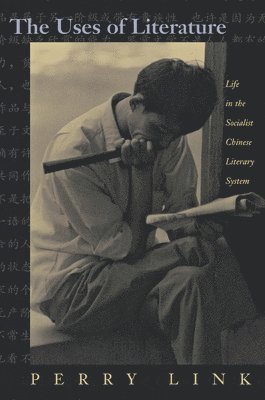
    Uses of Literature

    Life in the Socialist Chinese Literary System

    AvPerry Link

    Häftad, Engelska, 2000

    682 kr

    Beställningsvara. Skickas inom 5-8 vardagar. Fri frakt över 249 kr.

    Fler format och utgåvor

    E-bok

    953 kr

    Beskrivning

    Why do people in socialist China read and write literary works? Earlier studies in Western Sinology have approached Chinese texts from the socialist era as portraits of society, as keys to the tug-of-war of dissent, or, more recently, as pursuit of "pure art." The Uses of Literature looks broadly and empirically at these and many other "uses" of literature from the points of view of authors, editors, political authorities, and several kinds of readers. Perry Link, author of Evening Chats in Beijing, considers texts ranging from elite "misty" poetry to underground hand-copied volumes (shouchauben) and shows in concrete detail how people who were involved with literature sought to teach, learn, enjoy, explore, debate, lead, control, and resist. Using the late 1970s and early 1980s as an entree to the workings of China's "socialist literary system," the author shows how that system held sway from 1950 until around 1990, when an encroaching market economy gradually but fundamentally changed it. In addition to providing a definitive overview of how the socialist Chinese literary system worked, Link offers comparisons to the similar system in the Soviet Union.In the final chapter, the book seeks to explain how the word "good" was used and understood when applied to literary works in such systems. Combining aspects of cultural and literary studies, The Uses of Literature will reward anyone interested in the literature of modern China or how creativity is affected by a "socialist literary system."

    Produktinformation

    • Utgivningsdatum:2000-03-05
    • Mått:197 x 254 x 21 mm
    • Vikt:549 g
    • Format:Häftad
    • Språk:Engelska
    • Antal sidor:386
    • Förlag:Princeton University Press
    • ISBN:9780691001982
    • Utmärkelser:Short-listed for Choice Magazine Outstanding Reference/Academic Book Award 2000

    Utforska kategorier

    • Litteraturvetenskap inom Skönlitteratur
    • Litteraturteori inom Skönlitteratur
    • Socialism och vänsterideologier inom Samhälle och politik

    Mer om författaren

    Perry Link is Professor of East Asian Studies at Princeton University, where he teaches modern Chinese language, literature, and cultural history. His books include Mandarin Ducks and Butterflies and Evening Chats in Beijing.

    Recensioner i media

    One of Choice's Outstanding Academic Titles for 2000 "The definitive social and intellectual history of China's early post-Mao socialist literary system ... This book doubles as the most revealing, systematic, and readable guide yet to Chinese literary institutions, thought, tastes, reader-ruler relations for the whole communist period."--Choice "In his new, densely packed, and fascinating book, Professor Link has moved from describing the plight of Chinese intellectuals to an account of what books and publications the Chinese read and why...The members of the Chinese reading public are hardly known in the West. In The Uses of Literature, they are perceptively described ... Professor Link provides the best description and analysis I have read of how literary controls have been imposed during the last five decades."--Jonathan Mirsky, New York Review of Books "Link is too astute to be a true believer of any literary ideology, East or West... The historical background he provides, however, will enable all critics of contemporary Chinese literature to do their work with far greater accuracy and insight."--Timothy C. Wong, World Literature Today "The Uses of Literature will prove a wonderfully useful book, not only to those of us in the field, who will relish the fine detail and strong description, but to the more general audience who seeks to understand the complexities of the socialist literary system."--Kirk A. Denton, Harvard Journal of Asiatic Studies

    Innehållsförteckning

    • ACKNOWLEDGMENTS vii A NOTE ON DOCUMENTATION ix INTRODUCTION 3 CHAPTER ONE Historical Setting 13 Warming, 1976-1979 15 Cooling, 1980-1983 22 Perspectives 36 CHAPTER TWO The Mechanics of Literary Control 56 A Spectrum of Newpoints 56 What Was Controlled? 59 The Literary Control System 63 The Mechanics of Relaxation 68 The Mechanics of Tightening 81 Soviet Comparisons 97 CHAPTER THREE Writers 104 Tradition of Responsibility 104 The Modern Crisis and the Idea of a "Path"106 Establishing National Guidelines 108 Effects of the Anti-Rightist Campaign 110 Maoist Utopianism in Command 113 Kinds and Groups of Writers 116 The Writers' Association 118 Generational Differences 122 Livelihood 129 Dissent 138 Purposes 142 CHAPTER FOUR Media and Market 167 Distribution: Official and Public 167 Distribution: Restricted, Semiofficial, and Unofficial 183 Related Media: Stage, Film, Radio, and Television 198 CHAPTER FIVE Readers: The Popular Level 210 Readership (Audience) Groups 212 Popular Entertainment 220 CHAPTER SIX Readers: Socially Engaged Level 249 Intrusive Politics 254 Special Privilege and Abuse of Power 258 Pervasive Corruption 260 Styles of Bureaucratism 263 The Need for Rule of Law 270 The Problem of Truth 272 The Place of Romance 278 CHAPTER SEVEN The Uses of Literature 284 The Party and Its "Engineering" 286 Problems with Engineering 289 Retreat ftom Engineering 294 Secondary Uses of Engineering 296 The Variety of Other Uses 300 Transcending "Uses" 319 Use and Quality 322 SELECT GLOSSARY OF CHINESE CHARACTERS 333 BIBLIOGRAPHY OF WORKS CITED IN THE NOTES 339 INDEX 369