• Fri frakt över 249 kr
  • •
  • Snabba leveranser
  • •
  • Billiga böcker
Kundservice

Du är på sajten för privatpersoner.

Företag, bibliotek eller offentlig verksamhet?

Du handlar på classic.bokus.com, där alla dina funktioner finns intakta.
Till classic.bokus.com
Bokus logotyp. Gå till startsidan.
  • Erbjudanden
  • Nyheter
  • Student
  • Topplistor
  • Barn & ungdom
  • Bokus Play
  • E-böcker
  • Pocketböcker
  • Spel & pussel

10% rabatt på allt med kod NYSTART10 →

Sidfot

Mina sidor

    Hjälp

    • Kundservice
    • Vanliga frågor och svar
    • Frakt och leverans
    • Retur vid ångerrätt
    • Reklamera vara
    • Betalning
    • Köpvillkor
    • Allmänna villkor
    • Information om webbplatsens tillgänglighet

    Om Bokus

    • Om oss
    • Pressrum
    • För studenter
    • För företag
    • För bibliotek och offentlig verksamhet
    • För leverantörer
    • Hållbarhet

    Populärt

    • Aktuella erbjudanden
    • Presentkort
    • Studentlitteratur
    • Nya böcker
    • Topplistor
    • Signerade böcker
    • Engelska böcker

    Inspiration

    • Boktips
    • BookTok
    • Populära bokserier
    • Barnbokskaraktärer
    • Populära författare
    Logotyp för Bokus
    Följ oss på Facebook (extern länk)Följ oss på Instagram (extern länk)Följ oss på YouTube (extern länk)Följ oss på TikTok (extern länk)
    bokus @ CookiesAnpassa cookiesIntegritetspolicyKöpvillkor
    Till Citymail hemsida (extern länk)Till Budbee hemsida (extern länk)Till Postnord hemsida (extern länk)Till Schenker hemsida (extern länk)Till Early Bird hemsida (extern länk)Till Walleys hemsida (extern länk)
    1. Ekonomi och Ledarskap
    2. Nationalekonomi
    3. Mikroekonomi

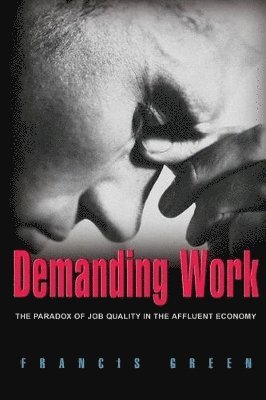
    Demanding Work

    The Paradox of Job Quality in the Affluent Economy

    AvFrancis Green

    Häftad, Engelska, 2007

    1 058 kr

    Beställningsvara. Skickas inom 3-6 vardagar. Fri frakt över 249 kr.

    Fler format och utgåvor

    E-bok

    803 kr

    Beskrivning

    Since the early 1980s, a vast number of jobs have been created in the affluent economies of the industrialized world. Many workers are doing more skilled and fulfilling jobs, and getting paid more for their trouble. Yet it is often alleged that the quality of work life has deteriorated, with a substantial and rising proportion of jobs providing low wages and little security, or requiring unusually hard and stressful effort. In this unique and authoritative formal account of changing job quality, economist Francis Green highlights contrasting trends, using quantitative indicators drawn from public opinion surveys and administrative data. In most affluent countries average pay levels have risen along with economic growth, a major exception being the United States. Skill requirements have increased, potentially meaning a more fulfilling time at work. Set against these beneficial trends, however, are increases in inequality, a strong intensification of work effort, diminished job satisfaction, and less employee influence over daily work tasks.Using an interdisciplinary approach, Demanding Work shows how aspects of job quality are related, and how changes in the quality of work life stem from technological change and transformations in the politico-economic environment. The book concludes by discussing what individuals, firms, unions, and governments can do to counter declining job quality.

    Produktinformation

    • Utgivningsdatum:2007-08-12
    • Mått:152 x 235 x 15 mm
    • Vikt:376 g
    • Format:Häftad
    • Språk:Engelska
    • Antal sidor:240
    • Förlag:Princeton University Press
    • ISBN:9780691134413

    Utforska kategorier

    • Mikroekonomi inom Ekonomi och Ledarskap
    • Sociologi inom Samhälle och politik

    Mer om författaren

    Francis Green, Professor of Economics at the University of Kent in Canterbury, England, is the coauthor of "Education for Training and Development in East Asia" and "Education, Training, and the Global Economy", and the coauthor or editor of nine other books. He is an editor of the "British Journal of Industrial Relations", and he provides periodic expert advice to the government of the United Kingdom, to the European Commission, and to the Organisation for Economic Cooperation and Development.

    Recensioner i media

    "A reliable account of the extent to which different key facets of work life are changing."--Journal of Economic Literature "[A]rguably the best overall account available anywhere of the circumstances of jobs and workers across the developed world... It is an important read for anyone concerned about the state of working people around the world as well as the future of modern economies."--Peter Capelli, British Journal of Industrial Relations "It is refreshing to see an economist incorporating other social scientist approaches to work, and draw broader conclusions about job quality... [T]his is a well researched, and thought provoking read."--John Neugebauer, Economic Issues

    Innehållsförteckning

    • List of Illustrations xi Preface: The Quest for "More and Better Jobs" xv Acknowledgments xxi Abbreviations xxiii Chapter One: Assessing Job Quality in the Affluent Economy 1 The Paradox of Job Quality at the Millennium 1 Revealing a History of the Present 3 The Changing World and the Everyday Workplace 5 What Makes a Good Job? 8 An Interdisciplinary Perspective on Job Quality 13 From Quality of Work Life to "Quality in Work"? 19 How to Measure a Good Job: Surveys of the Quality of Work Life 22 Chapter Two: The Quality of Work Life in the "Knowledge Economy" 24 An Optimistic Outlook 24 Theories of the Changing Demand for Skill 26 The Concept and Measurement of Skill 28 The Rising Level of Skill 29 Skills Polarization? 35 Skill, Technology, and Work Organization 37 The Skills Balance 40 Conclusion: A Mixed Verdict 42 Chapter Three: Late Twentieth-Century Trends in Work Effort 44 Working Hours, Work Effort, and the Quality of Work Life 44 The Concept and Measurement of Work Effort 47 Work Intensification in Britain 50 Work Intensification in Europe, Australia, and the United States 58 Any Objections? 61 Conclusion: A Summary of Effort Trends 64 Chapter Four: Accounting for Work Intensification 66 The Paradox of Work Intensification in the Affluent Economy 66 The Supply of Effort 67 "Amber Lights" and Effort-Biased Technological Change 69 Big Brother 77 The Changing Balance of Power 78 The Stick, the Carrot, and the Smooth Sell 81 Conclusion: The Role of Technological Change 84 Appendix: Multivariate Analyses 86 Chapter Five: Workers' Discretion 94 The Importance of Influence 94 The Workers' Voice 98 Theory about How Discretion Is Changing 99 Trends in Discretion 102 Conclusion: An Incomplete Account 107 Chapter Six: The Wages of Nations 111 Wages and the Fairness of Wages 111 The Growth of Average Wages 112 The Fairness of Wages 119 Conclusion: Alright for Some 123 Chapter Seven: Workers' Risk 126 Is This an Age of Uncertainty in the Workplace? 126 The Concept and Measurement of Job Insecurity 130 Workers' Perceptions of the Trend and Distribution of Job Risk 131 Objective Proxies for Risk 142 Conclusion: Risk and the Quality of Work Life 146 Chapter Eight: Workers' Well-Being 150 A Question of Well-Being 150 A Digression on the Notion of Subjective Well-Being 151 A Picture of the Changing Well-Being of Workers in the Industrialized World 153 Well-Being and the Quality of Jobs 160 Conclusion: The Quality of Work Life Is Strained 166 Appendix: Multivariate Analyses 168 Chapter Nine: Summary and Implications for Policy on the Quality of Work Life 170 The Rewards and Demands of Work in the Affluent Economy 170 Policy Implications 178 Data Set Appendix 185 Notes 193 References 203 Index of Names 219 General Index 223