• Fri frakt över 249 kr
  • •
  • Snabba leveranser
  • •
  • Billiga böcker
Kundservice

Du är på sajten för privatpersoner.

Företag, bibliotek eller offentlig verksamhet?

Du handlar på classic.bokus.com, där alla dina funktioner finns intakta.
Till classic.bokus.com
Bokus logotyp. Gå till startsidan.
  • Erbjudanden
  • Nyheter
  • Student
  • Topplistor
  • Barn & ungdom
  • Bokus Play
  • E-böcker
  • Pocketböcker
  • Spel & pussel

10% rabatt på allt med kod NYSTART10 →

Sidfot

Mina sidor

    Hjälp

    • Kundservice
    • Vanliga frågor och svar
    • Frakt och leverans
    • Retur vid ångerrätt
    • Reklamera vara
    • Betalning
    • Köpvillkor
    • Allmänna villkor
    • Information om webbplatsens tillgänglighet

    Om Bokus

    • Om oss
    • Pressrum
    • För studenter
    • För företag
    • För bibliotek och offentlig verksamhet
    • För leverantörer
    • Hållbarhet

    Populärt

    • Aktuella erbjudanden
    • Presentkort
    • Studentlitteratur
    • Nya böcker
    • Topplistor
    • Signerade böcker
    • Engelska böcker

    Inspiration

    • Boktips
    • BookTok
    • Populära bokserier
    • Barnbokskaraktärer
    • Populära författare
    Logotyp för Bokus
    Följ oss på Facebook (extern länk)Följ oss på Instagram (extern länk)Följ oss på YouTube (extern länk)Följ oss på TikTok (extern länk)
    bokus @ CookiesAnpassa cookiesIntegritetspolicyKöpvillkor
    Till Citymail hemsida (extern länk)Till Budbee hemsida (extern länk)Till Postnord hemsida (extern länk)Till Schenker hemsida (extern länk)Till Early Bird hemsida (extern länk)Till Walleys hemsida (extern länk)
    1. Historia och arkeologi
    2. Historia
    3. Europas historia

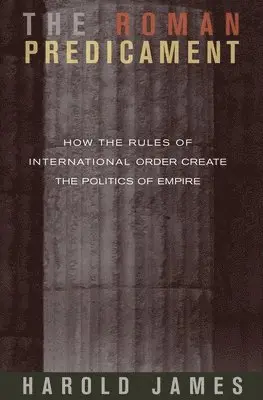
    Roman Predicament

    How the Rules of International Order Create the Politics of Empire

    AvHarold James

    Häftad, Engelska, 2008

    351 kr

    Beställningsvara. Skickas inom 5-8 vardagar. Fri frakt över 249 kr.

    Fler format och utgåvor

    E-bok

    485 kr

    Beskrivning

    Modern America owes the Roman Empire for more than gladiator movies and the architecture of the nation's Capitol. It can also thank the ancient republic for some helpful lessons in globalization. So argues economic historian Harold James in this masterful work of intellectual history. The book addresses what James terms "the Roman dilemma"--the paradoxical notion that while global society depends on a system of rules for building peace and prosperity, this system inevitably leads to domestic clashes, international rivalry, and even wars. As it did in ancient Rome, James argues, a rule-based world order eventually subverts and destroys itself, creating the need for imperial action. The result is a continuous fluctuation between pacification and the breakdown of domestic order. James summons this argument, first put forth more than two centuries ago in Adam Smith's Wealth of Nations and Edward Gibbon's Decline and Fall of the Roman Empire, to put current events into perspective. The world now finds itself staggering between a set of internationally negotiated trading rules and exchange--rate regimes, and the enforcement practiced by a sometimes-imperial America.These two forces--liberal international order and empire--will one day feed on each other to create a shakeup in global relations, James predicts. To reinforce his point, he invokes the familiar bon mot once applied to the British Empire: "When Britain could not rule the waves, it waived the rules." Despite the pessimistic prognostications of Smith and Gibbon, who saw no way out of this dilemma, James ends his book on a less depressing note. He includes a chapter on one possible way in which the world could resolve the Roman Predicament--by opting for a global system based on values as opposed to rules.

    Produktinformation

    • Utgivningsdatum:2008-03-16
    • Mått:152 x 235 x 14 mm
    • Vikt:281 g
    • Format:Häftad
    • Språk:Engelska
    • Antal sidor:176
    • Förlag:Princeton University Press
    • ISBN:9780691136356

    Utforska kategorier

    • Europas historia inom Historia och arkeologi
    • Forntidens historia inom Historia och arkeologi

    Mer om författaren

    Harold James is Professor of History and International Affairs at Princeton University. His books include "A German Identity, International Monetary Cooperation since Bretton Woods," and "The End of Globalization: Lessons from the Great Depression".

    Recensioner i media

    "[A] brilliant essay."--Robert Skidelsky, New York Review of Books "Starting from an analogy with Rome, James describes the mounting domestic tensions that increasingly threaten the global system and an interconnected world... The greater challenge to the international order may lie in the tensions within, rather than between, states, as James suggests... Like Rome ... the American-led global order faces problems created primarily by its own internal dynamics. What James calls the 'Roman dilemma' arises from the fact that the way in which peaceful commerce produces a stable, prosperous and integrated global order also creates undercurrents of conflict. A vicious circle thus leads the liberal, commercial world order to subvert and destroy itself."--William Anthony Hay, The National Interest "James writes with care and nuance, rarely straying into sensationalism or political posturing... [A]bsorbing in its elaborate detail."--Jakub J. Grygiel, Claremont Review of Books "There have been rather too many books recently seeking lessons and analogies from imperial history in order to comprehend the contemporary global order and assess its viability... [The Roman Predicament] is ... far better than most because Harold James brings to it a rare combination of insight into both the history of global finance and trade and the history of modern Europe."--Dominic Lieven, American Historical Review "James conveys a genuine analytical desire to understand the current American preponderance of power, and he grounds hi analysis in thoughtful historical parallels."--Timothy J. Lomperis, Historian "If only we did teach and learn from history, Harold James's outstanding ... book would be at the center of our current political campaign, because we are faced with the Roman Predicament of which he writes."--BrothersJudd.com

    Innehållsförteckning

    • Acknowledgments vii Introduction 1 Chapter One: The Model of Decline and Fall 6 Chapter Two: Mercury and Mars 24 Chapter Three: The Questioning of Rules in an Obscure and Irregular System 39 Chapter Four: Can It Last? 71 Chapter Five: The Victory of Mars 86 Chapter Six: Terminus: Beyond the Fringe 99 Chapter Seven: The Holy Roman Empire and the Roman Empire 118 Conclusion 141 Notes 151 Index 163