• Fri frakt över 249 kr
  • •
  • Snabba leveranser
  • •
  • Billiga böcker
Kundservice

Du är på sajten för privatpersoner.

Företag, bibliotek eller offentlig verksamhet?

Du handlar på classic.bokus.com, där alla dina funktioner finns intakta.
Till classic.bokus.com
Bokus logotyp. Gå till startsidan.
  • Erbjudanden
  • Student
  • Topplistor
  • Barn & ungdom
  • Bokus Play
  • Bokus Play
  • E-böcker
  • Ljudböcker
  • Pocketböcker
  • Spel & pussel

10% rabatt på allt med kod NYSTART10 →

Sidfot

Mina sidor

    Hjälp

    • Kundservice
    • Vanliga frågor och svar
    • Frakt och leverans
    • Retur vid ångerrätt
    • Reklamera vara
    • Betalning
    • Köpvillkor
    • Allmänna villkor
    • Information om webbplatsens tillgänglighet

    Om Bokus

    • Om oss
    • Pressrum
    • För studenter
    • För företag
    • För bibliotek och offentlig verksamhet
    • För leverantörer
    • Hållbarhet

    Populärt

    • Aktuella erbjudanden
    • Presentkort
    • Studentlitteratur
    • Nya böcker
    • Topplistor
    • Signerade böcker
    • Engelska böcker

    Inspiration

    • Boktips
    • BookTok
    • Populära bokserier
    • Barnbokskaraktärer
    • Populära författare
    Logotyp för Bokus
    Följ oss på Facebook (extern länk)Följ oss på Instagram (extern länk)Följ oss på YouTube (extern länk)Följ oss på TikTok (extern länk)
    bokus @ CookiesAnpassa cookiesIntegritetspolicyKöpvillkor
    Till Citymail hemsida (extern länk)Till Budbee hemsida (extern länk)Till Postnord hemsida (extern länk)Till Schenker hemsida (extern länk)Till Early Bird hemsida (extern länk)Till Walleys hemsida (extern länk)
    1. Hälsa och familj
    2. Hälsa
    3. Särskilda hälsotillstånd

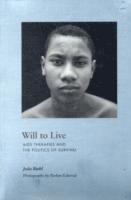
    Will to Live

    AIDS Therapies and the Politics of Survival

    AvJoão Biehl

    Häftad, Engelska, 2009

    Del i serien In-Formation

    561 kr

    Beställningsvara. Skickas inom 5-8 vardagar. Fri frakt över 249 kr.

    Fler format och utgåvor

    E-bok

    782 kr

    Beskrivning

    Will to Live tells how Brazil, against all odds, became the first developing country to universalize access to life-saving AIDS therapies--a breakthrough made possible by an unexpected alliance of activists, government reformers, development agencies, and the pharmaceutical industry. But anthropologist Joao Biehl also tells why this policy, hailed as a model worldwide, has been so difficult to implement among poor Brazilians with HIV/AIDS, who are often stigmatized as noncompliant or untreatable, becoming invisible to the public. More broadly, Biehl examines the political economy of pharmaceuticals that lies behind large-scale treatment rollouts, revealing the possibilities and inequalities that come with a magic bullet approach to health care. By moving back and forth between the institutions shaping the Brazilian response to AIDS and the people affected by the disease, Biehl has created a book of unusual vividness, scope, and detail. At the core of Will to Live is a group of AIDS patients--unemployed, homeless, involved with prostitution and drugs--that established a makeshift health service.Biehl chronicled the personal lives of these people for over ten years and Torben Eskerod represents them here in more than one hundred stark photographs. Ethnography, social medicine, and art merge in this unique book, illuminating the care and agency needed to extend life amid perennial violence. Full of lessons for the future, Will to Live promises to have a lasting influence in the social sciences and in the theory and practice of global public health.

    Produktinformation

    • Utgivningsdatum:2009-05-17
    • Mått:156 x 235 x 30 mm
    • Vikt:1 043 g
    • Format:Häftad
    • Språk:Engelska
    • Serie:In-Formation
    • Antal sidor:480
    • Förlag:Princeton University Press
    • Medarbetare:Torben Eskerod
    • ISBN:9780691143859
    • Utmärkelser:Winner of RAI Wellcome Medal for Anthropology as Applied to Medical Problems 2008

    Utforska kategorier

    • Särskilda hälsotillstånd inom Hälsa och familj
    • Antropologi inom Samhälle och politik
    • Infektionssjukdomar och smittsamma sjukdomar inom Medicin

    Mer om författaren

    Joao Biehl is professor of anthropology at Princeton University. Torben Eskerod is an artist and freelance photographer based in Copenhagen. The two also collaborated on the award-winning book "Vita: Life in a Zone of Social Abandonment."

    Recensioner i media

    Joint Winner of the 2008 Wellcome Medal for Medical Anthropology, Royal Anthropological Institute and the Wellcome Trust Winner of the 2008 Diana Forsythe Prize, American Anthropological Association "Biehl's powerful ethnography beautifully mixes visual and written portraits of those who lived and died as Brazil developed its public health and policy responses to AIDS. The author gives voice to those at the margins--the poor, the homeless, homosexuals, drug addicts, transvestites, prostitutes--who remained stigmatized and invisible as Brazil universalized access to AIDS therapies... Biehl convincingly argues the importance of understanding the history and politics of AIDS pharmaceuticalization, the role of social mobilization, and the invisibility of the marginalized in official statistics and care in grasping the reality of AIDS in Brazil."--E.J. Schatz, Choice "In Will to Live, Joao Biehl combines critical public health, ethnography, and even a mini epidemiological survey, studying AIDS therapies up, down, and sideways... The running commentary from major decision-makers in the novel Brazilian approach to AIDS provides both insights and rather transparent post facto justifications for the state's regulatory practices. These are nicely complemented by activist and patient critiques throughout the text."--Matthew Gutmann, American Ethnologist "Biehl's ethnography is already a paradigmatic example of how transformations in subjectivities and social experience can be investigated at all levels: personal, social, political, and global. The book is also exceptional, while describing in fruitful ways, complex interconnections that might occur within and across levels of lived experience... I strongly recommend this book to all those interested in pursuing anthropological investigations emphasizing the conceptual significance of lived experience through 'experience-near' analyses and 'thick description.'"--Cristina Redko, Ethos "[Joao Biehl's] book is important for understanding a complex public health program in a developing country. It is well written; the chapter that contains patients' testimonies is particularly emotional and poignant."--Carlos M.F. Antunes, Sc.D., New England Journal of Medicine "[Will to Live] argues that, despite the government's commitment, treatment has been difficult to implement among HIV-positive poor Brazilians, who are often stigmatized."--Chronicle Review "Will to Live is a compellingly crafted study of AIDS in Brazil, an exemplar of how careful ethnographic work can illuminate the place of everyday life in the constitution of, and response to, globalizing forces... I bring a unique understanding of, and appreciation for, Biehl's achievement. It is significant."--Tom Boellstorff, Journal of Anthropological Research "Biehl manages to make his writing accessible, informative, fluid and engaging, resulting in a text which requires no prior knowledge of the subject matter, or the methods of anthropological research. As such, while deeply anthropological in approach and commitment to ethnographic forms of narrative, the book will enlighten, challenge and fascinate readers from a wide range of disciplines, from medicine to health policy, sociology to government, STS and law."--Rachel Douglas-Jones, Kaleidoscope "This is an insightful read for those interested in medical anthropology, the pharmaceutical industry, medical ethics, AIDS activism, and health studies. It is an essential tool for those seeking to understand the complexity of tackling the AIDS issue on the ground level."--Lindsay Sprague, Anthropology in Action "Will to Live is an impressive and moving analysis by an engaged ethnographer... Biehl presents a powerful example of how ethnographic investigation can illuminate the fine details and trajectories of people's lives while also informing critical analysis of broad shifts in global and national health policies."--Steven Epstein, American Journal of Sociology

    Innehållsförteckning

    • Introduction: A NEW WORLD OF HEALTH The Right to a Nonprojected Future 3 Universal Access to Lifesaving Therapies 7 A Political Economy of Pharmaceuticals 10 Persistent Inequalities 14 Lives "Take me to my father's house" (Edileusa) 20 "Today is another world" (Luis) 22 "If I only had thought then the way I think now" (Rose) 26 "Why will I think about the future?" (Nerivaldo) 30 "A child is what I wanted most in life" (Evangivaldo) 33 "To have HIV ... is like not having money" (Valquirene) 37 "Too much medication" (Soraia) 40 "A beautiful place" (Tiquinho) 43 The Politics of Survival 47 Chapter One: PHARMACEUTICAL GOVERNANCE Globalization and Statecraft 53 The Social Science of a Transforming Regime 55 AIDS, Democratization, and Human Rights 58 A Transnational Policy-Space 64 The Activist State 68 Intellectual Property Rights and World Trade 73 A Country's Disease--Public-Private Partnerships 79 Decentralization and a Magic Bullet Approach 84 Public-Sector Science and the Production of Generic Drugs 87 Scaling-Up 93 The Pharmaceuticalization of Public Health 97 Chapter Two: CIRCUITS OF CARE How Has AIDS Activism Changed? 105 From Passion to Politics 110 The AIDS Industry 115 Micro-Politics of Patienthood 120 Performing Citizenship 125 Grassroots Health Systems 130 A New National AIDS Program 135 On the Street: Violence, Charity, and Pleasure 140 In the Mainstream 155 Measures of Success, Undesirable Realities 160 The Undetectable Virus 164 "It is all about medicines now" 169 In Search of a Comprehensive Approach 172 "There is not just one death" 175 Chapter Three: A HIDDEN EPIDEMIC The Limits of Surveillance 179 AIDS in Bahia 180 Economic Death 184 Pelourinho 190 "I set myself on fire" (Maria Madalena) 194 "They take care of me as if I were family" (Lazaro) 198 Technologies of Invisibility 202 A System of Nonintervention 204 Infectious Diseases Research 206 Medical Sovereignty, Local Bioethics 209 Triage 213 The Social Life of Death Certificates 217 AIDS Therapies and Homelessness 225 "Science makes people equal" 232 Brasilia 236 Chapter Four: EXPERIMENTAL SUBJECTS AIDS-like Symptoms 241 HIV Antibody Test 244 Certainty: Closing the Past 246 Uncertainty: The Window Period 246 A Population of Doubts 250 What Is Socially Visible Is an Imagined AIDS 253 Risk and Prevention Models 257 Libidinal Order 259 Science and Subjectivity 263 Dangerous Worlds of Intimacy 267 Technoneurosis 270 "They own their bodies and are responsible for their actions" 272 Clinical Trials 276 Chapter Five: PATIENT-CITIZENSHIP "On the plane of immanence that leads us into a life" 283 A Place of No Government 286 Pastoral Power 296 Institutional Belonging and Treatment Adherence 303 New Prohibitions 308 "In Caasah we don't just have AIDS--we have God" 312 Religion, Health, Wealth 318 Ambiguous Political Subjects 324 Resuming Sexual Life 327 Beyond Direct Observed Therapy 334 Chapter Six: WILL TO LIVE Lifelong AIDS 339 Human Values 344 Medical Disparities 347 From Epidemic to Personalized Disease 349 Physically Well, Economically Dead 353 Drug Resistance and Rescue Treatments 355 "Medication is me" (Luis) 358 "I am mother and father" (Rose) 363 "It is the financial part of life that tortures me" (Evangivaldo) 368 Conclusion: GLOBAL PUBLIC HEALTH Large-Scale Medical Change 375 "A little more reverence for life" 377 The Future of Treatment Rollouts 379 Pharmaceutical Philanthropy and Equity 383 Where Is the State? 388 A Vanishing Civil Society 393 Understanding the Nexus of AIDS, Poverty, and Politics 396 Local Economies of Salvation 399 The Unexpected and the Possible 404 Acknowledgments 407 Notes 411 References 425 Index 451