• Fri frakt över 249 kr
  • •
  • Snabba leveranser
  • •
  • Billiga böcker
Kundservice

Du är på sajten för privatpersoner.

Företag, bibliotek eller offentlig verksamhet?

Du handlar på classic.bokus.com, där alla dina funktioner finns intakta.
Till classic.bokus.com
Bokus logotyp. Gå till startsidan.
  • Erbjudanden
  • Nyheter
  • Student
  • Topplistor
  • Barn & ungdom
  • Bokus Play
  • E-böcker
  • Pocketböcker
  • Spel & pussel

10% rabatt på allt med kod NYSTART10 →

Sidfot

Mina sidor

    Hjälp

    • Kundservice
    • Vanliga frågor och svar
    • Frakt och leverans
    • Retur vid ångerrätt
    • Reklamera vara
    • Betalning
    • Köpvillkor
    • Allmänna villkor
    • Information om webbplatsens tillgänglighet

    Om Bokus

    • Om oss
    • Pressrum
    • För studenter
    • För företag
    • För bibliotek och offentlig verksamhet
    • För leverantörer
    • Hållbarhet

    Populärt

    • Aktuella erbjudanden
    • Presentkort
    • Studentlitteratur
    • Nya böcker
    • Topplistor
    • Signerade böcker
    • Engelska böcker

    Inspiration

    • Boktips
    • BookTok
    • Populära bokserier
    • Barnbokskaraktärer
    • Populära författare
    Logotyp för Bokus
    Följ oss på Facebook (extern länk)Följ oss på Instagram (extern länk)Följ oss på YouTube (extern länk)Följ oss på TikTok (extern länk)
    bokus @ CookiesAnpassa cookiesIntegritetspolicyKöpvillkor
    Till Citymail hemsida (extern länk)Till Budbee hemsida (extern länk)Till Postnord hemsida (extern länk)Till Schenker hemsida (extern länk)Till Early Bird hemsida (extern länk)Till Walleys hemsida (extern länk)
    1. Naturvetenskap och teknik
    2. Matematik och naturvetenskap
    3. Naturvetenskap:allmänt
    4. Populärvetenskap

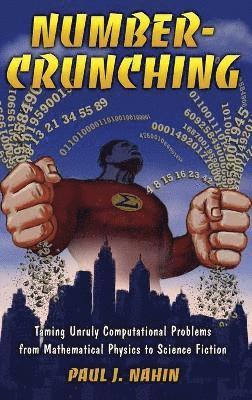
    Number-Crunching

    Taming Unruly Computational Problems from Mathematical Physics to Science Fiction

    AvPaul J. Nahin

    Inbunden, Engelska, 2011

    258 kr

    Beställningsvara. Skickas inom 5-8 vardagar. Fri frakt över 249 kr.

    Fler format och utgåvor

    E-bok

    346 kr

    Beskrivning

    How do technicians repair broken communications cables at the bottom of the ocean without actually seeing them? What's the likelihood of plucking a needle out of a haystack the size of the Earth? And is it possible to use computers to create a universal library of everything ever written or every photo ever taken? These are just some of the intriguing questions that best-selling popular math writer Paul Nahin tackles in "Number-Crunching". Through brilliant math ideas and entertaining stories, Nahin demonstrates how odd and unusual math problems can be solved by bringing together basic physics ideas and today's powerful computers. Some of the outcomes discussed are so counterintuitive they will leave readers astonished. Nahin looks at how the art of number-crunching has changed since the advent of computers, and how high-speed technology helps to solve fascinating conundrums such as the three-body, Monte Carlo, leapfrog, and gambler's ruin problems. Along the way, Nahin traverses topics that include algebra, trigonometry, geometry, calculus, number theory, differential equations, Fourier series, electronics, and computers in science fiction.He gives historical background for the problems presented, offers many examples and numerous challenges, supplies MATLAB codes for all the theories discussed, and includes detailed and complete solutions. Exploring the intimate relationship between mathematics, physics, and the tremendous power of modern computers, "Number-Crunching" will appeal to anyone interested in understanding how these three important fields join forces to solve today's thorniest puzzles.

    Produktinformation

    • Utgivningsdatum:2011-08-28
    • Mått:152 x 235 x 30 mm
    • Vikt:709 g
    • Format:Inbunden
    • Språk:Engelska
    • Antal sidor:408
    • Förlag:Princeton University Press
    • ISBN:9780691144252

    Utforska kategorier

    • Populärvetenskap inom Naturvetenskap och teknik
    • Systemvetenskap och AI inom Data och IT
    • Programmeringsböcker inom Data och IT

    Mer om författaren

    Paul J. Nahin is the author of many best-selling popular math books, including "Mrs. Perkins's Electric Quilt", "Digital Dice", "Chases and Escapes", "Dr. Euler's Fabulous Formula", "When Least Is Best", and "An Imaginary Tale" (all Princeton). He is professor emeritus of electrical engineering at the University of New Hampshire.

    Recensioner i media

    "Great stories. Interesting and challenging problems. Instructive MATLAB code. Lots of physics. That's my in-a-nutshell assessment... Nahin takes on the subject of using computers to solve difficult problems, many in physics, that couldn't be solved before computers... This is one of those books that one can read as a spectator, enjoying the scenery, taking in the landscape, appreciating the rich stories--my relationship with the book--or one can dive in, study the many equations, run the code, and have a personal experience of how problems that were unsolvable just a few decades ago have succumbed to computers."--Sol Lederman, Wild About Math "Number Crunching is most timely, given the escalating scale of economic, commercial, and financial transactions, necessitating thinking about, evaluating, and communicating on a much larger scale... The presentation in Number Crunching is simultaneously accessible, readable, entertaining, daunting, sophisticated, and technical."--Stephen E. Roulac, New York Journal of Books "Number-Crunching is packed with copious notes and references and augmented by significant challenge problems that take the reader beyond the text and which would make good undergraduate projects... Nahin's aim is clearly to convey enthusiasm for the subject to a younger reader and to give a glimpse of what is technically possible... He looks to convey the excitement that he and many of us had when first attracted to the physical sciences as we were growing up--the excitement at the realisation that, given a few tools, even an awkward teenager can make quantitative statements about the world."--C.J. Howls, Times Higher Education "Paul Nahin, a prolific and knowledgeable expository writer, is a professor emeritus of electrical engineering at the University of New Hampshire. What he offers in Number-Crunching might be described as a mix of (1) supplementary readings for courses in mathematics, physics, or electrical engineering, (2) 'challenge problems' intended as a brain-jogging call to prospective professionals, and (3) a garage sale of mathematical miscellania and esoterica."--Philip J. Davis, SIAM News "[Number-Crunching] is impressive for several reasons. First, Nahin has found the right level--not too easy and not too hard. Second, the problem selections and topics are interesting and in several cases give surprising results. Finally, the book is just plain fun."--Choice "[A] highly entertaining and rewarding read."--Dean Rickles, Mathematical Reviews "Unlike writers of popular mathematics books, Nahin is more then happy to spray the pages with equations! Since these are surrounded by lucid and informal explanations, they add significant value to the book... Whether or not you are the computing type, there is a lot to enjoy about this book."--Alan Stevens, Mathematics TODAY "Many of these challenge problems would make excellent projects--both in mathematics or physics--for undergraduates to explore. Number-Crunching's greatest strength is providing a perspective on how three unique yet vastly intertwined fields interact while keeping readers more and more intrigued as they progress through the text. Readers will find abundant resources to quench their thirst for knowledge of computational mathematics and physics."--Brandon Milanovich, Mathematics Teacher

    Innehållsförteckning

    • Introduction x Chapter 1: FEYNMAN MEETS FERMAT 1 1.1 The Physicist as Mathematician 1 1.2 Fermat's Last Theorem 2 1.3 "Proof" by Probability 3 1.4 Feynman's Double Integral 6 1.5 Things to come 10 1.6 Challenge Problems 11 1.7 Notes and References 13 Chapter 2: Just for Fun: Two Quick Number-Crunching Problems 16 2.1 Number-Crunching in the Past 16 2.2 A Modern Number-Cruncher 20 2.3 Challenge Problem 25 2.4 Notes and References 25 Chapter 3: Computers and Mathematical Physics 27 3.1 When Theory Isn't Available 27 3.2 The Monte Carlo Technique 28 3.3 The Hot Plate Problem 34 3.4 Solving the Hot Plate Problem with Analysis 38 3.5 Solving the Hot Plate Problem by Iteration 44 3.6 Solving the Hot Plate Problem with the Monte Carlo Technique 50 3.7 ENIAC and MANIAC-I: the Electronic Computer Arrives 55 3.8 The Fermi-Pasta-Ulam Computer Experiment 58 3.9 Challenge Problems 73 3.10 Notes and References 74 Chapter 4: The Astonishing Problem of the Hanging Masses 82 4.1 Springs and Harmonic Motion 82 4.2 A Curious Oscillator 87 4.3 Phase-Plane Portraits 96 4.4 Another (Even More?) Curious Oscillator 99 4.5 Hanging Masses 104 4.6 Two Hanging Masses and the Laplace Transform 108 4.7 Hanging Masses and MATLAB 113 4.8 Challenge Problems 124 4.9 Notes and References 124 Chapter 5: The Three-Body Problem and Computers 131 5.1 Newton's Theory of Gravity 131 5.2 Newton's Two-Body Solution 139 5.3 Euler's Restricted Three-Body Problem 147 5.4 Binary Stars 155 5.5 Euler's Problem in Rotating Coordinates 166 5.6 Poincare and the King Oscar II Competition 177 5.7 Computers and the Pythagorean Three-Body Problem 184 5.8 Two Very Weird Three-Body Orbits 195 5.9 Challenge Problems 205 5.10 Notes and References 207 Chapter 6: Electrical Circuit Analysis and Computers 218 6.1 Electronics Captures a Teenage Mind 218 6.2 My First Project 220 6.3 "Building" Circuits on a Computer 230 6.4 Frequency Response by Computer Analysis 234 6.5 Differential Amplifiers and Electronic Circuit Magic 249 6.6 More Circuit Magic: The Inductor Problem 260 6.7 Closing the Loop: Sinusoidal and Relaxation Oscillators by Computer 272 6.8 Challenge Problems 278 6.9 Notes and References 281 Chapter 7: The Leapfrog Problem 288 7.1 The Origin of the Leapfrog Problem 288 7.2 Simulating the Leapfrog Problem 290 7.3 Challenge Problems 296 7.4 Notes and References 296 Chapter 8: Science Fiction: When Computers Become Like Us 297 8.1 The Literature of the Imagination 297 8.2 Science Fiction "Spoofs" 300 8.3 What If Newton Had Owned a Calculator? 305 8.4 A Final Tale: the Artificially Intelligent Computer 314 8.5 Notes and References 324 Chapter 9: A Cautionary Epilogue 328 9.1 The Limits of Computation 328 9.2 The Halting Problem 330 9.3 Notes and References 333 Appendix (FPU Computer Experiment MATLAB Code) 335 Solutions to the Challenge Problems 337 Acknowledgments 371 Index 373 Also by Paul J. Nahin 377

    Betyg & recensioner

    5/5