• Fri frakt över 249 kr
  • •
  • Snabba leveranser
  • •
  • Billiga böcker
Kundservice

Du är på sajten för privatpersoner.

Företag, bibliotek eller offentlig verksamhet?

Du handlar på classic.bokus.com, där alla dina funktioner finns intakta.
Till classic.bokus.com
Bokus logotyp. Gå till startsidan.
  • Erbjudanden
  • Nyheter
  • Student
  • Topplistor
  • Barn & ungdom
  • Bokus Play
  • E-böcker
  • Pocketböcker
  • Spel & pussel

10% rabatt på allt med kod: NYSTART10 →

Sidfot

Mina sidor

    Hjälp

    • Kundservice
    • Vanliga frågor och svar
    • Frakt och leverans
    • Retur vid ångerrätt
    • Reklamera vara
    • Betalning
    • Köpvillkor
    • Allmänna villkor
    • Information om webbplatsens tillgänglighet

    Om Bokus

    • Om oss
    • Pressrum
    • För studenter
    • För företag
    • För bibliotek och offentlig verksamhet
    • För leverantörer
    • Hållbarhet

    Populärt

    • Aktuella erbjudanden
    • Presentkort
    • Studentlitteratur
    • Nya böcker
    • Topplistor
    • Signerade böcker
    • Engelska böcker

    Inspiration

    • Boktips
    • BookTok
    • Populära bokserier
    • Barnbokskaraktärer
    • Populära författare
    Logotyp för Bokus
    Följ oss på Facebook (extern länk)Följ oss på Instagram (extern länk)Följ oss på YouTube (extern länk)Följ oss på TikTok (extern länk)
    bokus @ CookiesAnpassa cookiesIntegritetspolicyKöpvillkor
    Till Citymail hemsida (extern länk)Till Budbee hemsida (extern länk)Till Postnord hemsida (extern länk)Till Schenker hemsida (extern länk)Till Early Bird hemsida (extern länk)Till Walleys hemsida (extern länk)
    1. Ekonomi och Ledarskap
    2. Nationalekonomi
    3. Mikroekonomi

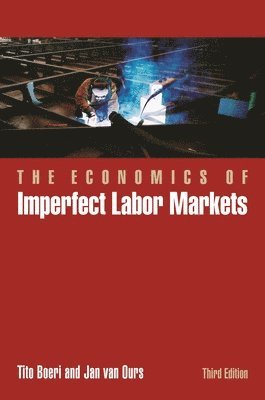
    Economics of Imperfect Labor Markets, Third Edition

    AvTito Boeri,Jan van Ours

    Inbunden, Engelska, 2021

    1 016 kr

    Beställningsvara. Skickas inom 5-8 vardagar. Fri frakt över 249 kr.

    Beskrivning

    The leading textbook on imperfect labor markets and the institutions that affect them—now completely updated and expandedToday's labor markets are witnessing seismic changes brought on by such factors as rising self-employment, temporary employment, zero-hour contracts, and the growth of the sharing economy. This fully updated and revised third edition of The Economics of Imperfect Labor Markets reflects these and other critical changes in imperfect labor markets, and it has been significantly expanded to discuss topics such as workplace safety, regulations on self-employment, and disability and absence from work. This new edition also features engaging case studies that illustrate key aspects of imperfect labor markets.Authoritative and accessible, this textbook examines the many institutions that affect the behavior of workers and employers in imperfect labor markets. These include minimum wages, employment protection legislation, unemployment benefits, family policies, equal opportunity legislation, collective bargaining, early retirement programs, and education and migration policies. Written for advanced undergraduates and beginning graduate students, the book carefully defines and measures these institutions to accurately characterize their effects, and discusses how these institutions are being transformed today.Fully updated to reflect today's changing labor marketsSignificantly expanded to discuss a wealth of new topics, including the impact of the COVID-19 pandemicFeatures quantitative examples, new case studies, data sets that enable users to replicate results in the literature, technical appendixes, and end-of-chapter exercisesUnique focus on institutions in imperfect labor marketsSelf-contained chapters cover each of the most important labor-market institutionsInstructor's manual available to professors—now with new exercises and solutions

    Produktinformation

    • Utgivningsdatum:2021-01-26
    • Mått:185 x 259 x 46 mm
    • Vikt:1 430 g
    • Format:Inbunden
    • Språk:Engelska
    • Antal sidor:736
    • Förlag:Princeton University Press
    • ISBN:9780691206363

    Utforska kategorier

    • Mikroekonomi inom Ekonomi och Ledarskap
    • Miljöekonomi inom Ekonomi och Ledarskap

    Mer om författaren

    Tito Boeri is professor of economics at Bocconi University in Milan and visiting professor at the European Institute at the London School of Economics. Twitter @Tboeri Jan van Ours is professor of applied economics at Erasmus University Rotterdam in the Netherlands and honorary professorial fellow in economics at the University of Melbourne.

    Innehållsförteckning

    • List of BoxesPreface and AcknowledgmentsSymbols and Acronyms1 Overview1.1 Why Study Labor Economics?1.2 The Two Key Decisions1.2.1 The Labor Supply Decision1.2.2 The Labor Demand Decision1.3 Labor Market Equilibrium1.3.1 A Perfect Labor Market1.3.2 An Imperfect Labor Market1.4 Labor Market Institutions1.4.1 Why Do Labor Market Institutions Exist?1.4.2 Institutions Matter1.5 Measures of Labor Market Outcomes1.5.1 Stock Measures1.5.2 Flow Measures1.5.3 Problems with Standard Measures of Labor Market Status1.6 Documenting Reforms in Labor Market Institutions1.7 Review Questions and Exercises1.8 Technical Annex: Competitive Pressures and Institutions1.8.1 A Competitive Labor Market1.8.2 Labor Market Institutions1.8.3 The Wedge1.8.4 Product Market Competition and the Employment Bias of Institutions2 Minimum Wages2.1 Cross-Country Comparisons2.2 Theory2.2.1 A Perfect Labor Market2.2.2 An Imperfect Labor Market2.3 Empirical Evidence2.3.1 Studies Based on Firm-Level or Household Survey Data2.3.2 Studies Based on Natural Experiments2.3.3 Studies Based on Matched Employer-Employee Data2.4 Policy Issues2.4.1 Are Minimum Wages Effective in Reducing Poverty?2.4.2 Should There Be a Youth Minimum Wage?2.5 Interactions with Other Institutions2.6 The Future of the Minimum Wage2.7 Suggestions for Further Reading2.8 Review Questions and Exercises2.9 Technical Annex: Minimum Wage Revisited2.9.1 Minimum Wage and Monopsony2.9.2 Bargaining or Government Setting?2.9.3 Efficiency Wages and the Solow Condition3 Unions and Collective Bargaining3.1 Measures and Cross-Country Comparisons3.1.1 Union Density3.1.2 Coverage and Excess Coverage3.1.3 Centralization and Coordination3.1.4 The Extension of Collective Bargaining3.1.5 Strike Activity3.2 Theory3.2.1 A Perfect Labor Market3.2.2 An Imperfect Labor Market3.3 Empirical Evidence3.3.1 Bargaining Coordination, Union Density, and Unemployment3.3.2 Effects of Unions on Wages3.3.3 Characteristics of the Collective Bargaining System3.4 Policy Issues3.4.1 Do Unions Increase Efficiency?3.4.2 Should Occupational Licensing Be Restricted?3.5 Interactions with Other Institutions3.6 The Future of Unions3.7 Suggestions for Further Reading3.8 Review Questions and Exercises3.9 Technical Annex: Unions Revisited3.9.1 How Strong Must Unions Be to Be Efficient?3.9.2 Deriving the Contract Curve4 Anti-Discrimination Legislation4.1 Measures and Cross-Country Comparisons4.2 Theory4.2.1 A Perfect Labor Market4.2.2 An Imperfect Labor Market4.3 Empirical Evidence4.3.1 Cross-Country Differences4.3.2 Discrimination in the Labor Market4.4 Policy Issues4.4.1 Should Applications Be Anonymized?4.4.2 Should Minority Quotas Be Introduced?4.5 Interactions with Other Institutions4.6 The Future of Anti-Discrimination Legislation4.7 Suggestions for Further Reading4.8 Review Questions and Exercises4.9 Technical Annex: Issues on Discrimination4.9.1 Prejudice in a Competitive Labor Market4.9.2 Monopsony and Gender Discrimination4.9.3 Unobserved Heterogeneity and Correspondence Studies5 Regulation of Working Hours5.1 Measures and Cross-Country Comparisons5.1.1 Legal Restrictions on Working Hours5.1.2 Regulations of Part-Time Employment5.1.3 Subsidized Short-Time Work5.2 Theory5.2.1 A Perfect Labor Market5.2.2 An Imperfect Labor Market5.3 Empirical Evidence5.3.1 Macro Facts about Working Hours5.3.2 Microeconomic Evidence on the Effects of Reductions in Working Hours5.4 Policy Issues5.4.1 Should Governments Regulate Working Hours?5.4.2 Should Governments Subsidize Short-Time Work?5.5 Interactions with Other Institutions5.6 The Future of Working Hours Regulations5.7 Suggestions for Further Reading5.8 Review Questions and Exercises5.9 Technical Annex: Intensive and Extensive Margins6 Early Retirement Plans6.1 Measures and Cross-Country Comparisons6.2 Theory6.2.1 A Perfect Labor Market6.2.2 An Imperfect Labor Market6.3 Empirical Evidence6.3.1 Macro Facts about Retirement6.3.2 Microeconomic Evidence on Push Factors6.3.3 Microeconomic Evidence on Pull Factors6.4 Policy Issues6.4.1 How Much Flexibility in Early Retirement?6.4.2 Should We Have Mandatory Retirement?6.5 Interactions with Other Institutions6.6 The Future of Early Retirement6.7 Suggestions for Further Reading6.8 Review Questions and Exercises6.9 Technical Annex: Optimal Retirement Age6.9.1 The Optimal Retirement Age6.9.2 Young and Older Workers: Crowding In or Out?7 Family Policies7.1 Measures and Cross-Country Comparisons7.1.1 Childcare7.1.2 Parental Leave7.2 Theory7.2.1 A Perfect Labor Market7.2.2 An Imperfect Labor Market7.3 Empirical Evidence7.3.1 Cross-Country Variation7.3.2 Microeconometric Evidence7.4 Policy Issues7.4.1 Should Paternity Leave Be Encouraged?7.4.2 How to Encourage Mothers with Young Children to Work?7.5 Interactions with Other Institutions7.6 The Future of Family Policies7.7 Suggestions for Further Reading7.8 Review Questions and Exercises7.9 Technical Annex: Family Policies and the Household7.9.1 Childcare Facilities7.9.2 The Surplus from Home Production7.9.3 The Unitary and Collective Models of the Household8 Education and Training8.1 Measures and Cross-Country Comparisons8.2 Theory8.2.1 A Perfect Labor Market8.2.2 An Imperfect Labor Market8.3 Empirical Evidence8.3.1 Cross-Country Comparison8.3.2 Estimating the Returns to Schooling8.3.3 On-the-Job Training8.4 Policy Issues8.4.1 Should Governments Subsidize In-Company Training?8.4.2 Should There Be Early School Tracking?8.5 Interactions with Other Institutions8.6 The Future of Education and Training8.7 Suggestions for Further Reading8.8 Review Questions and Exercises8.9 Technical Annex: Schooling and Training8.9.1 Optimal Years of Schooling8.9.2 Signaling8.9.3 Derivation of the Mincer Equation8.9.4 Who Pays for General Training?9 Migration Policies9.1 Measures and Cross-Country Comparisons9.2 Theory9.2.1 A Perfect Labor Market9.2.2 Skilled and Unskilled Migration9.2.3 Relocation of Native Workers, Firms, and Migrants9.3 An Imperfect Labor Market9.3.1 An Economy with Wage Rigidities9.3.2 Labor Market Externalities9.3.3 What Drives Migration Decisions?9.4 Empirical Evidence9.4.1 Macro Facts about Migration9.4.2 Microeconomic Evidence9.5 Policy Issues9.5.1 How to Compensate the Losers?9.5.2 How to Handle the Labor Market of Refugees?9.6 Interactions with Other Institutions9.7 The Future of Migration Policies9.8 Suggestions for Further Reading9.9 Review Questions and Exercises9.10 Technical Annex: Cost and Benefits of Migration9.10.1 The Net Gains from Migration9.10.2 Heterogeneous Labor and Wage Rigidities10 Employment Protection Legislation10.1 Measures and Cross-Country Comparisons10.2 Theory10.2.1 A Perfect Labor Market10.2.2 An Imperfect Labor Market10.3 Empirical Evidence10.3.1 Macro Facts10.3.2 Microeconomic Evidence10.4 Policy Issues10.4.1 What Is the Optimal Level of EPL?10.4.2 Should There Be a Graded Security Contract?10.5 Interactions with Other Institutions10.6 The Future of EPL10.7 Suggestions for Further Reading10.8 Review Questions and Exercises10.9 Technical Annex: The Political Economy of Two-Tier Reforms10.9.1 The Quest for Flexibility11 Regulations on Self-Employment11.1 Measures and Cross-Country Comparisons11.2 Theory11.2.1 A Perfect Labor Market11.2.2 An Imperfect Labor Market11.3 Empirical Evidence11.3.1 Macro Facts11.3.2 Micro Evidence on the Two Faces of Self-Employment11.4 Policy Issues11.4.1 Should Self-Employment Be Promoted?11.4.2 Should Social Insurance Be Mandatory for the Self-Employed?11.5 Interactions with Other Institutions11.6 The Future of Self-Employment Regulations11.7 Suggestions for Further Reading11.8 Review Questions and Exercises11.9 Technical Annex: The Choice between Self-Employment and Dependent Employment and Finance11.9.1 Self-Selection into Self-Employment11.9.2 Complementarity between Labor and Financial Frictions12 Unemployment Benefits and Active Labor Market Policies12.1 Measures and Cross-Country Comparisons12.2 Theory12.2.1 A Perfect Labor Market12.2.2 An Imperfect Labor Market12.3 Empirical Evidence12.3.1 Cross-Country Differences12.3.2 Effects of UB on Unemployment Duration12.3.3 Effect of UB on Post-Unemployment Outcomes12.3.4 ALMP Studies12.4 Policy Issues12.4.1 Do We Need Activation Policies?12.4.2 Should the Generosity of Unemployment Benefits Vary over the Cycle?12.5 Interactions with Other Institutions12.6 The Future of UB and ALMP12.7 Suggestions for Further Reading12.8 Review Questions and Exercises12.9 Technical Annex: Job Search Theory12.9.1 Unemployment Benefits in a One-Sided Search Model12.9.2 Two-Sided Job Search and Matching12.9.3 Statistical Foundations of the Matching Function12.9.4 Activating Unemployed Workers13 Health-Related Labor Policies13.1 Cross-Country Comparisons13.1.1 Workplace Safety13.1.2 Disability and Absenteeism13.2 Theory13.2.1 A Perfect Labor Market13.2.2 An Imperfect Labor Market13.3 Empirical Evidence13.3.1 Workplace Accidents and Safety Policies13.3.2 Sickness and Disability13.4 Policy Issues13.4.1 Do Workplace Safety Regulations Benefit Firms?13.4.2 Should Absenteeism Be Monitored More Strictly?13.5 The Future of Health-Related Labor Policies13.6 Interactions with Other Institutions13.7 Suggestions for Further Reading13.8 Review Questions and Exercises13.9 Technical Annex: Reporting Workplace Accidents14 Payroll Taxes14.1 Measures and Cross-Country Comparisons14.2 Theory14.2.1 A Perfect Labor Market14.2.2 An Imperfect Labor Market14.3 Empirical Evidence14.4 Policy Issues14.4.1 How to Make Work Pay?14.4.2 How to Pay and Target Beneficiaries?14.5 Interactions with Other Institutions14.6 The Future of Payroll Taxes14.7 Suggestions for Further Reading14.8 Review Questions and Exercises14.9 Technical Annex: Payroll Taxes14.9.1 A Perfect Labor Market14.9.2 An Imperfect Labor MarketReferencesName IndexSubject Index