• Fri frakt över 249 kr
  • •
  • Snabba leveranser
  • •
  • Billiga böcker
Kundservice

Du är på sajten för privatpersoner.

Företag, bibliotek eller offentlig verksamhet?

Du handlar på classic.bokus.com, där alla dina funktioner finns intakta.
Till classic.bokus.com
Bokus logotyp. Gå till startsidan.
  • Erbjudanden
  • Nyheter
  • Student
  • Topplistor
  • Barn & ungdom
  • Bokus Play
  • E-böcker
  • Pocketböcker
  • Spel & pussel

10% rabatt på allt med kod: NYSTART10 →

Sidfot

Mina sidor

    Hjälp

    • Kundservice
    • Vanliga frågor och svar
    • Frakt och leverans
    • Retur vid ångerrätt
    • Reklamera vara
    • Betalning
    • Köpvillkor
    • Allmänna villkor
    • Information om webbplatsens tillgänglighet

    Om Bokus

    • Om oss
    • Pressrum
    • För studenter
    • För företag
    • För bibliotek och offentlig verksamhet
    • För leverantörer
    • Hållbarhet

    Populärt

    • Aktuella erbjudanden
    • Presentkort
    • Studentlitteratur
    • Nya böcker
    • Topplistor
    • Signerade böcker
    • Engelska böcker

    Inspiration

    • Boktips
    • BookTok
    • Populära bokserier
    • Barnbokskaraktärer
    • Populära författare
    Logotyp för Bokus
    Följ oss på Facebook (extern länk)Följ oss på Instagram (extern länk)Följ oss på YouTube (extern länk)Följ oss på TikTok (extern länk)
    bokus @ CookiesAnpassa cookiesIntegritetspolicyKöpvillkor
    Till Citymail hemsida (extern länk)Till Budbee hemsida (extern länk)Till Postnord hemsida (extern länk)Till Schenker hemsida (extern länk)Till Early Bird hemsida (extern länk)Till Walleys hemsida (extern länk)
    1. Historia och arkeologi
    2. Historia
    3. Forntidens historia

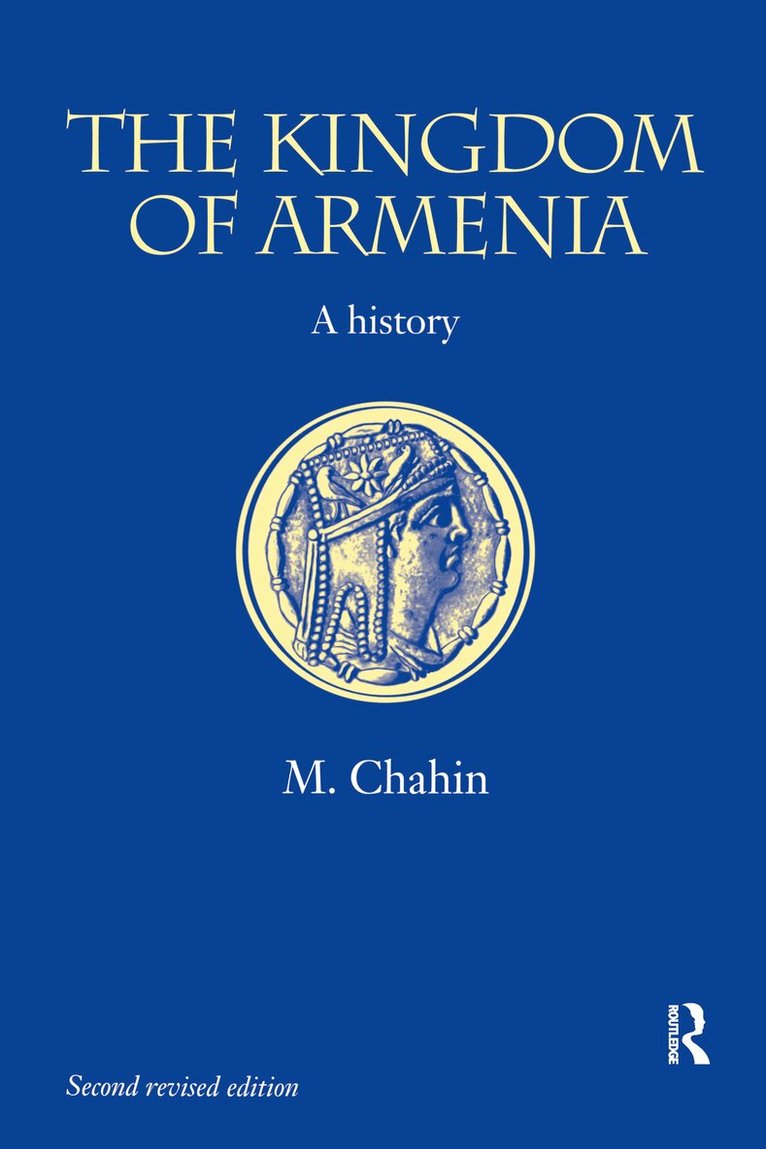
    Kingdom of Armenia

    New Edition

    AvMack Chahin

    Häftad, Engelska, 2001

    Del i serien Caucasus World

    1 033 kr

    Beställningsvara. Skickas inom 10-15 vardagar. Fri frakt över 249 kr.

    Fler format och utgåvor

    E-bok

    1 226 kr

    E-bok

    1 226 kr

    Beskrivning

    While the majority of contemporary works on Armenia concentrate on the modern era, The Kingdom of Armenia takes its beginning in the third century BC, with the ancient literate peoples of Mesopotamia who had commercial interests in the land of Armenia, and continues with a comprehensive overview through to the end of the Middle Ages.

    Produktinformation

    • Utgivningsdatum:2001-12-21
    • Mått:156 x 234 x 20 mm
    • Vikt:400 g
    • Format:Häftad
    • Språk:Engelska
    • Serie:Caucasus World
    • Antal sidor:350
    • Förlag:Taylor & Francis Ltd
    • ISBN:9780700714520

    Utforska kategorier

    • Forntidens historia inom Historia och arkeologi
    • Medeltiden inom Historia och arkeologi

    Mer om författaren

    M. Chahin lectured on the Ancient History of the Near East at the University of Bristol.

    Innehållsförteckning

    • Chronology of the Ancient Near East Maps Preface Introduction Prologue: Some milestones in the ancient history of the Near East Part I. The Kingdom or Urartu 1. The Land of Armenia 2. The 'Lost' Kingdom of Urartu 3. The rise of the Kingdom of Urartu 4. Aramu (858-844 BC): The first known king of Urartu 5. Sarduri I (844-828 BC): The first Vannic inscriptions 6. Ishpuini the Establisher (828-810 BC) & Menua the Conqueror (810-785 BC) 7. Argishti I (785-753 BC) and the Zenith of Urartian military power 8. Sarduri II (753-735 BC): The Golden Age of Vannic Power 9. Rusa I (735-714 BC): Urarto-Assyrian balance of power upset 10. Argishti II (714-681 BC): Urarto military recovery 11. Rusa II (680-639 BC): Urartu & Assyria at peace 12. The last kings of Urartu 13. Political organisation: Towns & buildings 14. Trade & commerce 15. Religion of Urartu 16. Art of Urartu 17. Military equipment & costume 18. Ararat & Assyria: A brief review Part II. The Kingdom of Armenia 19. Introduction 20. Early history 21. The Royal House of Ervand (the Orontids) 22. The Royal House of Artashes (the Artaxiads) 23. The Royal House of Arshak (the Arsacids) 24. The Royal House of Bagrat (the Bagratids) 25. The Kingdom of Armenia in Cilicia 26. Religion 27. Language & learning 28. Armenia's wealth of ecclesiastical architecture Epilogue Plates Notes Bibliography Index