• Fri frakt över 249 kr
  • •
  • Snabba leveranser
  • •
  • Billiga böcker
Kundservice

Du är på sajten för privatpersoner.

Företag, bibliotek eller offentlig verksamhet?

Du handlar på classic.bokus.com, där alla dina funktioner finns intakta.
Till classic.bokus.com
Bokus logotyp. Gå till startsidan.
  • Erbjudanden
  • Nyheter
  • Student
  • Topplistor
  • Barn & ungdom
  • Bokus Play
  • E-böcker
  • Pocketböcker
  • Spel & pussel

10% rabatt på allt med kod: NYSTART10 →

Sidfot

Mina sidor

    Hjälp

    • Kundservice
    • Vanliga frågor och svar
    • Frakt och leverans
    • Retur vid ångerrätt
    • Reklamera vara
    • Betalning
    • Köpvillkor
    • Allmänna villkor
    • Information om webbplatsens tillgänglighet

    Om Bokus

    • Om oss
    • Pressrum
    • För studenter
    • För företag
    • För bibliotek och offentlig verksamhet
    • För leverantörer
    • Hållbarhet

    Populärt

    • Aktuella erbjudanden
    • Presentkort
    • Studentlitteratur
    • Nya böcker
    • Topplistor
    • Signerade böcker
    • Engelska böcker

    Inspiration

    • Boktips
    • BookTok
    • Populära bokserier
    • Barnbokskaraktärer
    • Populära författare
    Logotyp för Bokus
    Följ oss på Facebook (extern länk)Följ oss på Instagram (extern länk)Följ oss på YouTube (extern länk)Följ oss på TikTok (extern länk)
    bokus @ CookiesAnpassa cookiesIntegritetspolicyKöpvillkor
    Till Citymail hemsida (extern länk)Till Budbee hemsida (extern länk)Till Postnord hemsida (extern länk)Till Schenker hemsida (extern länk)Till Early Bird hemsida (extern länk)Till Walleys hemsida (extern länk)
    1. Kultur
    2. Konstböcker
    3. Konstformer
    4. Övriga konstformer

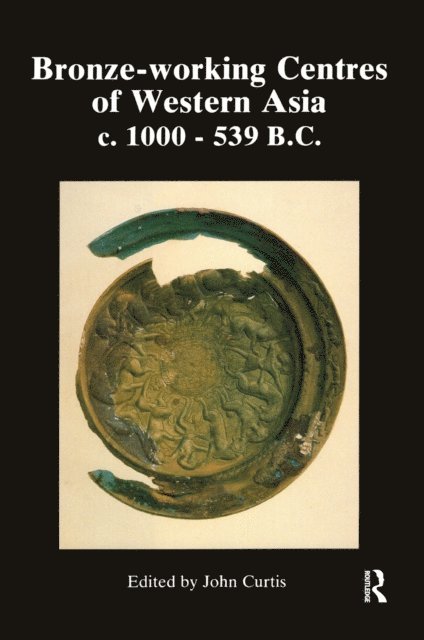
    Bronze-Working Centres Of Western Asia

    AvJohn Curtis

    Inbunden, Engelska, 1988

    2 459 kr

    Tillfälligt slut

    Fler format och utgåvor

    E-bok

    829 kr

    E-bok

    829 kr

    Beskrivning

    First published in 1988, the present volume contains the texts of papers read at a three-day Colloquium on bronzeworking centres in Western Asia from 1000 BC until the beginning of the Achaemenian period in 539 BC, which was held in the British Museum in July 1986. Each paper has been revised in the light of the discussion which followed it. The Colloquium was organized by Dr J E Curtis on behalf of the Department of Western Asiatic Antiquities and forms the first in a series which it is hoped will be held annually.

    Produktinformation

    • Utgivningsdatum:1988-01-04
    • Mått:156 x 234 x 36 mm
    • Vikt:771 g
    • Format:Inbunden
    • Språk:Engelska
    • Antal sidor:408
    • Förlag:Kegan Paul
    • ISBN:9780710302748

    Utforska kategorier

    • Övriga konstformer inom Kultur
    • Konst: teknik inom Kultur

    Innehållsförteckning

    • Introduction, 1 Bronzeworking centres of Western Asia c. 1000-539 BC: problems and perspectives 2 The background to the Luristan Bronzes 3 Northwest Iran as a bronzeworking centre: the view from Hasanlu4 The Iron Age in Guilan: proposal for a chronology 5 Bronzeworking centres in Central Asia c. 1000-539 BC 6 Assyria as a bronzeworking centre in the Late Assyrian period 7 Neo-Assyrian textual evidence for bronzeworking centres 8 Further notes on Assyrian bronzeworking 9 Bronze objects from Babylonia 10 Textual evidence for bronze in Babylonia in the Early Iron Age, 1000-539 BC 11 Urartu as a bronzeworking centre 12 The background to the Phrygian bronze industry 13 North Syria as a bronzeworking centre in the early first millennium BC: luxury commodities at home and abroad 14 Phoenicia as a bronzeworking centre in the Iron Age 15 The role of the Sea Peoples in the bronze industry of Palestine Transjordan in the Late Bronze - Early Iron transition 16 The evidence of bronzeworking in the West Semitic texts -17 Oman: a bronze-producing centre during the 1st half of the 1st millennium BC 18 Egypt as a bronzeworking centre (1000-539 BC) 19 The evidence of scientific analysis: a case study of the Nimrud Bowls 20 Problems and possibilities for provenancing bronzes by chemical composition, with special reference to Western Asia and the Mediterranean in the Early Iron Age 21 Concluding remarks