• Fri frakt över 249 kr
  • •
  • Snabba leveranser
  • •
  • Billiga böcker
Kundservice

Du är på sajten för privatpersoner.

Företag, bibliotek eller offentlig verksamhet?

Du handlar på classic.bokus.com, där alla dina funktioner finns intakta.
Till classic.bokus.com
Bokus logotyp. Gå till startsidan.
  • Erbjudanden
  • Nyheter
  • Student
  • Topplistor
  • Barn & ungdom
  • Bokus Play
  • E-böcker
  • Pocketböcker
  • Spel & pussel

10% rabatt på allt med kod: NYSTART10 →

Sidfot

Mina sidor

    Hjälp

    • Kundservice
    • Vanliga frågor och svar
    • Frakt och leverans
    • Retur vid ångerrätt
    • Reklamera vara
    • Betalning
    • Köpvillkor
    • Allmänna villkor
    • Information om webbplatsens tillgänglighet

    Om Bokus

    • Om oss
    • Pressrum
    • För studenter
    • För företag
    • För bibliotek och offentlig verksamhet
    • För leverantörer
    • Hållbarhet

    Populärt

    • Aktuella erbjudanden
    • Presentkort
    • Studentlitteratur
    • Nya böcker
    • Topplistor
    • Signerade böcker
    • Engelska böcker

    Inspiration

    • Boktips
    • BookTok
    • Populära bokserier
    • Barnbokskaraktärer
    • Populära författare
    Logotyp för Bokus
    Följ oss på Facebook (extern länk)Följ oss på Instagram (extern länk)Följ oss på YouTube (extern länk)Följ oss på TikTok (extern länk)
    bokus @ CookiesAnpassa cookiesIntegritetspolicyKöpvillkor
    Till Citymail hemsida (extern länk)Till Budbee hemsida (extern länk)Till Postnord hemsida (extern länk)Till Schenker hemsida (extern länk)Till Early Bird hemsida (extern länk)Till Walleys hemsida (extern länk)
    1. Historia och arkeologi
    2. Historia
    3. Europas historia
    4. Medeltiden

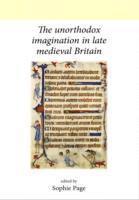
    Unorthodox Imagination in Late Medieval Britain

    AvSophie Page

    Inbunden, Engelska, 2011

    Del i serien Neale UCL Studies in British History

    1 295 kr

    Beställningsvara. Skickas inom 5-8 vardagar. Fri frakt över 249 kr.

    Beskrivning

    The unorthodox imagination in late medieval Britain explores how medieval people responded to images, stories, beliefs and practices which were at odds with the normative world view, from the heretical and subversive to the marvellous and exotic.The chapter by Jean-Claude Schmitt examines why some unorthodox images were viewed as provocative and threatening and explores how successfully ecclesiastical authorities contained their impact. The power of unorthodoxy to provoke wonder, scepticism or disapproval provides an opportunity to view medieval culture from fresh perspectives. The essays in this volume show that unorthodoxy was embedded in mainstream medieval culture, from stories of fairies and witches which promoted orthodox moral values to the social conformity of practitioners of ritual magic.This book provides a guide to understanding medieval unorthodoxy and the roles played by experience and imagination in medieval encounters with the unorthodox. It will be essential reading for anyone interested in the exotic, provocative and deviant in medieval culture.

    Produktinformation

    • Utgivningsdatum:2011-01-01
    • Mått:156 x 234 x 17 mm
    • Vikt:540 g
    • Format:Inbunden
    • Språk:Engelska
    • Serie:Neale UCL Studies in British History
    • Antal sidor:232
    • Förlag:Manchester University Press
    • ISBN:9780719078354

    Utforska kategorier

    • Medeltiden inom Historia och arkeologi

    Mer om författaren

    Sophie Page is Lecturer in Late Medieval History at University College London

    Recensioner i media

    The Unorthodox Imagination in Late Medieval Britain, ed. Sophie Page (Manchester: Manchester U.P., 2010; pp. 220. GBP60). The period of the later middle ages saw increasingly concerted attempts to impose black and white judgements on various intellectual and religious spheres. In attitudes to images, heretics, magic, the sacred, and the landscape, among many other phenomena, the period was marked by categorisation, definition, and attempted 'normalisation'. But did this drive for certainty and safety create a safe and certain world? This is a subject which has attracted a great deal of interest in some quarters, notably those concerned with the study of female religion-one thinks immediately of Dyan Elliott's work on the inquisitorial investigation of female visions-and of heresy. In this volume Sophie Page brings together research in disparate fields to show quite successfully that there is more comparative and synthetic work to be done on the 'unorthodox' in late medieval Europe, and that there are some big questions waiting to be addressed. By 'unorthodox' Page means not only heretical, but also magical, unusual, proscribed, abnormal, marginal, and profane. The open-endedness of this category is fertile. The better of the essays in this volume (and it is a mixed bag, as one would expect from a set of conference proceedings) all touch on similar themes: a growing concern with the categorisation of belief and experience into good and bad, and concern with the 'grey areas' which this creates. In some ways it might seem as if the Huizinga thesis, of a world struggling to come to terms with stark contrasts, is emerging here, but, if so, it is different from Huizinga's picture in an important respect. The writers in this volume assume that cultural categories and moods are the products of rational activity and cognition, and they also assume that these categories do not encompass the whole of reality. This makes for an interesting series of investigations. The volume opens with Jean-Claude Schmitt's reflections on the increasing condemnation of images representing the numinous in the fifteenth century. Before that time there had been no doctrine or law on what could be depicted in images-at least not in the way that there were spiralling universes of law and scholarship on what one could say or write. He makes particularly interesting remarks about the condemnation of 'open virgin' statues whose doors revealed the whole Trinity in the womb. Carl Watkins describes the growing conservatism of chronicle writers between the twelfth and fourteenth centuries in their attitudes to miracles, portents and wonders, connecting this to the 'rising stock of eyewitness testimony' in law. This is quite a big thesis, and surely worth some detailed debate: I suspect many would disagree with him, but it is an interesting question. John Arnold seeks to expand and complicate the grey area between heresy and orthodoxy which Anne Hudson identified in English vernacular religious texts. He shows that scepticism was broader and older than any one academic or sect-based heresy; in other words, if grey is a product of mixing black and white, then, in this case, the harder you look, the more grey everything appears. Catherine Rider describes changes in churchmen's attitudes to magic, noting growing concern in pastoral texts for the irreverence implied in the misuse of church goods-for example, in divination. Perhaps providing analogous support for Arnold's argument, she identifies a broad grey area in what pastoral writers considered as 'sortilegium'. Lea Olsan's grey area is a concrete cultural phenomenon rather than a historian's categorisation. She describes how heroes in romance literature defy uncertainty and the befuddlement of enchantment to emerge grasping truth, suggesting that, in late medieval society, the firm ground of belief was more of an aspiration than a reality. This sums up the theme of the volume very nicely: grey areas are not a curious cultural middle ground between the known quantities of black and white, they are all that there is; and the late medieval obsession with defining and categorising was an attempt to find some personal or institutional stability. -- IAN FORREST English Historical Review 20120601

    Innehållsförteckning

    • List of figuresList of contributorsAcknowledgementsIntroduction1. Unorthodox’ Images?THE 2006 NEALE LECTURE Jean-Claude Schmitt 2. Comment on Jean-Claude Schmitt’s Neale Lecture Robert Bartlett 3. Fascination and anxiety in medieval wonder storiesCarl Watkins4 . The materiality of unbelief in late medieval EnglandJohn Arnold5. Magic and unorthodoxy in late medieval English pastoral manualsCatherine Rider6. Private reliquaries and other prophylactic jewels: new compositions and devotional practices (XIVth-XVth centuries)Edina Bozoky7. The middleness of ritual magicFrank Klaassen8. Enchantment in medieval literatureLea Olsan9. Constructing exotic animals and environments in late medieval BritainAleks PluskowskiIndex