• Fri frakt över 249 kr
  • •
  • Snabba leveranser
  • •
  • Billiga böcker
Kundservice

Du är på sajten för privatpersoner.

Företag, bibliotek eller offentlig verksamhet?

Du handlar på classic.bokus.com, där alla dina funktioner finns intakta.
Till classic.bokus.com
Bokus logotyp. Gå till startsidan.
  • Erbjudanden
  • Nyheter
  • Student
  • Topplistor
  • Barn & ungdom
  • Bokus Play
  • E-böcker
  • Pocketböcker
  • Spel & pussel

10% rabatt på allt med kod NYSTART10 →

Sidfot

Mina sidor

    Hjälp

    • Kundservice
    • Vanliga frågor och svar
    • Frakt och leverans
    • Retur vid ångerrätt
    • Reklamera vara
    • Betalning
    • Köpvillkor
    • Allmänna villkor
    • Information om webbplatsens tillgänglighet

    Om Bokus

    • Om oss
    • Pressrum
    • För studenter
    • För företag
    • För bibliotek och offentlig verksamhet
    • För leverantörer
    • Hållbarhet

    Populärt

    • Aktuella erbjudanden
    • Presentkort
    • Studentlitteratur
    • Nya böcker
    • Topplistor
    • Signerade böcker
    • Engelska böcker

    Inspiration

    • Boktips
    • BookTok
    • Populära bokserier
    • Barnbokskaraktärer
    • Populära författare
    Logotyp för Bokus
    Följ oss på Facebook (extern länk)Följ oss på Instagram (extern länk)Följ oss på YouTube (extern länk)Följ oss på TikTok (extern länk)
    bokus @ CookiesAnpassa cookiesIntegritetspolicyKöpvillkor
    Till Citymail hemsida (extern länk)Till Budbee hemsida (extern länk)Till Postnord hemsida (extern länk)Till Schenker hemsida (extern länk)Till Early Bird hemsida (extern länk)Till Walleys hemsida (extern länk)
    1. Medicin
    2. Medicin: icke kliniska discipliner
    3. Fysiologi

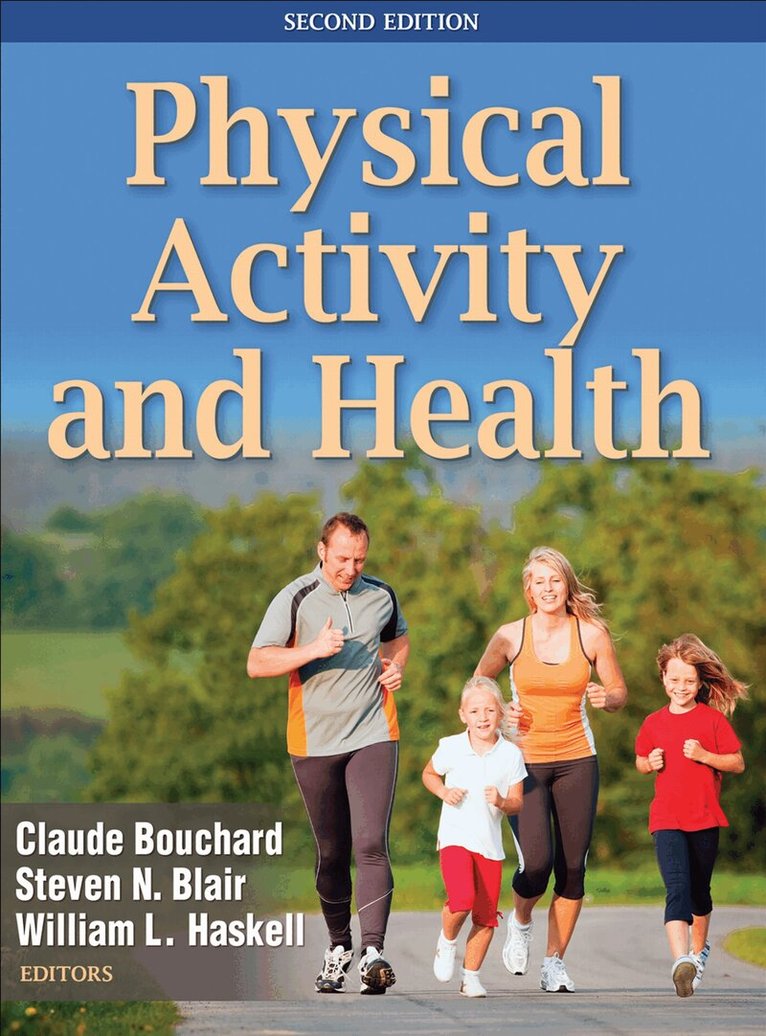
    Physical Activity and Health

    AvClaude Bouchard,Steven N. Blair

    Inbunden, Engelska, 2012

    1 178 kr

    Beställningsvara. Skickas inom 5-8 vardagar. Fri frakt över 249 kr.

    Beskrivning

    The human body is designed for activity. For most of our history, physical activity was required for survival, but technological advances have eliminated much of the need for hard physical labor. As our activity levels have dropped, it has become clear that a physically inactive lifestyle can lead to a host of health problems. Physical Activity and Health, Second Edition, provides a comprehensive treatment of the research on the benefits of a physically active lifestyle in comparison with the harmful consequences of physical inactivity. Written by leading scientists from the United States, Canada, Europe, and Australia, Physical Activity and Health, Second Edition, brings together the results of the most important studies on the relationship between physical activity, sedentarism, and various health outcomes. The second edition has been fully updated based on the latest advances in this rapidly changing field and expanded to include the following new content: • A chapter on the physiology of inactivity and the effects of sedentary behavior even in people who engage in appropriate amounts of physical activity, which is an area of growing interest • More extensive coverage of physical activity, aging, and the brain, including a new chapter on the relationship between physical activity and brain structures and functions • A chapter on the development of national and international physical activity and health guidelines, which will help readers better understand how scientific findings are converted into practical recommendations Physical Activity and Health, Second Edition, offers a detailed yet concise presentation of key concepts as well as a framework to help readers relate results from single studies or collections of studies to the overall paradigm linking physical activity and physical fitness to health. For each of the topics covered, the text provides an overview of the most important research findings, discusses the limitations of the current knowledge base, and identifies directions for future investigation. At the core of the text is a review of our current understanding of how physical activity affects health concerns such as cardiovascular disease, diabetes, cancer, and obesity as well as aging and mental health. The text identifies sedentary living habits and poor fitness as major public health problems and examines the potential of physical activity to prevent disease and enhance quality of life. This complete resource also looks at the evolution of the field of physical activity and health; variations in physical activity levels across age, sex, and ethnic groups; the body's physiological responses to physical activity; dose-response issues; and the influence of genetics on physical activity, fitness, and health. The book ends with an integration of the issues covered and discusses new opportunities for research. The second edition of Physical Activity and Health continues to offer clear, user-friendly coverage of the most important concepts and research in the field. Numerous special features will aid readers in their comprehension of the material. Chapter outlines and callout boxes help readers key in on important topics and focus their reading, and chapter summaries, definitions of key terms, and study questions provide tools for review and self-testing. Commonly used acronyms and abbreviations are found on the interior covers for handy reference. Where other books have simply promoted physical activity for the individual or a population, Physical Activity and Health, Second Edition, completely integrates current knowledge of the relationship between physical activity and health. With contributions from some of the finest scientists in the field, this comprehensive text offers information unmatched in accuracy and reliability.

    Produktinformation

    • Utgivningsdatum:2012-02-29
    • Mått:216 x 279 x 21 mm
    • Vikt:1 474 g
    • Format:Inbunden
    • Språk:Engelska
    • Antal sidor:456
    • Upplaga:2
    • Förlag:Human Kinetics Publishers
    • ISBN:9780736095419

    Utforska kategorier

    • Fysiologi inom Medicin
    • Motion & träning inom Hälsa och familj

    Mer om författaren

    Claude Bouchard, PhD, is the director of the Human Genomics Laboratory at Pennington Biomedical Research Center, a campus of the Louisiana State University System, where he also holds the John W. Barton Sr. chair in genetics and nutrition. He was director of the Physical Activity Sciences Laboratory at Laval University, Quebec City, Canada, for over 20 years. Dr. Bouchard holds a BPed from Laval University, an MSc in exercise physiology from the University of Oregon at Eugene, and a PhD in population genetics from the University of Texas at Austin. For four decades, his research has dealt with the role of physical activity, and the lack thereof, on physiology, metabolism, and indicators of health, taking into account genetic uniqueness. He has performed research on the contributions of gene sequence variation and the benefits to be expected from regular activity in terms of changes in cardiovascular and diabetes risk factors Dr. Bouchard has served as program leader for four consensus conferences and symposia pertaining to various aspects of physical activity and health. He has published more than 1,000 scientific papers and has edited several books and monographs dealing with physical activity and health. Dr. Bouchard is the recipient of the Willendorf Award from the International Association for the Study of Obesity, the Sandoz Award from the Canadian Atherosclerosis Society, the Albert Creff Award of the National Academy of Medicine of France, and four honoris causa doctorates (Katholieke Universiteit Leuven, University of South Carolina, University of Guelph, and Brock University). He is a foreign member of the Royal Academy of Medicine of Belgium and a member of the Order of Canada. Dr. Bouchard is former president of the Canadian Society for Applied Physiology, the North American Association for the Study of Obesity, and the International Association for the Study of Obesity. He is a fellow of the American College of Sports Medicine, the American Heart Association, the American Society of Nutrition, and the American Association for the Advancement of Science. Steven N. Blair, PED, was a distinguished professor emeritus in the departments of exercise science and epidemiology and biostatistics at the Arnold School of Public Health at the University of South Carolina. His research focused on the associations between lifestyle and health, with a specific emphasis on exercise, physical fitness, body composition, and chronic disease. Listed as one of the world’s most influential scientific minds by Thomson Reuters, Blair published more than 700 papers and chapters in scientific literature. With over 60,000 citations of his body of work (h-index of 114), he was one of the most highly cited exercise scientists.Blair was a fellow of the American College of Epidemiology, Society of Behavioral Medicine, American College of Sports Medicine, American Heart Association, Obesity Society, and European Society of Preventive Medicine. He was a retired fellow of the Royal Society of Medicine–London and the National Academy of Kinesiology A past president of the American College of Sports Medicine, National Coalition for Promoting Physical Activity, and the National Academy of Kinesiology, he received four honorary doctoral degrees. He received awards from many professional associations, including a MERIT Award from the National Institutes of Health, an Honor Award from the American College of Sports Medicine, and a Population Science Award from the American Heart Association. He was one of the few individuals outside the U.S. Public Health Service to be awarded the Surgeon General's Medallion.Steven Blair passed away in 2023. William L. Haskell, PhD, is emeritus professor of medicine in the Stanford Prevention Research Center and the Division of Cardiovascular Medicine, Stanford School of Medicine. He holds an honorary MD degree from Linkoping University in Sweden. For more than 40 years, his research has investigated the relationships between physical activity and health. He has been involved at the national and international levels in the development of physical activity and fitness guidelines and recommendations for physical activity in health promotion and disease prevention. Dr. Haskell has served as principal investigator on major NIH-funded research projects demonstrating the health benefits of physical activity. For the past 17 years, he has been a member of the planning committee and faculty for the CDC-sponsored research course on physical activity and public health. From 1968 to 1970, he was program director for the President's Council on Physical Fitness and Sports. He also served as chair of the Physical Activity Guidelines Advisory Committee for the U.S. Department of Health and Human Services, which documented the scientific basis for the 2008 Physical Activity Guidelines for Americans. From 2008 to 2010 he was a scientific advisor to the World Health Organization for the development of Global Recommendations on Physical Activity for Health (2010) and to the United Kingdom Health Ministries for the development of physical activity and sedentary behavior guidelines for the home countries. Currently he is chair of the International Review Panel for the Evaluation of Exercise and Sports Sciences in the Nordic Countries. He is past president of the American College of Sports Medicine and founder and past president of the American College of Sports Medicine Foundation. He was a fellow with the Exercise and Rehabilitation Council, American Heart Association, and American Association of Cardiovascular and Pulmonary Rehabilitation.

    Recensioner i media

    "With the vast number of topics it covers as well as the examples of the practical application of the underlying principles it presents, this book is an excellent learning and teaching resource."-- Doody's Book Review (5 star review)

    Innehållsförteckning

    • Part I: History and Current Status of the Study of Physical Activity and HealthChapter 1: Why Study Physical Activity and Health? Claude Bouchard, PhD; Steven N. Blair, PED; and William L. Haskell, PhDHuman Evolution, History, and Physical Activity Burden of Chronic Diseases Health and Its Determinants Aging and Health Defining Physical Activity and Physical Fitness Physical Inactivity Versus Physical Activity Summary Review Materials Chapter 2: Historical Perspectives on Physical Activity, Fitness, and Health Russell R. Pate, PhDEarly Beliefs About Physical Activity and Health Scientific Inquiry on Exercise and Health Evolution of Physical Activity Guidelines Summary Review Materials Chapter 3: Physical Activity and Fitness With Age, Sex, and Ethnic Differences Peter T. Katzmarzyk, PhD, FACSMPhysical Activity Physical Fitness Summary Review Materials Chapter 4: Sedentary Behavior and Inactivity Physiology Marc Hamilton, PhD; and Neville Owen, PhDSedentary Behavior, Physical Activity, and Public Health Inactivity Physiology: The Underlying Biology of Acute and Chronic Muscular Inactivity Sedentary Behavior and Metabolic Health: Emerging Epidemiological Evidence Humans May Not Have Reached the Pinnacle of Physical Inactivity A Comprehensive Sedentary Behavior Research Agenda Public Health Implications Summary Review Materials Part II: Effects of Physical Activity on the Human OrganismChapter 5: Metabolic, Cardiovascular, and Respiratory Responses to Physical Activity Edward T. Howley, PhDRelationship of Energy to Physical Activity Oxygen Consumption and Cardiovascular and Respiratory Responses to Exercise Effect of Training, Age, and Gender on Maximal Oxygen Uptake Application to Exercise Training and Physical Activity Interventions Summary Review Materials Chapter 6: Acute Responses to Physical Activity and Exercise Adrianne E. Hardman, MSc, PhDLipids and Lipoproteins Endothelial Function Insulin–Glucose Dynamics Blood Pressure Hematological Changes Immune Function and Inflammation Responses Related to Energy Balance Augmentation of Acute Effects by Training Summary Review Materials Chapter 7: Hormonal Response to Regular Physical Activity Peter A. Farrell, PhDDefining Hormones Importance of Hormonal Regulation Regular Physical Activity and Hormonal Adaptations Summary Review Materials Chapter 8: Skeletal Muscle Adaptation to Regular Physical Activity Howard J. Green, PhD Skeletal Muscle and Human Survival Muscle Cell: Composition, Structure, and Function Muscle Fiber Types and Subtypes Muscle Adaptation and Functional Consequences Aging Muscle: The Role of Training Summary Review Materials Chapter 9: Response of Liver, Kidney, and Other Organs and Tissues to Regular Physical Activity Roy J. Shephard, MB, BS, MD (London), PhD, DPEAcute Effects of Physical Activity Chronic Effects of Physical Activity Strengths and Limitations of the Current Evidence Summary Review Materials Part III: Physical Activity, Fitness, and HealthChapter 10: Physical Activity, Fitness, and Mortality Rates Michael J. LaMonte, PhD; and Steven N. Blair, PEDPhysical Activity and Mortality Fitness and Mortality Activity or Fitness and Mortality in Adults With Existing Diseases Quantifying the Population Mortality Burden of Inactivity Summary Review Materials Chapter 11: Physical Activity, Fitness, and Cardiac, Vascular, and Pulmonary Morbidities Ian Janssen, PhDLow Physical Activity and Low Cardiorespiratory Fitness as Risk Factors for Cardiovascular Morbidities Low Physical Activity and Low Cardiorespiratory Fitness as Risk Factors for Pulmonary Morbidities Biological Mechanisms Role of Physical Activity in Patients with Cardiac, Vascular, and Pulmonary Morbidities Summary Review Materials Chapter 12: Physical Activity, Fitness, and Obesity Robert Ross, PhD; and Ian Janssen, PhDDefinition and Problem of Overweight and Obesity Fat Depots Relationships Among Excess Weight, Physical Activity, and Fitness Role of Physical Activity in Prevention and Treatment of Excess Weight Summary Review Materials Chapter 13: Physical Activity, Fitness, and Diabetes Mellitus R. Jan-Willem Middelbeek, MD, MS; Oscar Alcazar, PhD; and Laurie J. Goodyear, PhDDiabetes: Definitions and Prevalence Epidemiology, Etiology, and Complications of Type 2 Diabetes Impact of Physical Activity on Insulin and Glucose Metabolism Epidemiological Evidence Indicating Benefits of Physical Activity in Preventing Type 2 Diabetes Summary of Randomized Controlled Trials on the Prevention of Type 2 Diabetes Importance of Regular Physical Activity for People With Type 2 Diabetes Summary Review Materials Chapter 14: Physical Activity, Fitness, and Cancer I-Min Lee, MBBS, ScDImportance of Cancer How Physical Activity and Physical Fitness Decrease the Risk of Developing Cancer How We Study Whether Physical Activity and Physical Fitness Decrease the Risk of Developing Cancer Physical Activity, Physical Fitness, and Site-Specific Cancers Physical Activity and Cancer Survivors Summary Review Materials Chapter 15: Physical Activity, Fitness, and Joint and Bone Health Jennifer Hootman, PhD, ATC, FACSM, FNATAScientific Evidence Strengths and Limitations of the Evidence Summary Review Materials Chapter 16: Physical Activity, Muscular Fitness, and Health Neil McCartney, PhD; and Stuart Phillips, PhDHistory of Resistance Training and Its Role in Health Fundamental Aspects of Resistance Training Resistance Training Throughout the Life Span Resistance Training in Disease and Disability Summary Review Materials Chapter 17: Physical Activity, Fitness, and Children Thomas Rowland, MDUnderstanding the Exercise–Health Link in Children Defining the Kinds and Amount of Physical Activities for Health Optimal Intervention Strategies Biological Effects on Physical Activity in Youth Summary Review Materials Chapter 18: Risks of Physical Activity Evert A.L.M. Verhagen, PhD; Esther M.F. van Sluijs, PhD; and Willem van Mechelen, MD, PhD Risks of Physical Activity and Sport Participation Minimizing Risk and Maximizing Benefits Recommendations for Future Research Summary Review Materials Part IV: Physical Activity, Fitness, Aging, and Brain FunctionsChapter 19: Physical Activity, Fitness, and Aging Loretta DiPietro, PhD, MPHThe Aging Process Methodological Considerations in Aging Research Demographics of Physical Activity Among Older Adults Dimensions of Physical Activity and Their Relationship to Health and Function in Aging Programmatic Issues in Promoting Physical Activity in Older Populations Summary Review Materials Chapter 20: Physical Activity and Brain Functions Kirk I. Erickson, PhDDescriptive Questions Mechanistic Questions Applied Questions: Populations Benefiting From Physical Activity Moderating Questions: Factors Moderating the Effect of Physical Activity Summary Review Materials Chapter 21: Exercise and Its Effects on Mental Health John S. Raglin, PhD; and Gregory S. Wilson, PED, FACSMResearch Paradigms of Exercise and Mental Health Research Exercise and Depression Exercise and Anxiety Exercise and Schizophrenia Putative Mechanisms for the Psychological Benefits of Exercise Detrimental Psychological Responses to Exercise: The Overtraining Syndrome Summary Review Materials Part V: How Much Is Required and How Do We Get There?Chapter 22: Dose–Response Issues in Physical Activity, Fitness, and Health William L. Haskell, PhDPrinciples Guiding the Body's Response to Activity Components of the Physical Activity Dose Factors Determining Optimal Activity Dose Physical Activity and Fitness: Dose for Health Benefits Summary Review Materials Chapter 23: From Science to Physical Activity Guidelines Mark S. Tremblay, PhD; and William L. Haskell, PhDStages of Physical Activity Guideline Development Strengths, Limitations, and Challenges Summary Review Materials Part VI: New Challenges and OpportunitiesChapter 24: Genetic Differences in the Relationships Among Physical Activity, Fitness, and Health Tuomo Rankinen, PhD; and Claude Bouchard, PhDBasics of Human Genetics Events in Human Genes and Genomes Genetic Variation in Exercise Traits Among Sedentary People Genetics of Physical Activity Level Individual Differences in Response to Regular Exercise Genes and Responses to Exercise Trait-Specific Response to Exercise Personalized Exercise Medicine Summary Review Materials Chapter 25: An Integrated View of Physical Activity, Fitness, and Health William L. Haskell, PhD; Steven N. Blair, PED; and Claude Bouchard, PhD Physical Activity Versus Inactivity: Universal Value Versus Damaging Consequences Developing and Implementing Physical Activity Plans Research Questions and Issues Summary Review Materials

    Betyg & recensioner

    4/5