• Fri frakt över 249 kr
  • •
  • Snabba leveranser
  • •
  • Billiga böcker
Kundservice

Du är på sajten för privatpersoner.

Företag, bibliotek eller offentlig verksamhet?

Du handlar på classic.bokus.com, där alla dina funktioner finns intakta.
Till classic.bokus.com
Bokus logotyp. Gå till startsidan.
  • Erbjudanden
  • Nyheter
  • Student
  • Topplistor
  • Barn & ungdom
  • Bokus Play
  • E-böcker
  • Pocketböcker
  • Spel & pussel

10% rabatt på allt med kod: NYSTART10 →

Sidfot

Mina sidor

    Hjälp

    • Kundservice
    • Vanliga frågor och svar
    • Frakt och leverans
    • Retur vid ångerrätt
    • Reklamera vara
    • Betalning
    • Köpvillkor
    • Allmänna villkor
    • Information om webbplatsens tillgänglighet

    Om Bokus

    • Om oss
    • Pressrum
    • För studenter
    • För företag
    • För bibliotek och offentlig verksamhet
    • För leverantörer
    • Hållbarhet

    Populärt

    • Aktuella erbjudanden
    • Presentkort
    • Studentlitteratur
    • Nya böcker
    • Topplistor
    • Signerade böcker
    • Engelska böcker

    Inspiration

    • Boktips
    • BookTok
    • Populära bokserier
    • Barnbokskaraktärer
    • Populära författare
    Logotyp för Bokus
    Följ oss på Facebook (extern länk)Följ oss på Instagram (extern länk)Följ oss på YouTube (extern länk)Följ oss på TikTok (extern länk)
    bokus @ CookiesAnpassa cookiesIntegritetspolicyKöpvillkor
    Till Citymail hemsida (extern länk)Till Budbee hemsida (extern länk)Till Postnord hemsida (extern länk)Till Schenker hemsida (extern länk)Till Early Bird hemsida (extern länk)Till Walleys hemsida (extern länk)
    1. Historia och arkeologi
    2. Historia
    3. Europas historia

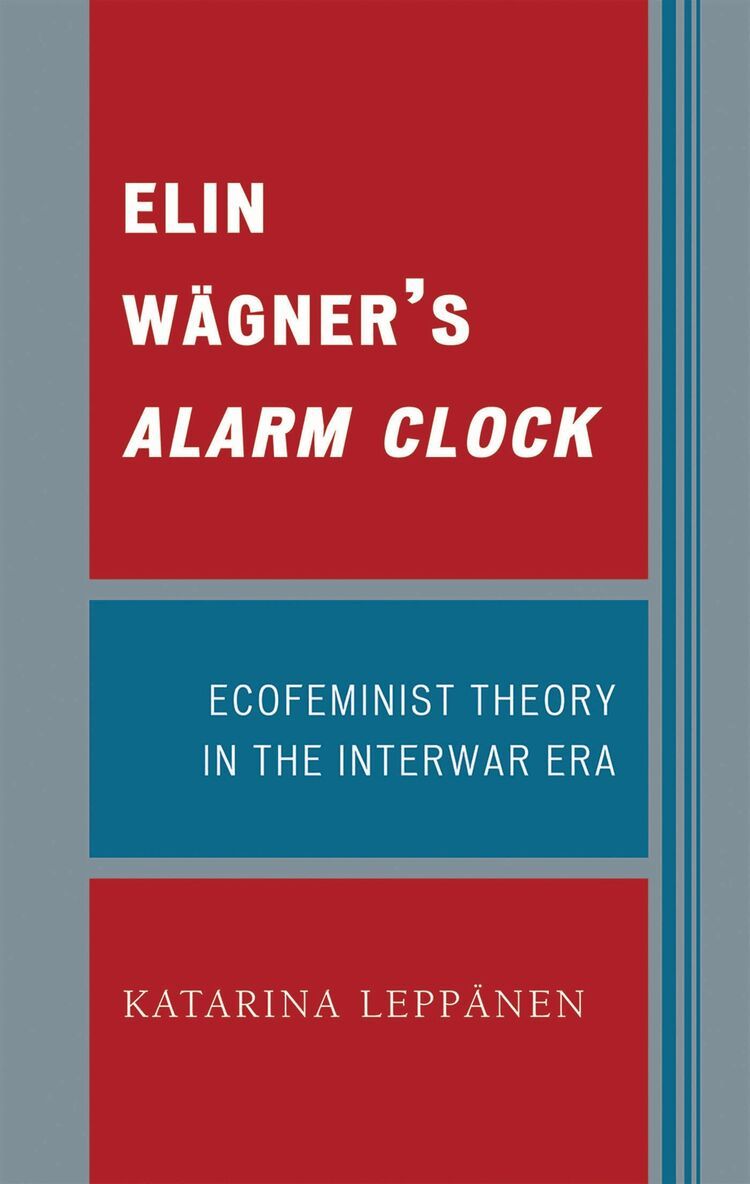
    Elin Wägner's Alarm Clock

    Ecofeminist Theory in the Interwar Era

    AvKatarina Leppänen

    Inbunden, Engelska, 2007

    1 436 kr

    Beställningsvara. Skickas inom 10-15 vardagar. Fri frakt över 249 kr.

    Beskrivning

    This book analyses the ideas of the Swedish journalist, feminist, and literary author Elin Wägner (1882-1949), as conveyed in her book Väckarklocka (1941), in a European feminist context. This context is presented in terms of three elements. Firstly, the German sociologist/educationalist Mathilde Vaerting and her sociology of power played an important role in Wägner's development of a theory of matriarchy. Secondly, the influence of the Austrian feminist Rosa Mayreder and her theory of masculine civilization and feminine culture are analyzed in relation to Wägner's development of what might be called an early ecological feminism. Thirdly, the mainly unknown Women's Organization for World Order (WOWO) is presented.0s and 1930s, which wanted to strengthen women's position and confidence as political citizens by providing them with a historical past where women ruled (matriarchy). Thereby they not only reinvented a past, but also revitalized the emergence or eternity of patriarchy. These women discussed the possibility of women offering an alternative to the prevailing order. A special analysis is made of Mayreder's and Wägner's way of discussing what woman is and in what ways she can challenge the system. Both argued that women ought to have the same rights and duties as men, but that this should not require them to adapt to the distorted male system. This study argues that this position, easily characterized as "essentialist" in modern feminist terms, is in fact functional and strongly emancipatory in its time and context.In this reevaluation of Väckarklocka Katarina Leppänen has established this important Swedish novel as a text central to the development of the feminist movement. Elin Wägner's Alarm Clock is a book suitable for students of Swedish Literature and European Feminism.

    Produktinformation

    • Utgivningsdatum:2007-11-06
    • Mått:160 x 239 x 24 mm
    • Vikt:567 g
    • Format:Inbunden
    • Språk:Engelska
    • Antal sidor:252
    • Förlag:Bloomsbury Publishing Plc
    • ISBN:9780739120033

    Utforska kategorier

    • Europas historia inom Historia och arkeologi

    Mer om författaren

    Katarina Leppänen is a researcher at the Center for Public Sector Research and a teacher in the Department of History of Ideas and Theory of Science, Göteborg University.

    Recensioner i media

    By reading Elin Wägner´s Väckarklocka in an European context, rather than a purely Swedish context, which is often done, many of the ideas of the book appear clearly as part of a larger political project which entailed a re-evaluation of the prevailing social order. What Leppänen shows in Elin Wägner's Alarm Clock is that the debate on matriarchy in the 1920s and 1930s was much stronger and vital than has been known before. And that this position, often characterised negatively as essentialism in modern feminist terms, was, in fact, functional and strongly emancipatory in its time and context. Elin Wägner's Alarm Clock is a good contribution to the complex history of European feminism...

    Innehållsförteckning

    • Chapter 1 IntroductionPart 2 MovementsChapter 3 Alarm Clock for the Age and the MovementPart 4 HistoryChapter 5 Matriarchy and J.J. BachofenChapter 6 Towards Feminist PoliticsPart 7 Civilization and NatureChapter 8 Is Civilization Unnatural?Chapter 9 Earth and the EnvironmentChapter 10 Woman as AlternativeChapter 11 re:Fwd: feminismsChapter 12 Appendix: Program from the Women's Organization for World Order