• Fri frakt över 249 kr
  • •
  • Snabba leveranser
  • •
  • Billiga böcker
Kundservice

Du är på sajten för privatpersoner.

Företag, bibliotek eller offentlig verksamhet?

Du handlar på classic.bokus.com, där alla dina funktioner finns intakta.
Till classic.bokus.com
Bokus logotyp. Gå till startsidan.
  • Erbjudanden
  • Nyheter
  • Student
  • Topplistor
  • Barn & ungdom
  • Bokus Play
  • E-böcker
  • Pocketböcker
  • Spel & pussel

10% rabatt på allt med kod: NYSTART10 →

Sidfot

Mina sidor

    Hjälp

    • Kundservice
    • Vanliga frågor och svar
    • Frakt och leverans
    • Retur vid ångerrätt
    • Reklamera vara
    • Betalning
    • Köpvillkor
    • Allmänna villkor
    • Information om webbplatsens tillgänglighet

    Om Bokus

    • Om oss
    • Pressrum
    • För studenter
    • För företag
    • För bibliotek och offentlig verksamhet
    • För leverantörer
    • Hållbarhet

    Populärt

    • Aktuella erbjudanden
    • Presentkort
    • Studentlitteratur
    • Nya böcker
    • Topplistor
    • Signerade böcker
    • Engelska böcker

    Inspiration

    • Boktips
    • BookTok
    • Populära bokserier
    • Barnbokskaraktärer
    • Populära författare
    Logotyp för Bokus
    Följ oss på Facebook (extern länk)Följ oss på Instagram (extern länk)Följ oss på YouTube (extern länk)Följ oss på TikTok (extern länk)
    bokus @ CookiesAnpassa cookiesIntegritetspolicyKöpvillkor
    Till Citymail hemsida (extern länk)Till Budbee hemsida (extern länk)Till Postnord hemsida (extern länk)Till Schenker hemsida (extern länk)Till Early Bird hemsida (extern länk)Till Walleys hemsida (extern länk)
    1. Samhälle och politik
    2. Sociologi och antropologi
    3. Antropologi

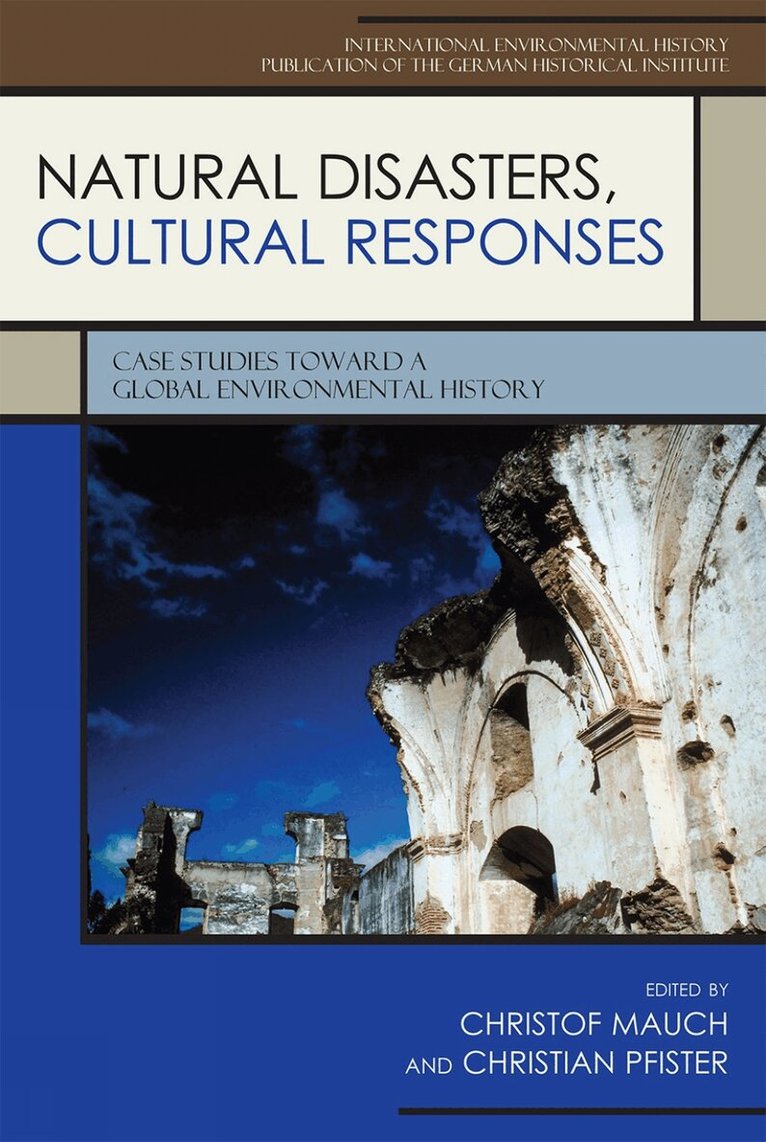
    Natural Disasters, Cultural Responses

    Case Studies toward a Global Environmental History

    AvChristof Mauch,Christian Pfister

    Häftad, Engelska, 2009

    794 kr

    Beställningsvara. Skickas inom 10-15 vardagar. Fri frakt över 249 kr.

    Beskrivning

    Catastrophes, it seems, are becoming more frequent in the twenty-first century. According to UN statistics, every year approximately two hundred million people are directly affected by natural disasters—seven times the number of people who are affected by war. Discussions about global warming and fatal disasters such as Katrina and the Tsunami of 2004 have heightened our awareness of natural disasters and of their impact on both local and global communities. Hollywood has also produced numerous disaster movies in recent years, some of which have become blockbusters. This volume demonstrates that natural catastrophes—earthquakes, hurricanes, floods, etc.—have exercised a vast impact on humans throughout history and in almost every part of the world. It argues that human attitudes toward catastrophes have changed over time. Surprisingly, this has not necessarily led to a reduction of exposure or risk. The organization of the book resembles a journey around the globe—from Europe to North Africa, the Middle East, and Asia, and from the Pacific through South America and Mexico to the United States. While natural disasters appear everywhere on the globe, different cultures, societies, and nations have adopted specific styles for coping with disaster. Indeed, how humans deal with catastrophes depends largely on social and cultural patterns, values, religious belief systems, political institutions, and economic structures. The roles that catastrophes play in society and the meanings they are given vary from one region to the next; they differ—and this is one of the principal arguments of this book—from one cultural, political, and geographic space to the next. The essays collected here help us to understand not only how people in different times throughout history have learned to cope with disaster but also how humans in different parts of the world have developed specific cultural, social, and technological strategies for doing so.

    Produktinformation

    • Utgivningsdatum:2009-02-16
    • Mått:157 x 229 x 28 mm
    • Vikt:594 g
    • Format:Häftad
    • Språk:Engelska
    • Antal sidor:394
    • Förlag:Bloomsbury Publishing Plc
    • ISBN:9780739124161

    Utforska kategorier

    • Antropologi inom Samhälle och politik
    • Miljövetenskap och miljöpolitik inom Naturvetenskap och teknik
    • Allmän historia och världshistoria inom Historia och arkeologi

    Mer om författaren

    Christof Mauch is Chair in North American History and Transatlantic Relations at the Amerika-Institut of Munich University. Christian Pfister is a professor in the Department of Economic, Social, and Environmental History at the Institute of History, University of Bern.

    Recensioner i media

    Edited by the acknowledged masters of environmental history, Christof Mauch and Christian Pfister, this absorbing collection enriches our understanding of how humans at different times and in different places have dealt with disasters. The unexpected and dramatic hazards of life on earth—earthquakes, floods, drought, frost and fires—have brought real suffering, death, famine, and disease to rich and poor, rural and urban alike. However, as the expert contributors to this book demonstrate so persuasively from historical case studies around the world, they have also produced particular situations that have generated innovative socio-political, technological and economic coping strategies. This is an informative and thought-provoking book, not only for its wealth of information and enormous contribution to the growing field of disaster history, but it is a timely publication for an era in which human beings, perhaps more than at any other period in history, feel vulnerable in the face of growing anthropogenic catastrophe.

    Innehållsförteckning

    • Chapter 1 IntroductionChapter 2 1. Learning from Nature-induced Disasters: Theoretical Considerations and Case Studies from Western EuropeChapter 3 2. Disaster and Political Culture in Germany Since 1500Chapter 4 3. Summer Frost: A Natural Hazard with Fatal Consequences in Preindustrial FinlandChapter 5 4. Society and Natural Risks in France, 1500-2000: Changing Historical PerspectivesChapter 6 5. Humanitarianism and Colonialism: Religious Responses to the Algerian Drought and Famine of 1866–1870Chapter 7 6. The Floods of Baghdad: Cultural and Technological ResponsesChapter 8 7. Interpreting Earthquakes in Medieval Islamic TextsChapter 9 8. Famine in Bengal: A Comparison of the 1770 Famine in Bengal and the 1897 Famine in ChotanagpurChapter 10 9. "Heaven-Sent" Disasters in Late-Imperial China: The Scope of the State and BeyondChapter 11 10. Cultures of Disaster, Cultures of Coping: Hazard as a Frequent Life Experience in the PhilippinesChapter 12 11. The Parana River Floods during the Spanish-Colonial Period: Impact and ResponsesChapter 13 12. Documenting Disaster: Archival Investigations of Climate, Crisis, and Catastrophe in Colonial MexicoChapter 14 13. American Disasters during the Twentieth Century: The Case of New JerseyChapter 15 Afterword