• Fri frakt över 249 kr
  • •
  • Snabba leveranser
  • •
  • Billiga böcker
Kundservice

Du är på sajten för privatpersoner.

Företag, bibliotek eller offentlig verksamhet?

Du handlar på classic.bokus.com, där alla dina funktioner finns intakta.
Till classic.bokus.com
Bokus logotyp. Gå till startsidan.
  • Erbjudanden
  • Nyheter
  • Student
  • Topplistor
  • Barn & ungdom
  • Bokus Play
  • E-böcker
  • Pocketböcker
  • Spel & pussel

10% rabatt på allt med kod: NYSTART10 →

Sidfot

Mina sidor

    Hjälp

    • Kundservice
    • Vanliga frågor och svar
    • Frakt och leverans
    • Retur vid ångerrätt
    • Reklamera vara
    • Betalning
    • Köpvillkor
    • Allmänna villkor
    • Information om webbplatsens tillgänglighet

    Om Bokus

    • Om oss
    • Pressrum
    • För studenter
    • För företag
    • För bibliotek och offentlig verksamhet
    • För leverantörer
    • Hållbarhet

    Populärt

    • Aktuella erbjudanden
    • Presentkort
    • Studentlitteratur
    • Nya böcker
    • Topplistor
    • Signerade böcker
    • Engelska böcker

    Inspiration

    • Boktips
    • BookTok
    • Populära bokserier
    • Barnbokskaraktärer
    • Populära författare
    Logotyp för Bokus
    Följ oss på Facebook (extern länk)Följ oss på Instagram (extern länk)Följ oss på YouTube (extern länk)Följ oss på TikTok (extern länk)
    bokus @ CookiesAnpassa cookiesIntegritetspolicyKöpvillkor
    Till Citymail hemsida (extern länk)Till Budbee hemsida (extern länk)Till Postnord hemsida (extern länk)Till Schenker hemsida (extern länk)Till Early Bird hemsida (extern länk)Till Walleys hemsida (extern länk)
    1. Samhälle och politik
    2. Politik och statsskick
    3. Statsskick och politiska processer
    4. Konstitution: stat och regering

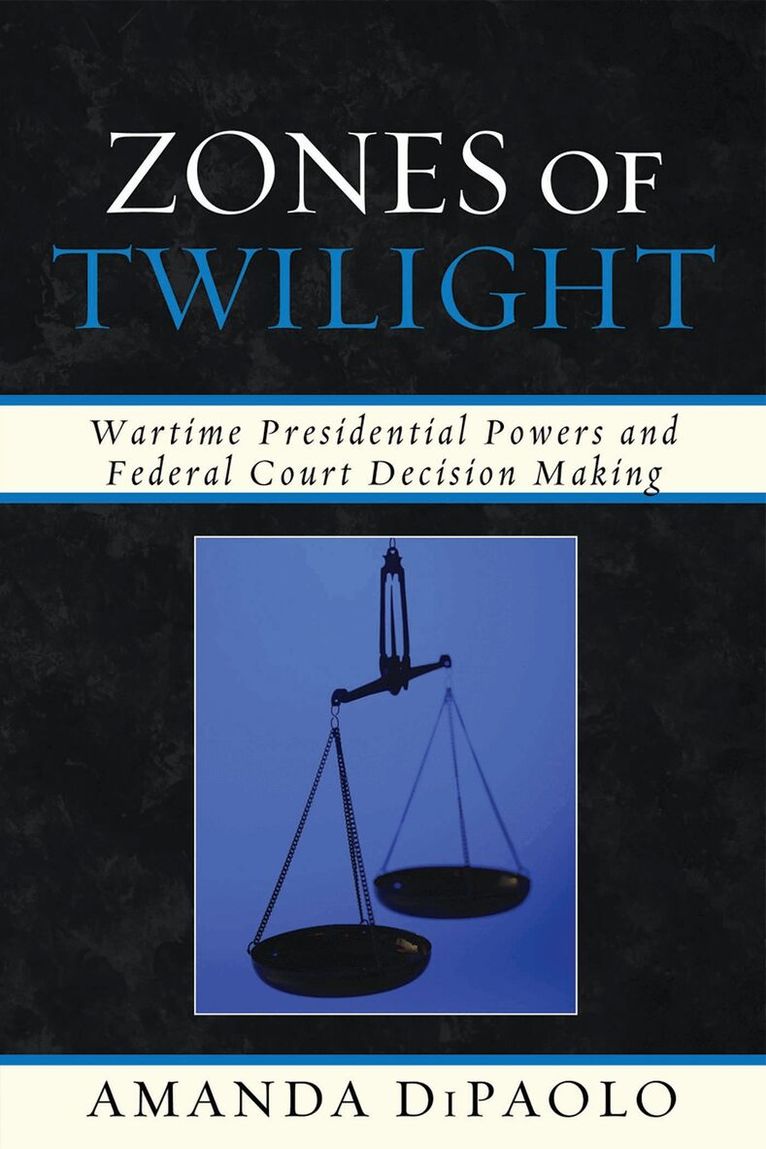
    Zones of Twilight

    Wartime Presidential Powers and Federal Court Decision Making

    AvAmanda DiPaolo

    Häftad, Engelska, 2009

    701 kr

    Beställningsvara. Skickas inom 10-15 vardagar. Fri frakt över 249 kr.

    Beskrivning

    The Bill of Rights was designed to protect the American public from encroachments of liberty by the federal government. During times of war, the president often spearheads efforts to limit rights in the name of national security. When these cases make their way through the federal courts system, it is expected that the judiciary would use rights-based language in their adjudication of cases dealing with such rights-based claims. Zones of Twilight shows that the courts actually use the separation of powers to decide these cases. In other words, the courts look to see if Congress has authorized the president to limit the liberties in question. More often than not, if Congress is on board, so are the federal courts. Although the common conception is that the courts give the president a blank check during war, it is in fact Congress that has received that blank check.Zones of Twilight looks at four reoccurring issues during times of war where the courts have had to decide cases where the executive has limited individual freedoms: military detentions, warrantless electronic surveillance, emergency economic powers, and free speech.

    Produktinformation

    • Utgivningsdatum:2009-12-22
    • Mått:155 x 232 x 18 mm
    • Vikt:392 g
    • Format:Häftad
    • Språk:Engelska
    • Antal sidor:262
    • Förlag:Bloomsbury Publishing Plc
    • ISBN:9780739138342

    Utforska kategorier

    • Konstitution: stat och regering inom Samhälle och politik

    Mer om författaren

    Amanda DiPaolo is assistant professor of political science at Middle Tennessee State University

    Recensioner i media

    DiPaolo (Middle Tennessee State Univ.) examines how federal courts rule when the national government has limited individual liberties during times of national emergency. Using Justice Robert Jackson's Youngstown Sheet & Tube v. Sawyer (1952) framework ina case law-based analysis, DiPaolo observes that in cases in which the president justifies his actions by claiming national security concerns, the federal courts will often opt not to rule on the larger constitutional issues at stake. Rather, they will evaluate the president's actions based on whether or not Congress has legislated. This 'separation of powers' approach, she suggests, protects the courts from bowing to the pressures of the moment and making a mistake that will, in the long run, weaken thejudiciary and the Constitution itself. DiPaolo's very thorough...case retellings are helpfully summarized by various tables that classify the decisions based on whether or not the court agreed with the chief executive's decision, and whether or not Congress had legislated in the particular subject area. Recommended.

    Innehållsförteckning

    • Chapter 1. IntroductionChapter 2. Guiding War Powers Judicial Decision MakingChapter 3. Military DetentionsChapter 4. Warrantless Electronic SurveillanceChapter 5. Economic Property RightsChapter 6. Free Speech