• Fri frakt över 249 kr
  • •
  • Snabba leveranser
  • •
  • Billiga böcker
Kundservice

Du är på sajten för privatpersoner.

Företag, bibliotek eller offentlig verksamhet?

Du handlar på classic.bokus.com, där alla dina funktioner finns intakta.
Till classic.bokus.com
Bokus logotyp. Gå till startsidan.
  • Erbjudanden
  • Nyheter
  • Student
  • Topplistor
  • Barn & ungdom
  • Bokus Play
  • E-böcker
  • Pocketböcker
  • Spel & pussel

10% rabatt på allt med kod: NYSTART10 →

Sidfot

Mina sidor

    Hjälp

    • Kundservice
    • Vanliga frågor och svar
    • Frakt och leverans
    • Retur vid ångerrätt
    • Reklamera vara
    • Betalning
    • Köpvillkor
    • Allmänna villkor
    • Information om webbplatsens tillgänglighet

    Om Bokus

    • Om oss
    • Pressrum
    • För studenter
    • För företag
    • För bibliotek och offentlig verksamhet
    • För leverantörer
    • Hållbarhet

    Populärt

    • Aktuella erbjudanden
    • Presentkort
    • Studentlitteratur
    • Nya böcker
    • Topplistor
    • Signerade böcker
    • Engelska böcker

    Inspiration

    • Boktips
    • BookTok
    • Populära bokserier
    • Barnbokskaraktärer
    • Populära författare
    Logotyp för Bokus
    Följ oss på Facebook (extern länk)Följ oss på Instagram (extern länk)Följ oss på YouTube (extern länk)Följ oss på TikTok (extern länk)
    bokus @ CookiesAnpassa cookiesIntegritetspolicyKöpvillkor
    Till Citymail hemsida (extern länk)Till Budbee hemsida (extern länk)Till Postnord hemsida (extern länk)Till Schenker hemsida (extern länk)Till Early Bird hemsida (extern länk)Till Walleys hemsida (extern länk)
    1. Kultur
    2. Arkitektur

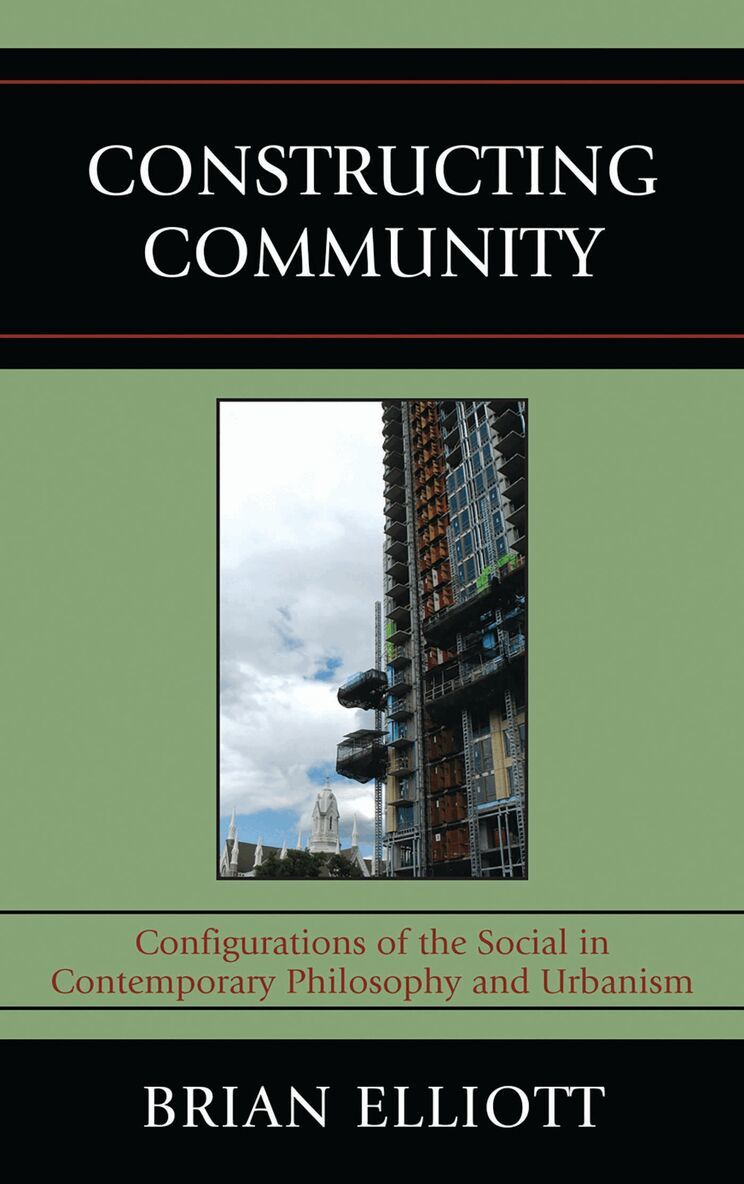
    Constructing Community

    Configurations of the Social in Contemporary Philosophy and Urbanism

    AvBrian Elliott

    Inbunden, Engelska, 2010

    1 327 kr

    Beställningsvara. Skickas inom 10-15 vardagar. Fri frakt över 249 kr.

    Beskrivning

    Constructing Community examines community from the particular perspective of the shaping and control of urban space in contemporary liberal democracies. Following a consideration and critique of influential theories of community that have arisen within European philosophy over the last three decades, Brian Elliott investigates parallel approaches to community within urban theory and practice over the same period. Underlying the comparison of political theory and urban practice is a basic assumption that community and place are intimately connected such that the one cannot be adequately understood without the other. The underlying intention of this book is to advocate a particular understanding of community, one that centers on collective, grassroots oppositional action. While it draws on certain current theories and practices, the model of community put forward is far from the orthodox position. This study is a provocative and original analysis of the question of urban politics in contemporary liberal democracies. It offers a strong case for reconsidering current debates on democratic politics in light of the connection between political power and the control of public space and the built environment.

    Produktinformation

    • Utgivningsdatum:2010-08-20
    • Mått:168 x 246 x 16 mm
    • Vikt:433 g
    • Format:Inbunden
    • Språk:Engelska
    • Antal sidor:180
    • Förlag:Bloomsbury Publishing Plc
    • ISBN:9780739139660

    Utforska kategorier

    • Arkitektur inom Kultur
    • Sociala grupper och identitet inom Samhälle och politik
    • Filosofiska discipliner inom Filosofi och religion

    Mer om författaren

    Brian Elliott teaches in the philosophy department at Oregon State University and is author of Walter Benjamin for Architects.

    Recensioner i media

    Constructing Community presents a compelling argument about the nature and prospects of urban communities. First, Brian Elliott provides a general account of the self-organization of dissenting, or resisting, localized communities. His approach combines key aspects of "dialogical" (Habermas) and "singular" (Agamben/Nancy) conceptions of social formation. Applying this model to cities like Portland, Oregon, he explains why "New Urbanists" and "postmodern urbanists" run into problems analogous to those faced by theorists of community. He defends a version of dialectical utopianism that is sensitive to both the communicative power of discourse and the exigencies of bare life. Much as Benjamin taught us to think of Paris as the capital of the nineteenth century, Elliott invites us to imagine a dialectically utopian Portland as the capital of the twenty-first.

    Innehållsförteckning

    • Part 1 IntroductionPart 2 I. Part One. Theories of CommunityChapter 3 1. Habermas and Dialogical CommunityChapter 4 2. Singular CommunityChapter 5 3. Dissenting CommunityPart 6 II. Urbanism and CommunityChapter 7 4. New UrbanismChapter 8 5. Postmodern UrbanismChapter 9 6. Dialectical UtopianismPart 10 Bibliography