• Fri frakt över 249 kr
  • •
  • Snabba leveranser
  • •
  • Billiga böcker
Kundservice

Du är på sajten för privatpersoner.

Företag, bibliotek eller offentlig verksamhet?

Du handlar på classic.bokus.com, där alla dina funktioner finns intakta.
Till classic.bokus.com
Bokus logotyp. Gå till startsidan.
  • Erbjudanden
  • Nyheter
  • Student
  • Topplistor
  • Barn & ungdom
  • Bokus Play
  • E-böcker
  • Pocketböcker
  • Spel & pussel

10% rabatt på allt med kod NYSTART10 →

Sidfot

Mina sidor

    Hjälp

    • Kundservice
    • Vanliga frågor och svar
    • Frakt och leverans
    • Retur vid ångerrätt
    • Reklamera vara
    • Betalning
    • Köpvillkor
    • Allmänna villkor
    • Information om webbplatsens tillgänglighet

    Om Bokus

    • Om oss
    • Pressrum
    • För studenter
    • För företag
    • För bibliotek och offentlig verksamhet
    • För leverantörer
    • Hållbarhet

    Populärt

    • Aktuella erbjudanden
    • Presentkort
    • Studentlitteratur
    • Nya böcker
    • Topplistor
    • Signerade böcker
    • Engelska böcker

    Inspiration

    • Boktips
    • BookTok
    • Populära bokserier
    • Barnbokskaraktärer
    • Populära författare
    Logotyp för Bokus
    Följ oss på Facebook (extern länk)Följ oss på Instagram (extern länk)Följ oss på YouTube (extern länk)Följ oss på TikTok (extern länk)
    bokus @ CookiesAnpassa cookiesIntegritetspolicyKöpvillkor
    Till Citymail hemsida (extern länk)Till Budbee hemsida (extern länk)Till Postnord hemsida (extern länk)Till Schenker hemsida (extern länk)Till Early Bird hemsida (extern länk)Till Walleys hemsida (extern länk)
    1. Samhälle och politik
    2. Sociologi och antropologi
    3. Sociologi

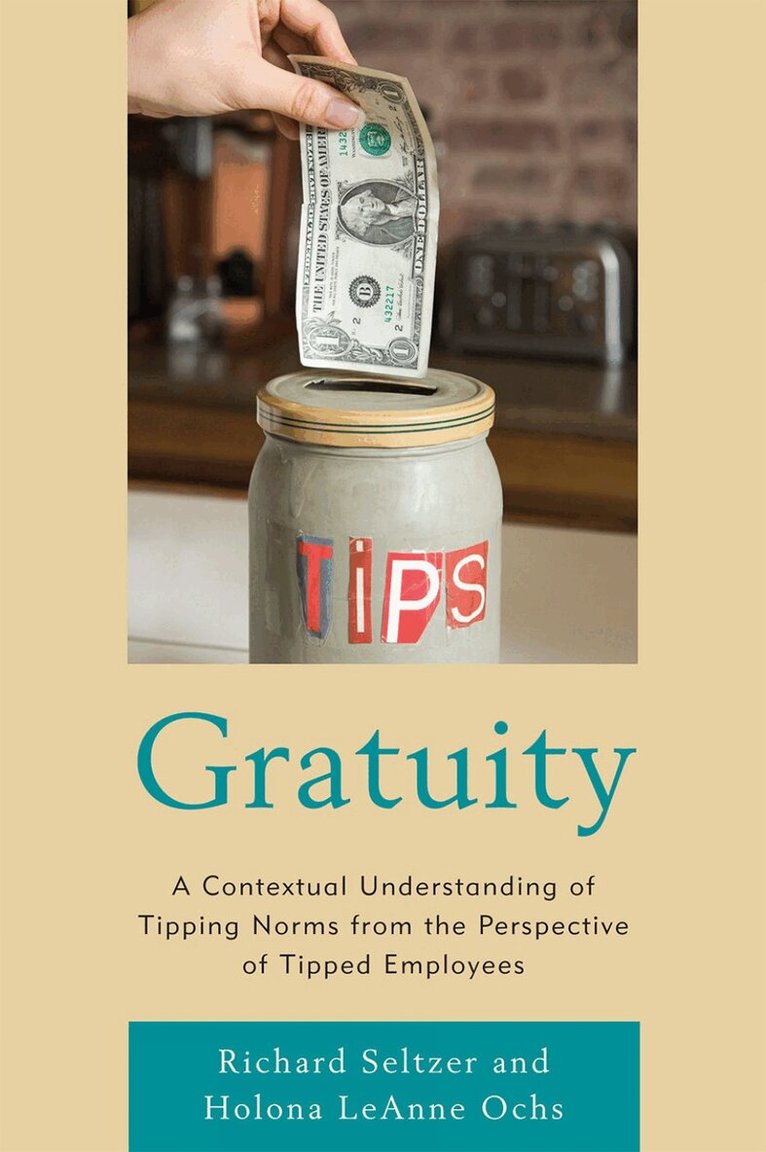
    Gratuity

    A Contextual Understanding of Tipping Norms from the Perspective of Tipped Employees

    AvRichard Seltzer,Holona LeAnne Ochs

    Häftad, Engelska, 2010

    Del i serien Lexington Books

    701 kr

    Beställningsvara. Skickas inom 10-15 vardagar. Fri frakt över 249 kr.

    Beskrivning

    Gratuity is based on interviews with 425 people in more than 50 occupational categories. The respondents from across the U.S. reflect the diversity of the population but have one thing in common: they earn tips. A tip is a price set almost entirely by a customer, less connected to demand than to social code. In the U.S., tipping remains one of our most controversial, confusing, and highly variable norms.In their own words, respondents present their perspectives regarding their compensation as well as what they like and dislike about work. Understanding what people think about tipping and how tipped employees experience their work provides an understanding of tipping norms that has never been addressed. The evidence in this study indicates that tips do not appear to increase in accordance with inequality, and tips do not alleviate the discomfort of inequality from the perspective of the tipped employee when they are given to demonstrate status over another. Tips may in some cases serve a redistributive function, but they are not consistent with regard to social status. The evidence in this study also indicates that tips are a weak signal of quality and are not likely to serve as an effective monitoring mechanism. People appear to conform to tipping norms for social and emotional rather than strictly rational reasons. Furthermore, conformity to tipping norms is likewise inconsistent across work contexts. One of the principal mechanisms for fostering conformity lies within the organizational hierarchy, and management plays a critical role.The definitive difference between those who like their job and those who do not is the experience with people, particularly management. Every person who interacts with the public encounters people who are rude or disrespectful. The critical lesson for management is that the emotional costs of these interactions can be mitigated by managers who extend trust and support to employees. The absence of trust in the workplace contributes to a work environment that impose

    Produktinformation

    • Utgivningsdatum:2010-06-02
    • Mått:156 x 235 x 18 mm
    • Vikt:467 g
    • Format:Häftad
    • Språk:Engelska
    • Serie:Lexington Books
    • Antal sidor:310
    • Förlag:Bloomsbury Publishing Plc
    • ISBN:9780739144237

    Utforska kategorier

    • Sociologi inom Samhälle och politik
    • Kulturhistoria inom Historia och arkeologi

    Mer om författaren

    Richard Seltzer is professor of political science at Howard University.Holona LeAnne Ochs is assistant professor of political science at Lehigh University.

    Recensioner i media

    This book is a comprehensive, thoroughly researched, and engaging account of tipping in the United States. Beutifully written and clearly organized, Seltzer and Ochs give us highly interesting stories of the practice from the diverse perspectives of those who receive tips and the distinct contexts in which they work. In occupations ranging from restaurant servers in chains and upscale dining facilities to household services and parking attendants, the workers share their attitudes toward their jobs, management, and customers, reflecting on the role of gratuities in their work life.

    Innehållsförteckning

    • Chapter 1 Preface by Richard SeltzerChapter 2 IntroductionChapter 3 TheoryChapter 4 MethodologyPart 5 Section I: RestaurantsChapter 6 Chapter 1: Restaurant ChainsChapter 7 Chapter 2: Family EateriesChapter 8 Chapter 3: Upscale DiningChapter 9 Chapter 4: Bussers and RunnersChapter 10 Chapter 5: Bartenders, Cocktail Servers, and Bar-BacksChapter 11 Chapter 6: Multi-Function StaffChapter 12 Chapter 7: Specialty JobsChapter 13 Chapter 8: Tip JarsPart 14 Section II: ServicesChapter 15 Chapter 9: Household ServicesChapter 16 Chapter 10: DeliveriesChapter 17 Chapter 11: Loading and CartingChapter 18 Chapter 12: CarsChapter 19 Chapter 13: AnimalsChapter 20 Chapter 14: CosmetologyChapter 21 Chapter 15: TeachersChapter 22 Chapter 16: Blue Collar WorkersChapter 23 Chapter 17: OfficiantsChapter 24 Chapter 18: Medical CareChapter 25 Chapter 19: MiscellaneousPart 26 Section III: EntertainmentChapter 27 Chapter 20: Family EntertainmentChapter 28 Chapter 21: Adult EntertainmentChapter 29 Chapter 22: MusiciansChapter 30 Chapter 23: SportsChapter 31 Chapter 24: Ushers and VendorsChapter 32 ConclusionChapter 33 References