• Fri frakt över 249 kr
  • •
  • Snabba leveranser
  • •
  • Billiga böcker
Kundservice

Du är på sajten för privatpersoner.

Företag, bibliotek eller offentlig verksamhet?

Du handlar på classic.bokus.com, där alla dina funktioner finns intakta.
Till classic.bokus.com
Bokus logotyp. Gå till startsidan.
  • Erbjudanden
  • Nyheter
  • Student
  • Topplistor
  • Barn & ungdom
  • Bokus Play
  • E-böcker
  • Pocketböcker
  • Spel & pussel

Må bättre, för mindre! Upp till 50% rabatt på hälsoböcker

Sidfot

Mina sidor

    Hjälp

    • Kundservice
    • Vanliga frågor och svar
    • Frakt och leverans
    • Retur vid ångerrätt
    • Reklamera vara
    • Betalning
    • Köpvillkor
    • Allmänna villkor
    • Information om webbplatsens tillgänglighet

    Om Bokus

    • Om oss
    • Pressrum
    • För studenter
    • För företag
    • För bibliotek och offentlig verksamhet
    • För leverantörer
    • Hållbarhet

    Populärt

    • Aktuella erbjudanden
    • Presentkort
    • Studentlitteratur
    • Nya böcker
    • Topplistor
    • Signerade böcker
    • Engelska böcker

    Inspiration

    • Boktips
    • BookTok
    • Populära bokserier
    • Barnbokskaraktärer
    • Populära författare
    Logotyp för Bokus
    Följ oss på Facebook (extern länk)Följ oss på Instagram (extern länk)Följ oss på YouTube (extern länk)Följ oss på TikTok (extern länk)
    bokus @ CookiesAnpassa cookiesIntegritetspolicyKöpvillkor
    Till Citymail hemsida (extern länk)Till Budbee hemsida (extern länk)Till Postnord hemsida (extern länk)Till Schenker hemsida (extern länk)Till Early Bird hemsida (extern länk)Till Walleys hemsida (extern länk)
    1. Ekonomi och Ledarskap
    2. Nationalekonomi

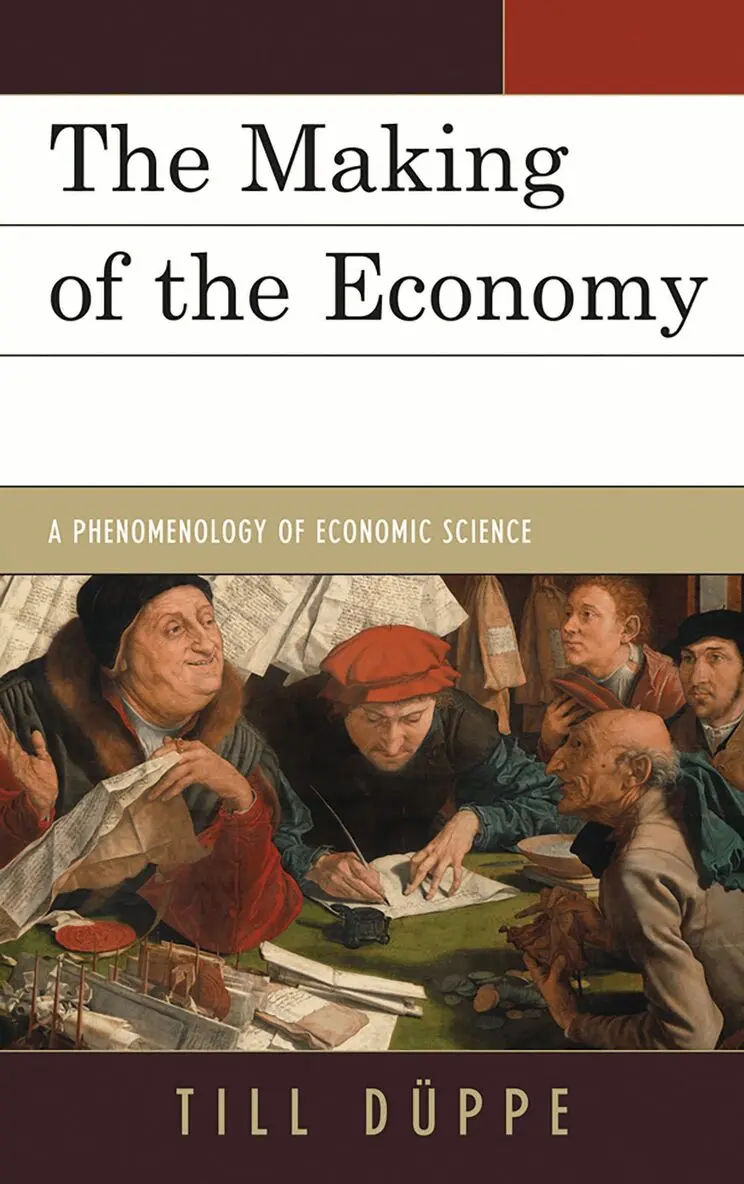
    Making of the Economy

    A Phenomenology of Economic Science

    AvTill Düppe

    Inbunden, Engelska, 2011

    1 396 kr

    Beställningsvara. Skickas inom 10-15 vardagar. Fri frakt över 249 kr.

    Beskrivning

    How did modern man come to believe in the object of the economy? What hopes made us accept scientific authority about this illusive thing? What kinds of persons were attracted by objective knowledge in economic discourse? And how does this knowledge guide our economic life? The Making of the Economy tackles such questions surrounding the modern notion of the economy with a fresh look from phenomenological philosophy. In a historical narrative of economic discourses, Till Düppe shows that only due to the scientific culture of economics we speak of an economy. Economic science made the economy. Our economic experiences alone do not trigger an interest in the economy—which makes Husserl’s case for the "forgetfulness of the life-world." Düppe's historical narrative focuses on the emergence of formal economic analysis out of a series of successive life-worlds, or concrete historical situations, an approach which generates a new substantive understanding of both the history of economics and the current discourse of crisis surrounding economics. The book will appeal to historians and philosophers of the social sciences, as well as scholars of history, philosophy, and economics.

    Produktinformation

    • Utgivningsdatum:2011-10-24
    • Mått:159 x 235 x 19 mm
    • Vikt:522 g
    • Format:Inbunden
    • Språk:Engelska
    • Antal sidor:250
    • Förlag:Bloomsbury Publishing Plc
    • ISBN:9780739164198

    Utforska kategorier

    • Nationalekonomi inom Ekonomi och Ledarskap
    • Filosofiska discipliner inom Filosofi och religion

    Mer om författaren

    Till Düppe is scientific researcher at the University of Hamburg.

    Recensioner i media

    In his illuminating and provocative book The Making of the Economy, Till Du¨ppe examines the economics profession, diagnoses a lack of confidence in its methods and declares the profession to be in crisis. ... I have only been able to give a sense of the sheer enormity of the ground covered by this highly engaging book: hermeneutics, prescientific economics, the scientific attitude of Gerard Debreu, economics imperialism and much besides. Du¨ppe has performed a valuable service in providing motivation for reflecting on how economists’ epistemic authority is actually used, and in providing a structure for organizing these reflections. His book vividly illustrates the benefits of bringing together history and philosophy to evaluate economics, an approach John Davis (2012) has persuasively argued economic methodologists should adopt. It encourages one to pose some hitherto-unasked questions: Would the end of economics restore meaning to our intellectual projects? Would this breakup make it more or less likely that opportunistic uses of epistemic authority would be successfully challenged? Put bluntly, would it liberate or oppress us?

    Innehållsförteckning

    • Chapter 1 IntroductionPart 2 Part 1. PhilosophyChapter 3 Chapter 1. Science and the Life-WorldChapter 4 Chapter 2. Formalism and How Economists Forgot the Life-WorldChapter 5 Chapter 3. Structuralism and How Economists Made the EconomyPart 6 Part 2. HistoryChapter 7 Chapter 4. The Pre-History of the Economy: The OikonomiaChapter 8 Chapter 5. The Urstiftung of the Economy in the 17th CenturyChapter 9 Chapter 6. The Battles for the Economy since 1848Chapter 10 Chapter 7. The Diminishing Weight of Meaning of the Economy during the Socialist Calculation DebateChapter 11 Chapter 8. The Secret Engineering of the Free Economy during the Formalist RevolutionChapter 12 Chapter 9. The Waning of the Economy TodayChapter 13 ConclusionsChapter 14 References