
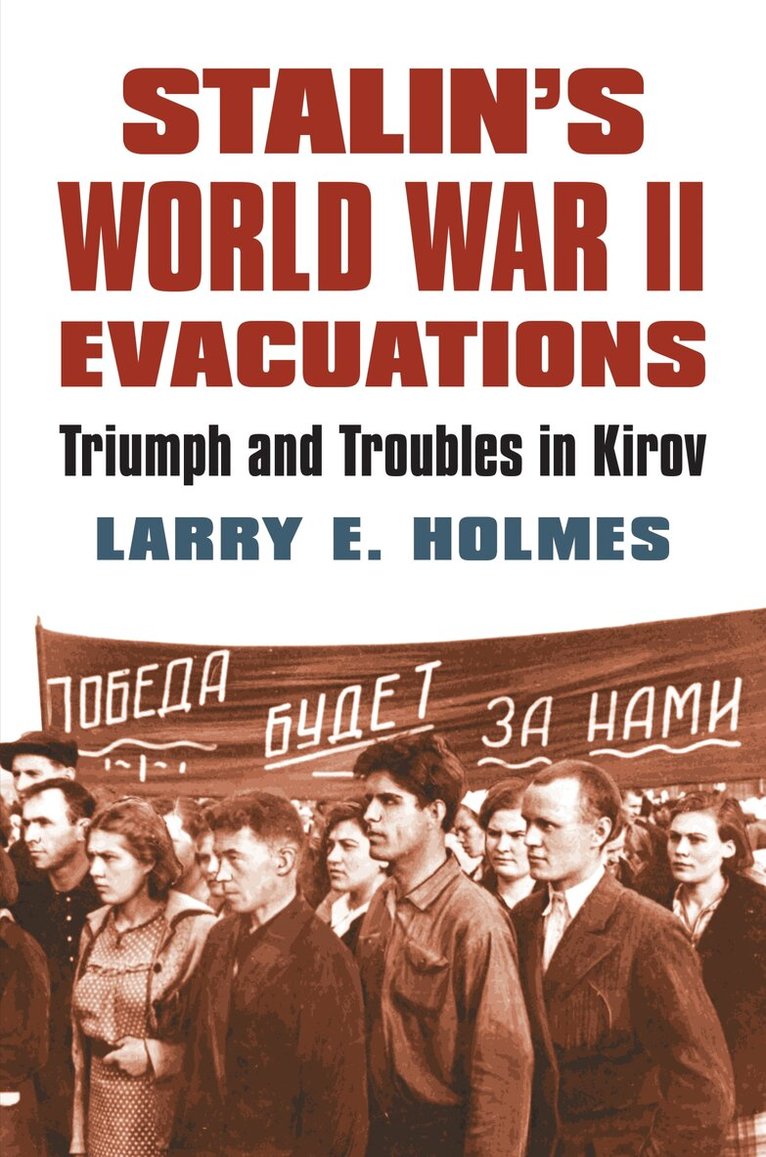
War, Evacuation, and the Exercise of Power
The Center, Periphery, and Kirov's Pedagogical Institute 1941–1952
1 581 kr
Beställningsvara. Skickas inom 10-15 vardagar. Fri frakt över 249 kr.
Beskrivning
War, Evacuation, and the Exercise of Power examines the history of the Pedagogical Institute, located in the USSR's Kirov region from 1941 to 1952. Holmes reveals a tangled and complex relationship of local, regional, and national agencies. While it recognizes the immense strength of the center, it emphasizes a contentious diffusion, although not a confusion, of authority. In so doing, it departs from traditional models of Soviet power with their neatly drawn vertical and horizontal lines of command. It also demonstrates institutional and personal behavior simultaneously consistent with and at odds with a triumphalist wartime narrative.The Nazi invasion of Soviet-held territory in 1941 set off a massive evacuation eastward that included the relocation in Kirov of the Commissariat of Forest Industry and a large factory under the jurisdiction of the Commissariat of Aviation Industry. By occupying the two main buildings of Kirov’s Pedagogical Institute, these commissariats forced the Institute to abandon the provincial capital for a remote rural location, Iaransk. Then and for years thereafter, the Pedagogical Institute portrayed itself as the victim of these commissariats' bad behavior that included the physical destruction of the Institute’s buildings and much of its property. In its quest for justice, as it understood it, the Institute had the support of the Commissariat of Education. But that agency was far too weak in comparison with its institutional competitors, the offending commissariats, to provide much help. Of greater significance, the Institute forged a remarkable alliance with governing party and state organs in the city and region of Kirov. A united Kirov compelled the entry into the dispute of the Council of Peoples Commissars of both the Russian Republic and Soviet Union and the party’s Central Committee.In addition to a focus on the exercise of power at the center and periphery, this study also assesses the Institute’s wartime exile in Iaransk. The difficulties of life there led to a Soviet version of town vs. gown and provoked the Institute’s further resentment of Moscow. They also exacerbated conflict among distinct groups at the Institute as each advanced its own interests and authority. Faculty and administration, ranked and unranked faculty, communists and non-communists, and evacuated instructors and the Institute’s own all fought amongst themselves over the relationship of politics and scholarship and over the legitimacy of a highly stratified system of food rationing.
Produktinformation
Utforska kategorier
Mer om författaren
Recensioner i media
Innehållsförteckning
Hoppa över listan
Mer från samma författare
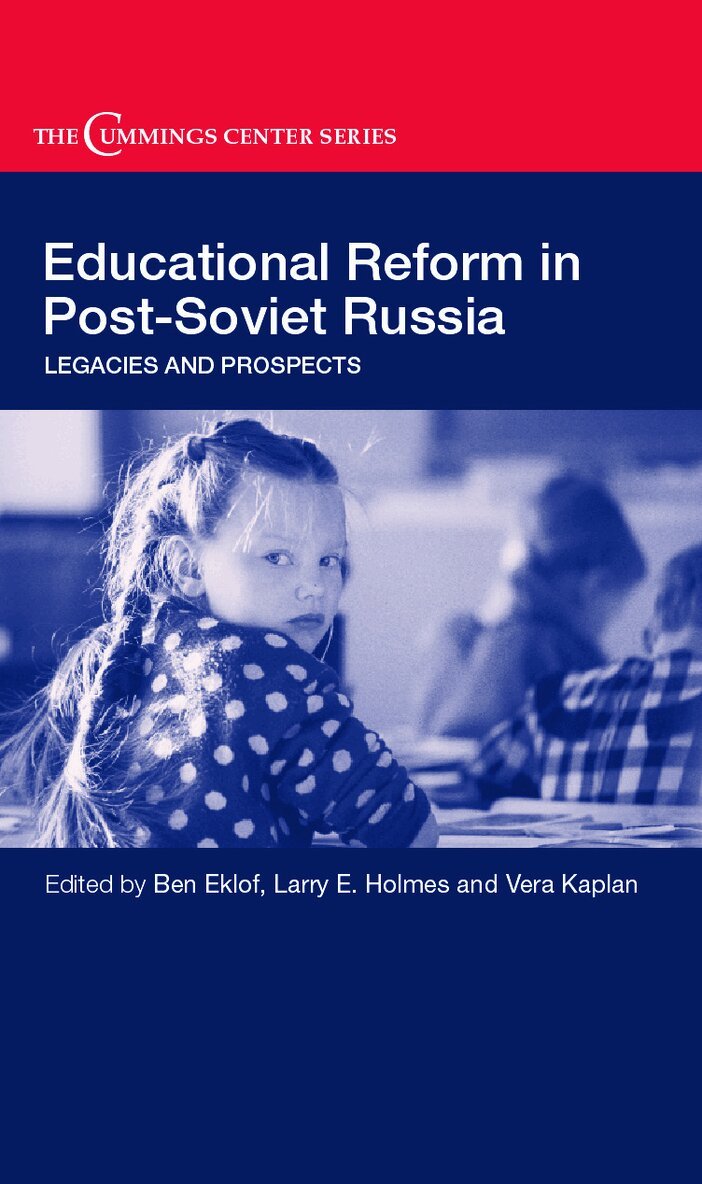
Educational Reform in Post-Soviet Russia
Ben Eklof, Larry E. Holmes, Vera Kaplan
Inbunden, 2004
3 012 kr
Hoppa över listan



Mer från samma serie
Perspectives on the Entangled History of Communism and Nazism
Klas-Göran Karlsson, Johan Stenfeldt, Ulf Zander
Inbunden, 2015
1 367 kr
Under Siege
Walter S. DeKeseredy, Shahid Alvi, Martin D. Schwartz, Andreas E. Tomaszewski
Häftad, 2003
591 kr
Bodies Inhabiting the World
Derek R. Nelson, Niels Henrik Gregersen, Bengt Kristensson Uggla
Inbunden, 2023
1 119 kr
Promoting Abstinence, Being Faithful, and Condom Use with Young Africans
Mary Louisa Plummer
Häftad, 2014
841 kr
Hoppa över listan
Du kanske också är intresserad av
Educational Reform in Post-Soviet Russia
Ben Eklof, Larry E. Holmes, Vera Kaplan
Inbunden, 2004
3 012 kr