• Fri frakt över 249 kr
  • •
  • Snabba leveranser
  • •
  • Billiga böcker
Kundservice

Du är på sajten för privatpersoner.

Företag, bibliotek eller offentlig verksamhet?

Du handlar på classic.bokus.com, där alla dina funktioner finns intakta.
Till classic.bokus.com
Bokus logotyp. Gå till startsidan.
  • Erbjudanden
  • Nyheter
  • Student
  • Topplistor
  • Barn & ungdom
  • Bokus Play
  • E-böcker
  • Pocketböcker
  • Spel & pussel

10% rabatt på allt med kod NYSTART10 →

Sidfot

Mina sidor

    Hjälp

    • Kundservice
    • Vanliga frågor och svar
    • Frakt och leverans
    • Retur vid ångerrätt
    • Reklamera vara
    • Betalning
    • Köpvillkor
    • Allmänna villkor
    • Information om webbplatsens tillgänglighet

    Om Bokus

    • Om oss
    • Pressrum
    • För studenter
    • För företag
    • För bibliotek och offentlig verksamhet
    • För leverantörer
    • Hållbarhet

    Populärt

    • Aktuella erbjudanden
    • Presentkort
    • Studentlitteratur
    • Nya böcker
    • Topplistor
    • Signerade böcker
    • Engelska böcker

    Inspiration

    • Boktips
    • BookTok
    • Populära bokserier
    • Barnbokskaraktärer
    • Populära författare
    Logotyp för Bokus
    Följ oss på Facebook (extern länk)Följ oss på Instagram (extern länk)Följ oss på YouTube (extern länk)Följ oss på TikTok (extern länk)
    bokus @ CookiesAnpassa cookiesIntegritetspolicyKöpvillkor
    Till Citymail hemsida (extern länk)Till Budbee hemsida (extern länk)Till Postnord hemsida (extern länk)Till Schenker hemsida (extern länk)Till Early Bird hemsida (extern länk)Till Walleys hemsida (extern länk)
    1. Historia och arkeologi
    2. Historia
    3. Europas historia

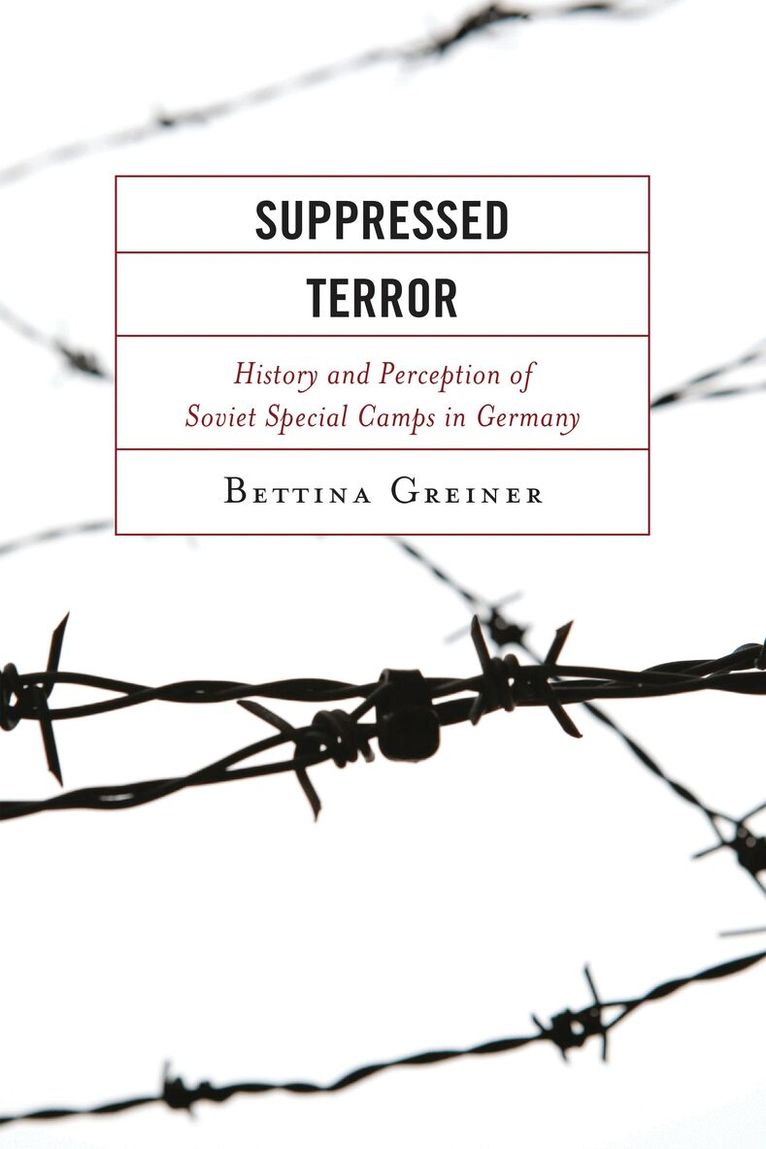
    Suppressed Terror

    History and Perception of Soviet Special Camps in Germany

    AvBettina Greiner

    Inbunden, Engelska, 2014

    Del i serien Harvard Cold War Studies Book Series

    1 866 kr

    Beställningsvara. Skickas inom 10-15 vardagar. Fri frakt över 249 kr.

    Beskrivning

    At the end of World War II, the Soviet secret police installed ten special camps in the Soviet occupation zone, later to become the German Democratic Republik. Between 1945 and 1950, roughly 154,000 Germans were held incommunicado in these camps. Whether those accused of being Nazis, spies, or terrorists were indeed guilty as charged, they were indiscriminately imprisoned as security threats and denied due process of the law. One third of the captives did not survive. To this day, most Germans have no knowledge of this postwar Stalinist persecution, even though it exemplifies in a unique way the entangled history of Germans as perpetrators and victims.How can one write the history of victims in a “society of perpetrators?” This is only one of the questions Displaced Terror: History and Perception of Soviet Special Camps in Germany raises in exploring issues in memory culture in contemporary Germany. The study begins with a detailed description of the camp system against the backdrop of Stalinist security policies in a territory undergoing a transition from war zone to occupation zone to Cold War hot spot. The interpretation of the camps as an instrument of pacification rather than of denacification does not ignore the fact that, while actual perpetrators were a minority, the majority of the special camp inmates had at least been supporters of Nazi rule and were now imprisoned under life-threatening conditions together with victims and opponents of the defeated regime. Based on their detention memoirs, the second part of the book offers a closer look at life and death in the camps, focusing on the prisoners' self-organization and the frictions within these coerced communities. The memoirs also play an important role in the third and last part of the study. Read as attempts to establish public acknowledgment of violence suffered by Germans, they mirror German memory culture since the end of World War II.

    Produktinformation

    • Utgivningsdatum:2014-04-24
    • Mått:165 x 241 x 38 mm
    • Vikt:708 g
    • Format:Inbunden
    • Språk:Engelska
    • Serie:Harvard Cold War Studies Book Series
    • Antal sidor:418
    • Förlag:Bloomsbury Publishing Plc
    • ISBN:9780739177433

    Utforska kategorier

    • Europas historia inom Historia och arkeologi
    • Andra världskriget inom Historia och arkeologi
    • Modern militärhistoria inom Historia och arkeologi

    Mer om författaren

    Bettina Greiner is a German historian working at the Hamburg Institute for Social Research and is coordinator of the Berlin Colloquia on Contemporary History.

    Recensioner i media

    This translation of a 2010 German book is a deeply sourced, sophisticated analytical study of the imprisonment of German civilians in the Soviet military occupation zone in East Germany and the German Democratic Republic between 1945 and 1950. POWs and war criminals convicted by Soviet military courts were forced to work. But over 120,000 German civilians, arrested ostensibly for denazification procedures and kept in “special” camps, were not permitted to work. . . .What purpose did these special camps serve? Greiner thinks they began as pretrial sites for suspected Nazis of minor standing and evolved into long-term prisons for unconvicted inmates. . . .Greiner reflects on changes in the historical memorialization of political captivity in Germany and warns against equating Nazi and Soviet political confinement, especially with regard to guilt and victimhood. Summing Up: Recommended. Upper-division undergraduates and above.

    Innehållsförteckning

    • ContentsPreface to the English EditionChapter One - IntroductionThe Camp SystemInternees and SMT PrisonersExplorationsDetention MeasuresDetention ExperiencesDetention MemoriesChapter Two – Detention MeasuresInternments“Mobilization” and “Cleansing the Rear Area” between December 1944 and April 1945The NKVD Order No. 00315 or the End of “Mobilization”The Primacy of the Pacification PolicyIsolation as “Political Prophylaxis”Soviet Military Tribunals (SMTs) The Work of the SMTsFunctional Changes in the Camp SystemThe Logic of Judicial TerrorJudicial Prosecution of “Class Enemies”“Political Purges” and the Struggle against “Deviationists”Russian RouletteChapter Three – Detention Experiences ArrestDawn RaidsDenouncedIn ShockIn the “GPU Cellars”Detention ConditionsInterrogationsTraitorsVerdictsIn Special Camp No. 7/No. 1 SachsenhausenParallel Worlds: “Politicals” and “Criminals”The Divided Camp CommunityDaily Life in the Sachsenhausen Special CampFragmentsChapter Four – Detention MemoirsFreedomThe Closure of the Special Camps, 1950The Combat Group against InhumanityThe Price of Recognition“Empty” Memory Sites“Second-Class Victims” or Self-Imposed IsolationA Last Attempt: The Publication Offensive after 1989-1990“Gray” LiteratureThe Dependency Trap“Documentarism” as Narrative Style“Alternate Framings” and Other “Narrative Templates”Self-devised Traps—Memoirs after 1989Chapter Five – The Special Camps and Their Place in HistoryInternment CampsThe POW Camps of the GUPVIThe Soviet GULAGNational Socialist CampsNotesAbbreviationsBibliographyIndex of NamesSubject IndexAuthor Note