• Fri frakt över 249 kr
  • •
  • Snabba leveranser
  • •
  • Billiga böcker
Kundservice

Du är på sajten för privatpersoner.

Företag, bibliotek eller offentlig verksamhet?

Du handlar på classic.bokus.com, där alla dina funktioner finns intakta.
Till classic.bokus.com
Bokus logotyp. Gå till startsidan.
  • Erbjudanden
  • Nyheter
  • Student
  • Topplistor
  • Barn & ungdom
  • Bokus Play
  • E-böcker
  • Pocketböcker
  • Spel & pussel

10% rabatt på allt med kod: NYSTART10 →

Sidfot

Mina sidor

    Hjälp

    • Kundservice
    • Vanliga frågor och svar
    • Frakt och leverans
    • Retur vid ångerrätt
    • Reklamera vara
    • Betalning
    • Köpvillkor
    • Allmänna villkor
    • Information om webbplatsens tillgänglighet

    Om Bokus

    • Om oss
    • Pressrum
    • För studenter
    • För företag
    • För bibliotek och offentlig verksamhet
    • För leverantörer
    • Hållbarhet

    Populärt

    • Aktuella erbjudanden
    • Presentkort
    • Studentlitteratur
    • Nya böcker
    • Topplistor
    • Signerade böcker
    • Engelska böcker

    Inspiration

    • Boktips
    • BookTok
    • Populära bokserier
    • Barnbokskaraktärer
    • Populära författare
    Logotyp för Bokus
    Följ oss på Facebook (extern länk)Följ oss på Instagram (extern länk)Följ oss på YouTube (extern länk)Följ oss på TikTok (extern länk)
    bokus @ CookiesAnpassa cookiesIntegritetspolicyKöpvillkor
    Till Citymail hemsida (extern länk)Till Budbee hemsida (extern länk)Till Postnord hemsida (extern länk)Till Schenker hemsida (extern länk)Till Early Bird hemsida (extern länk)Till Walleys hemsida (extern länk)
    1. Samhälle och politik
    2. Politik och statsskick
    3. Statsskick och politiska processer
    4. Statsskick: demokrati

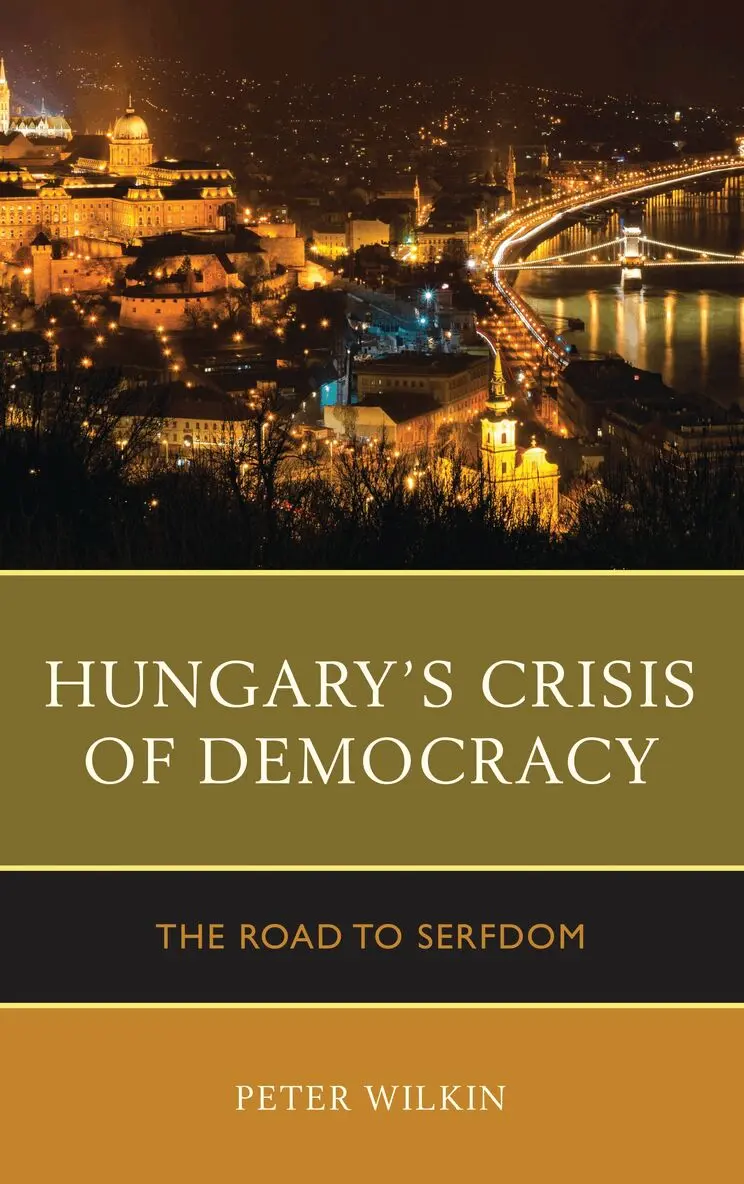
    Hungary’s Crisis of Democracy

    The Road to Serfdom

    AvPeter Wilkin

    Inbunden, Engelska, 2016

    1 325 kr

    Beställningsvara. Skickas inom 10-15 vardagar. Fri frakt över 249 kr.

    Fler format och utgåvor

    Häftad

    562 kr

    Beskrivning

    This book examines the crisis of democracy that has arisen in Hungary since the election of the Fidesz government in 2010. After moving swiftly to transform the Hungarian constitution, Fidesz created a new political system which has led its critics to argue that the era of democracy in Hungary is over. US Senator John McCain has gone so far as to describe Hungary as an illiberal democracy on a path toward fascism. The author argues that Fidesz has sought to challenge the capitalist and democratic transformation that shaped Hungary for 20 years after the fall of communism by increasing the power of the state over crucial aspects of the economy, society, and the political system. In so doing Fidesz’ actions resemble those undertaken by many authoritarian states that have emerged since the end of the Second World War, all aiming to build up a national capitalism and protect their economies whilst undertaking nation-building. To make sense of this the author draws upon two traditions of thought, world systems-analysis, which situates Hungary in the context of its incorporation in the modern capitalist world-system after the fall of communism; and anarchist social thought which provides a unique way of seeing the actions of states and political elites. In so doing the book argues that the events unfolding in Hungary cannot be explained on the basis of Hungarian exceptionalism but must be situated in the broader political and economic context that has shaped the development of Hungary since 1990. The form of capitalism introduced in Hungary and across the region of East and Central Europe has systematically undermined the strong state and social security that had existed under communism, and when added to the failure of the left and liberals in the region it has paved the way for far-right and neo-fascist political movements to emerge claiming the mantle of defenders of society from the market. This represents a fundamental threat to the enlightenment traditions that have shaped dominant modern political ideologies and raises profound problems for both the EU and NATO.

    Produktinformation

    • Utgivningsdatum:2016-08-26
    • Mått:159 x 235 x 24 mm
    • Vikt:517 g
    • Format:Inbunden
    • Språk:Engelska
    • Antal sidor:250
    • Förlag:Bloomsbury Publishing Plc
    • ISBN:9780739187913

    Utforska kategorier

    • Statsskick: demokrati inom Samhälle och politik

    Mer om författaren

    Peter Wilkin is a reader in social science at Brunel University.

    Recensioner i media

    This book explains Hungary’s current democratic crisis by situating it within the semi-periphery of the modern world system, arguing that the Fidesz party’s political dominance involves an attempt to create a developmental state in the face of social crises brought about by neo-liberalism, an attempt that is simultaneously constrained by that ideology. Wilkins provides a remarkably lucid account of world systems theory, combined with a good overview of elite theory, the latter emphasizing Scott’s concept of the “anarchist squint.” The main topics covered include the communist legacy’s influence on the composition of the political elite that oversaw the democratic transition; Fidesz’s party evolution from neo-liberalism to its current status as the hegemonic party of the Right; the rise of Jobbik in the context of Hungary’s fascist past; the role of digital governance and media wars in Fidesz’s rise to power; Milla’s strengths and weaknesses as a liberal capitalist democratic opposition movement; and the key external role played by the EU and NATO. Apart from making a strong case for analyzing political change in the context of international political economy, the book’s main strength is providing a clear, detailed overview of political developments in this unfortunately quite relevant case of democratic failure. Summing Up:Recommended. Upper-division undergraduates through faculty.

    Innehållsförteckning

    • Chapter 1 Hungary in the Modern World-SystemChapter 2 Hungary, communism and the democratic transitionChapter 3 The evolution of Fidesz: From neo-liberals to conservative nationalistsChapter 4 Social movement protest 1: The challenge of JobbikChapter 5 Digital governance and media wars: The battle for Hungary’s mediaChapter 6 Social Movement protest 2: Milla and virtual politicsChapter 7 The European Union, NATO and the Hungarian crisis