Where the Waters Divide
Neoliberalism, White Privilege, and Environmental Racism in Canada
704 kr
Beställningsvara. Skickas inom 10-15 vardagar. Fri frakt över 249 kr.
Beskrivning
This timely and important scholarship advances an empirical understanding of Canada’s contemporary “Indian” problem. Where the Waters Divide is one of the few book monographs that analyze how contemporary neoliberal reforms (in the manner of de-regulation, austerity measures, common sense policies, privatization, etc.) are woven through and shape contemporary racial inequality in Canadian society. Using recent controversies in drinking water contamination and solid waste and sewage pollution, Where the Waters Divide illustrates in concrete ways how cherished notions of liberalism and common sense reform — neoliberalism — also constitute a particular form of racial oppression and white privilege.Where the Waters Divide brings together theories and concepts from four disciplines — sociology, geography, Aboriginal studies, and environmental studies — to build critical insights into the race relational aspects of neoliberal reform. In particular, the book argues that neoliberalism represents a key moment in time for the racial formation in Canada, one that functions not through overt forms of state sanctioned racism, as in the past, but via the morality of the marketplace and the primacy of individual solutions to modern environmental and social problems. Furthermore, Mascarenhas argues, because most Canadians are not aware of this pattern of laissez faire racism, and because racism continues to be associated with intentional and hostile acts, Canadians can dissociate themselves from this form of economic racism, all the while ignoring their investment in white privilege.Where the Waters Divide stands at a provocative crossroads. Disciplinarily, it is where the social construction of water, an emerging theme within Cultural Studies and Environmental Sociology, meets the social construction of expertise — one of the most contentious areas within the social sciences. It is also where the political economy of natural resources, an emerging theme in Development and Globalization Studies, meets the Politics of Race Relations — an often-understudied area within Environmental Studies. Conceptually, the book stands where the racial formation associated with natural resources reform is made and re-made, and where the dominant form of white privilege is contrasted with anti-neoliberal social movements in Canada and across the globe.
Produktinformation
Utforska kategorier
Mer om författaren
Recensioner i media
Innehållsförteckning
Hoppa över listan




Mer från samma serie
Perspectives on the Entangled History of Communism and Nazism
Klas-Göran Karlsson, Johan Stenfeldt, Ulf Zander
Inbunden, 2015
1 371 kr
Under Siege
Walter S. DeKeseredy, Shahid Alvi, Martin D. Schwartz, Andreas E. Tomaszewski
Häftad, 2003
592 kr
Bodies Inhabiting the World
Derek R. Nelson, Niels Henrik Gregersen, Bengt Kristensson Uggla
Inbunden, 2023
1 122 kr
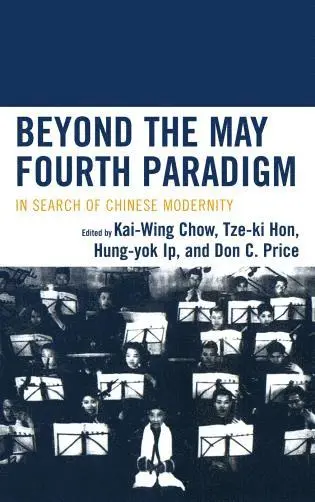
Beyond the May Fourth Paradigm
Kai-wing Chow, Tze-ki Hon, Hung-yok Ip, Don C. Price
Inbunden, 2008
1 730 kr