• Fri frakt över 249 kr
  • •
  • Snabba leveranser
  • •
  • Billiga böcker
Kundservice

Du är på sajten för privatpersoner.

Företag, bibliotek eller offentlig verksamhet?

Du handlar på classic.bokus.com, där alla dina funktioner finns intakta.
Till classic.bokus.com
Bokus logotyp. Gå till startsidan.
  • Erbjudanden
  • Nyheter
  • Student
  • Topplistor
  • Barn & ungdom
  • Bokus Play
  • E-böcker
  • Pocketböcker
  • Spel & pussel

10% rabatt på allt med kod: NYSTART10 →

Sidfot

Mina sidor

    Hjälp

    • Kundservice
    • Vanliga frågor och svar
    • Frakt och leverans
    • Retur vid ångerrätt
    • Reklamera vara
    • Betalning
    • Köpvillkor
    • Allmänna villkor
    • Information om webbplatsens tillgänglighet

    Om Bokus

    • Om oss
    • Pressrum
    • För studenter
    • För företag
    • För bibliotek och offentlig verksamhet
    • För leverantörer
    • Hållbarhet

    Populärt

    • Aktuella erbjudanden
    • Presentkort
    • Studentlitteratur
    • Nya böcker
    • Topplistor
    • Signerade böcker
    • Engelska böcker

    Inspiration

    • Boktips
    • BookTok
    • Populära bokserier
    • Barnbokskaraktärer
    • Populära författare
    Logotyp för Bokus
    Följ oss på Facebook (extern länk)Följ oss på Instagram (extern länk)Följ oss på YouTube (extern länk)Följ oss på TikTok (extern länk)
    bokus @ CookiesAnpassa cookiesIntegritetspolicyKöpvillkor
    Till Citymail hemsida (extern länk)Till Budbee hemsida (extern länk)Till Postnord hemsida (extern länk)Till Schenker hemsida (extern länk)Till Early Bird hemsida (extern länk)Till Walleys hemsida (extern länk)
    1. Samhälle och politik
    2. Samhälle och kultur
    3. Kultur och medier
    4. Medievetenskap

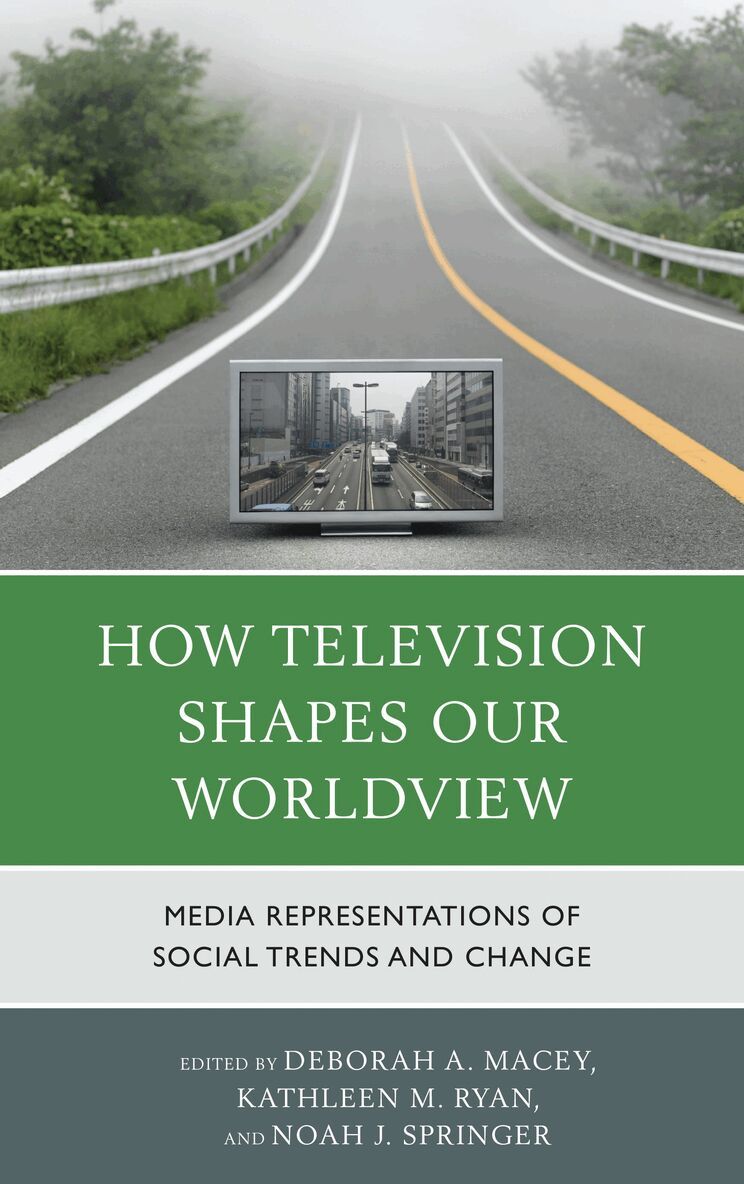
    How Television Shapes Our Worldview

    Media Representations of Social Trends and Change

    AvDeborah A. Macey,Kathleen M. Ryan

    Häftad, Engelska, 2016

    Del i serien Lexington Books

    839 kr

    Beställningsvara. Skickas inom 10-15 vardagar. Fri frakt över 249 kr.

    Beskrivning

    Over the last half of the twentieth century, television has become the predominant medium through which the public accesses information about the world. Through the news, situation comedies, police dramas, and commercials, we learn about the world around us, and our role within it. These genres, narratives, and cultural forms are not simply entertainment, but powerful socializing agents that show the world as we might never see it in real life. How Television Shapes Our Worldview brings together a diverse set of scholars, methodologies, and theoretical frameworks to interrogate the ways through which television molds our vision of the outside world. The essays include advertising and public relations analyses, audience interviews, and case studies that touch on genres ranging from science fiction in the 1970s to current “reality” television. Television truly provides a powerful influence over how we learn about the world around us and understand its social processes.

    Produktinformation

    • Utgivningsdatum:2016-02-29
    • Mått:154 x 229 x 33 mm
    • Vikt:676 g
    • Format:Häftad
    • Språk:Engelska
    • Serie:Lexington Books
    • Antal sidor:462
    • Förlag:Bloomsbury Publishing Plc
    • ISBN:9780739194126

    Utforska kategorier

    • Medievetenskap inom Samhälle och politik

    Mer om författaren

    Deborah A. Macey is visiting assistant professor at Saint Louis University.Kathleen M. Ryan is associate professor at the University of Colorado, Boulder and an active multimedia director and producer.Noah J. Springer is a PhD student at the University of Colorado, Boulder.

    Recensioner i media

    Macey, Ryan, and Springer have compiled essays that examine how television has molded visions of the outside world since the mid-20th century. Since its emergence as a popular form of mass communication, television has served as a primary means of information and cultural storytelling. Through the medium, in all its various genres, narratives, and cultural programs—news, sit coms, police dramas, reality shows—viewers learn about a world they might never see in real life. Pointing to the increasingly fragmented television landscape, the editors organized the essays—all by media scholars—into six main sections: 'Not Necessarily the News,' which considers current affairs; 'Boy (and Girl) Meets World,' the intersection of television with individual lives and social trends; 'America's Most Wanted,' television’s role in perpetuating good and evil; 'The More You Know,' television’s role in social change; 'The Voice,' power and authenticity; and 'Futurama,' which offers a glance at the future. The essays analyze a wide range of shows—Glee, That Girl, Rhoda, Friends, House M.D., M*A*S*H, Welcome Back, Kotter;the numerous theoretical frameworks and methodologies presented suggests that the audience is specialists. The book is a good read. . . .Summing Up: Recommended. Graduate students, researchers, faculty.

    Innehållsförteckning

    • 1. IntroductionDeborah A. Macey, Kathleen M. Ryan and Noah J. SpringerSection I: Not Necessarily the News2. A Bigger Screen for a Narrower ViewJack A. Barwind, Philip J. Salem, and Robert D. Gratz3. Measuring the Messenger: Analyzing Bias in Presidential Election Return CoverageKahtleen M. Ryan, Lane Clegg, and Joy C. Mapaye4. Television, Islam, and the Invisible: Narratives on Terrorism and ImmigrationTim KarisSection II: Boy (and Girl) Meets World5. “Your Dreams Were Your Ticket Out:” How Mass Media’s Teachers Constructed One Educator’s IdentityEdward A. Janak6. Defying Gravity: Fox’s Glee Provides a Forum for Queer Teen RepresentationKatherine J. Lehman7. Friendship and the Single Girl: What We Learned about Feminism and Friendship from Sitcom Women in the 1960s and 1970sCindy Conaway and Peggy TallySection III: America’s Most Wanted8. Epic Failures: Media Framing and the Ethics of Scapegoating in BaseballChandler Harris and Lauren Lemley9. Eyewitnesses to TV Versions of Reality: The Relationship between Exposure to TV Crime Dramas and Perceptions of the Criminal Justice SystemSusan H. Sarapin and Glenn G. Sparks10. Paramilitary Patriots of the Cold War: Women, Weapons, and Private Warriors in The A-Team and AirwolfCharity FoxSection IV: The More You Know11. Lisa and Phoebe, Lone Vegetarian Icons: At Odds with Television’s CarnonormativityCarrie Packwood Freeman12. Television and the Environment: More Screen–Less GreenJennifer Ellen Good13. From Welby to McDreamy: What TV Teaches Us About Doctors, Patients, and the Health Care SystemKatherine A. FossSection V: The Voice14. Made Impossible by Viewers Like You: The Politics and Poetics of Native American Voices in US Public TelevisionLeighton C. Peterson15. “Real” Black, “Real” Money: African American Audiences on The Real Housewives of AtlantaGretta Moody16. He Who has the Gold Makes the Rules: Tyler Perry Presents “The Tyler Perry Way”Danielle E. Williams17. Viewing 90210 from 12203: Affluent TV Teens Influence a Cohort of Middle Class WomenMichelle Napierski-PranclSection VI: Futurama18. The Construction of Taste: Television and American Home DécorStylés I. Akira and Larry Ossei-Mensah19. Bordertown: Manufacturing Mexicanness in Reality TelevisionAriadne Alejandra Gonzalez20. Cyborgs in the Newsroom: Databases, Cynicism and Political Irony in The Daily ShowNoah J. Springer