Häftad, Engelska, 2017
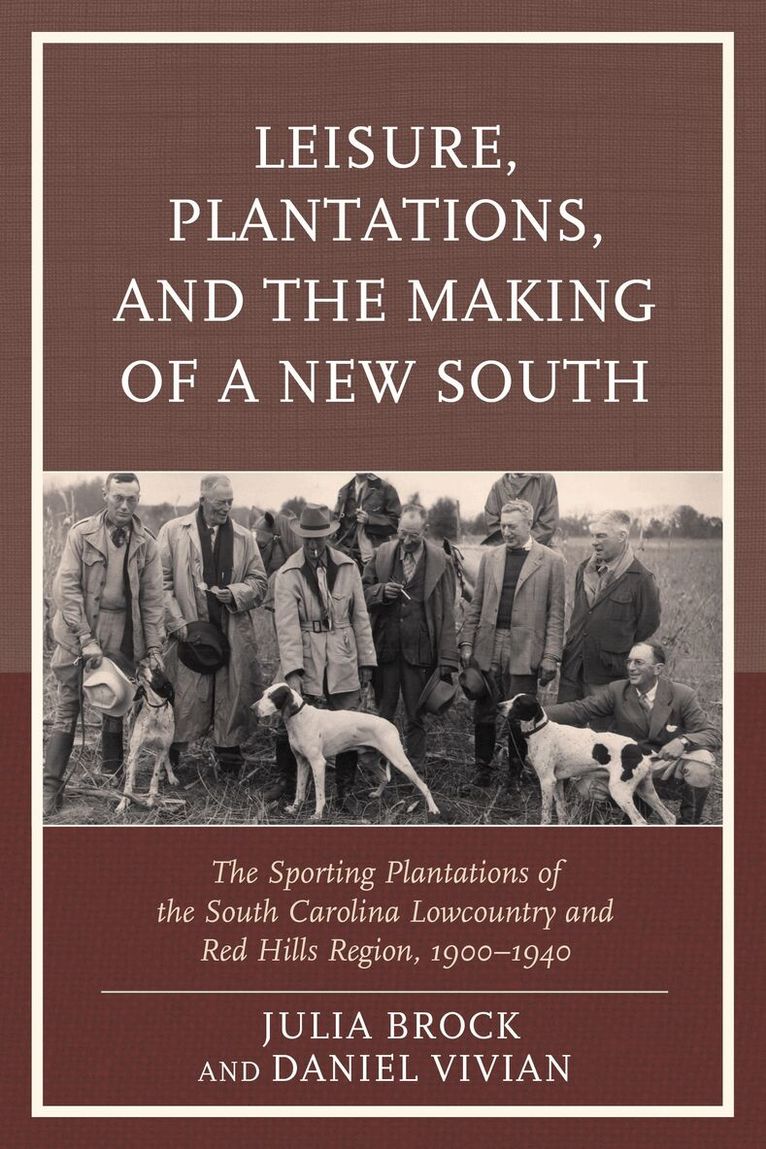
Leisure, Plantations, and the Making of a New South
The Sporting Plantations of the South Carolina Lowcountry and Red Hills Region, 1900–1940
Del i serien New Studies in Southern History
645 kr
Beställningsvara. Skickas inom 10-15 vardagar. Fri frakt över 249 kr.
Beskrivning
Produktinformation
- Utgivningsdatum: 2017-04-12
- Mått: 149 x 231 x 17 mm
- Vikt: 340 g
- Format: Häftad
- Språk: Engelska
- Serie: New Studies in Southern History
- Antal sidor: 228
- Förlag: Bloomsbury Publishing Plc
- ISBN: 9780739195802
Utforska kategorier
Mer om författaren
Daniel Vivian is assistant professor and director of the Public History Program at the University of Louisville. Julia Brock is assistant professor and co-director of the Center for Public History at the University of West Georgia.
Recensioner i media
This collection of seven essays raises important questions about the post-reconstruction and 20th-century South . . . The collective contribution is to highlight the development of northern-owned hunting estates in coastal Carolina and Georgia and in the red hills of southwestern Georgia and the northern Florida panhandle. The estates were at once leisure retreats and illustrations of the early 20th-century approaches to conservation (hunting and game laws often ran counter to local economic needs) or interracial relations (work-based relationships on the estates reinforced the position of African Americans in the world of southern tenancy even as the estate owners were dependent on tenants for expertise as guides). The essays are strongest in giving detail to the patterns of estate development (architecture, purchasing, or the estates as tourist destinations) and in outlining the social or hunting activities of the owners, residents, and hunters. While the essays also demonstrate the influence of estate owners in the politics of the 20th-century South, there are potentially rewarding lines of inquiry into politics that are left unexplored. . . .Summing Up: Recommended. Upper-division undergraduates and above.
Betyg & recensioner
0 recensioner
Inga recensioner tillgängliga.