• Fri frakt över 249 kr
  • •
  • Snabba leveranser
  • •
  • Billiga böcker
Kundservice

Du är på sajten för privatpersoner.

Företag, bibliotek eller offentlig verksamhet?

Du handlar på classic.bokus.com, där alla dina funktioner finns intakta.
Till classic.bokus.com
Bokus logotyp. Gå till startsidan.
  • Erbjudanden
  • Nyheter
  • Student
  • Topplistor
  • Barn & ungdom
  • Bokus Play
  • E-böcker
  • Pocketböcker
  • Spel & pussel

10% rabatt på allt med kod: NYSTART10 →

Sidfot

Mina sidor

    Hjälp

    • Kundservice
    • Vanliga frågor och svar
    • Frakt och leverans
    • Retur vid ångerrätt
    • Reklamera vara
    • Betalning
    • Köpvillkor
    • Allmänna villkor
    • Information om webbplatsens tillgänglighet

    Om Bokus

    • Om oss
    • Pressrum
    • För studenter
    • För företag
    • För bibliotek och offentlig verksamhet
    • För leverantörer
    • Hållbarhet

    Populärt

    • Aktuella erbjudanden
    • Presentkort
    • Studentlitteratur
    • Nya böcker
    • Topplistor
    • Signerade böcker
    • Engelska böcker

    Inspiration

    • Boktips
    • BookTok
    • Populära bokserier
    • Barnbokskaraktärer
    • Populära författare
    Logotyp för Bokus
    Följ oss på Facebook (extern länk)Följ oss på Instagram (extern länk)Följ oss på YouTube (extern länk)Följ oss på TikTok (extern länk)
    bokus @ CookiesAnpassa cookiesIntegritetspolicyKöpvillkor
    Till Citymail hemsida (extern länk)Till Budbee hemsida (extern länk)Till Postnord hemsida (extern länk)Till Schenker hemsida (extern länk)Till Early Bird hemsida (extern länk)Till Walleys hemsida (extern länk)
    1. Historia och arkeologi
    2. Historia
    3. Historia: särskilda händelser och ämnen
    4. Sjöfartshistoria

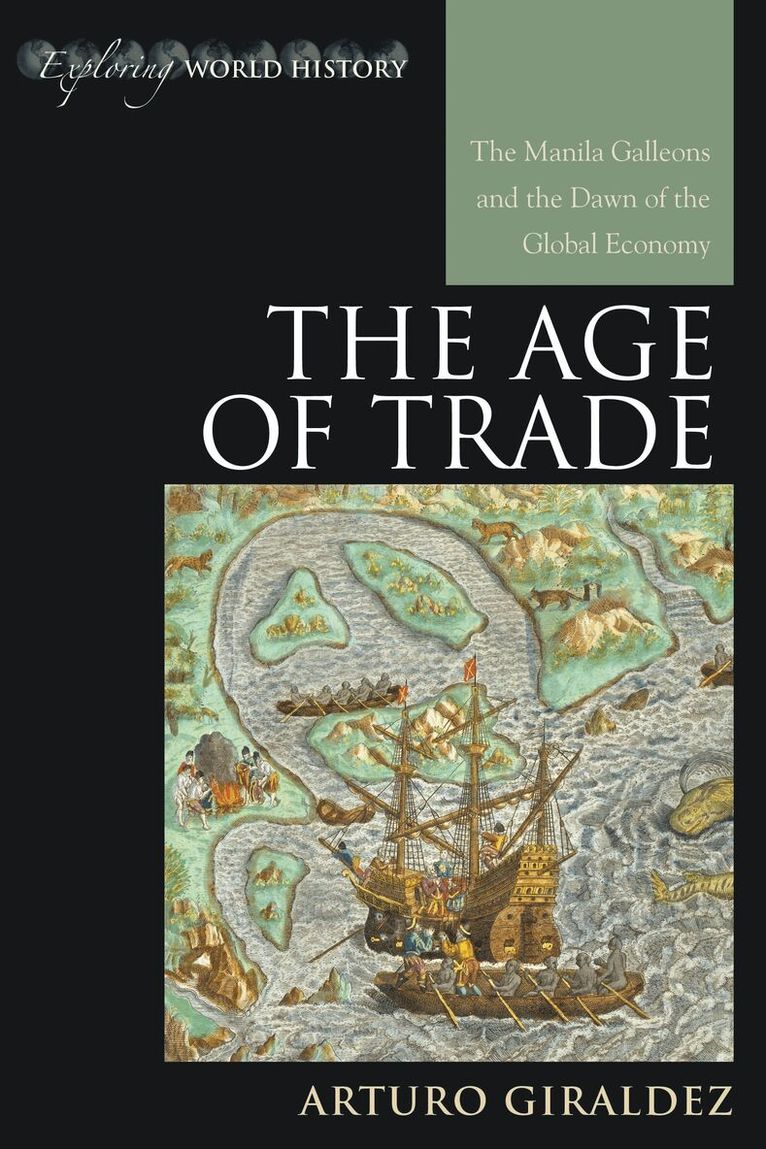
    Age of Trade

    The Manila Galleons and the Dawn of the Global Economy

    AvArturo Giraldez

    Inbunden, Engelska, 2015

    Del i serien Exploring World History

    607 kr

    Beställningsvara. Skickas inom 10-15 vardagar. Fri frakt över 249 kr.

    Beskrivning

    This groundbreaking book presents the first full history of the Manila galleons, which marked the true beginning of a global economy. Arturo Giraldez, the world’s leading scholar of the galleons, traces the rise of the maritime route, which began with the founding of the city of Manila in 1571 and ended in 1815 when the last galleon left the port of Acapulco in New Spain (Mexico) for the Philippines, establishing a permanent connection between the Spanish empire in America with Asian countries, most importantly China, the main supplier of commodities during that era. Throughout the two-and-a-half-century history of the Manila galleons, the strategic commodity fuelling global networks was always silver. Giraldez shows how this most important of precious metals shaped world history, with influences that stretch to the present.

    Produktinformation

    • Utgivningsdatum:2015-03-19
    • Mått:155 x 231 x 28 mm
    • Vikt:545 g
    • Format:Inbunden
    • Språk:Engelska
    • Serie:Exploring World History
    • Antal sidor:270
    • Förlag:Bloomsbury Publishing Plc
    • ISBN:9780742556638

    Utforska kategorier

    • Sjöfartshistoria inom Historia och arkeologi
    • Allmän historia och världshistoria inom Historia och arkeologi

    Mer om författaren

    Arturo Giraldez is professor of modern languages and literature at the University of the Pacific.

    Recensioner i media

    Giráldez seeks to bridge the disciplinary gap between those who study the early modern Americas and those who analyze the Spanish Empire from a European perspective by examining the so-called galleon trade, the Spanish-controlled shipping link that connected the Philippines with Mexico between 1565 and the early 1800s. This link, the author argues, represents the dawn of the global economy in that it turned global trade into an uninterrupted flow. Fueled by Chinese demand for American silver and New World demand for porcelain, silk, spices, and ivory, the galleon trade was vital to the global Spanish Empire. The author discusses how the Spanish, taking advantage of endemic internal conflict, settled the Philippines and turned Manila into an emporium; how Manila's ethnic Chinese population played a vital role in its trade; and how political unrest and natural disaster disrupted traffic until, in the late 18th century, unrest in China, the British occupation of Manila, the expulsion of the indispensable Chinese community, and changing consumer taste among Mexico’s upper classes caused a severe decline in trade. . . .[T]his study...does a fine job showing how the galleon trade closed the last gap in the globe-spanning web of trade. Summing Up: Recommended. General, public, and undergraduate collections.

    Innehållsförteckning

    • Acknowledgments IntroductionChapter One: The Philippines before the SpaniardsMonsoons, Islands, and the “Rim of Fire”Native Peoples on the ShoresBarangays and the Age of Commerce after 1405The Mountain Peoples The Gold of the Visayas and the Harvest of Cowries The Mediterranean Connection and the Long Post-1400 Trade Boom China and the Islands before Spain Chapter Two: The Origins of Spanish Settlement in the PhilippinesManila and the Origins of World Trade Atlantic Silver in the Sixteenth and Seventeenth Centuries China and the Global Market in the Sixteenth and Seventeenth Centuries The Discovery of the Sea: Iberians and Spices The Military Revolution and the 35 Percent of the World The Portuguese and the Vasco da Gama Era Ferdinand Magellan Spanish Expeditions to the Spice Islands Miguel López de LegázpiSpaniards in LuzonExploration of LuzonChapter Three: Spanish Settlement in the PhilippinesThe First Decades of the Colony and “The China Enterprise”Settling Down in the PhilippinesThe “Magellan Exchange” and the IslandsA New Agricultural RegimeReorganizing the TerritoryThe Colony’s FinancesNative Contributions to the Colonial EconomyThe SituadoThe Role of Manila in the New Territorial ArrangementsIndirect Rule: The PrincipalíaColonial AdministrationChapter Four: The Seventeenth CenturyThe “Little Ice Age” The End of the Silver CycleThe Eighty Years’ War with the NetherlandsThe Philippines and the War with the Dutch The Moro WarsJapan and the FriarsThe Portuguese in ManilaThe European Companies The Armenian DiasporaThe New Christians’ Mercantile Diaspora The End of the Century Chapter Five: The GalleonsThe Line The Voyage Officers and Sailors Acapulco Chapter Six: The Economy of the LineChina and Silver in the Modern Era Textiles and the Galleons Galleon Line Regulations A Royal Inspector’s Visit Chinese Merchants: The Sangleys The Chinese Rebellion of 1603 The Rebellion of 1640 Chapter Seven: The Eighteenth Century and the Galleon LineA New Ecological Regime The Mexican Silver Cycle The Tea and Opium Cycle The War of Jenkins’ Ear and the Manila GalleonThe Seven Years’ War in the PhilippinesThe Chinese in Eighteenth-Century PhilippinesReforms in the Philippines The Moro Wars in the Eighteenth Century Changes in Spanish Imperial PolicyThe End of the Galleon TradeThe End of the LineNotesBibliographyIndexAbout the Author