• Fri frakt över 249 kr
  • •
  • Snabba leveranser
  • •
  • Billiga böcker
Kundservice

Du är på sajten för privatpersoner.

Företag, bibliotek eller offentlig verksamhet?

Du handlar på classic.bokus.com, där alla dina funktioner finns intakta.
Till classic.bokus.com
Bokus logotyp. Gå till startsidan.
  • Erbjudanden
  • Nyheter
  • Student
  • Topplistor
  • Barn & ungdom
  • Bokus Play
  • E-böcker
  • Pocketböcker
  • Spel & pussel

10% rabatt på allt med kod: NYSTART10 →

Sidfot

Mina sidor

    Hjälp

    • Kundservice
    • Vanliga frågor och svar
    • Frakt och leverans
    • Retur vid ångerrätt
    • Reklamera vara
    • Betalning
    • Köpvillkor
    • Allmänna villkor
    • Information om webbplatsens tillgänglighet

    Om Bokus

    • Om oss
    • Pressrum
    • För studenter
    • För företag
    • För bibliotek och offentlig verksamhet
    • För leverantörer
    • Hållbarhet

    Populärt

    • Aktuella erbjudanden
    • Presentkort
    • Studentlitteratur
    • Nya böcker
    • Topplistor
    • Signerade böcker
    • Engelska böcker

    Inspiration

    • Boktips
    • BookTok
    • Populära bokserier
    • Barnbokskaraktärer
    • Populära författare
    Logotyp för Bokus
    Följ oss på Facebook (extern länk)Följ oss på Instagram (extern länk)Följ oss på YouTube (extern länk)Följ oss på TikTok (extern länk)
    bokus @ CookiesAnpassa cookiesIntegritetspolicyKöpvillkor
    Till Citymail hemsida (extern länk)Till Budbee hemsida (extern länk)Till Postnord hemsida (extern länk)Till Schenker hemsida (extern länk)Till Early Bird hemsida (extern länk)Till Walleys hemsida (extern länk)
    1. Ekonomi och Ledarskap
    2. Nationalekonomi
    3. Ekonomisk historia

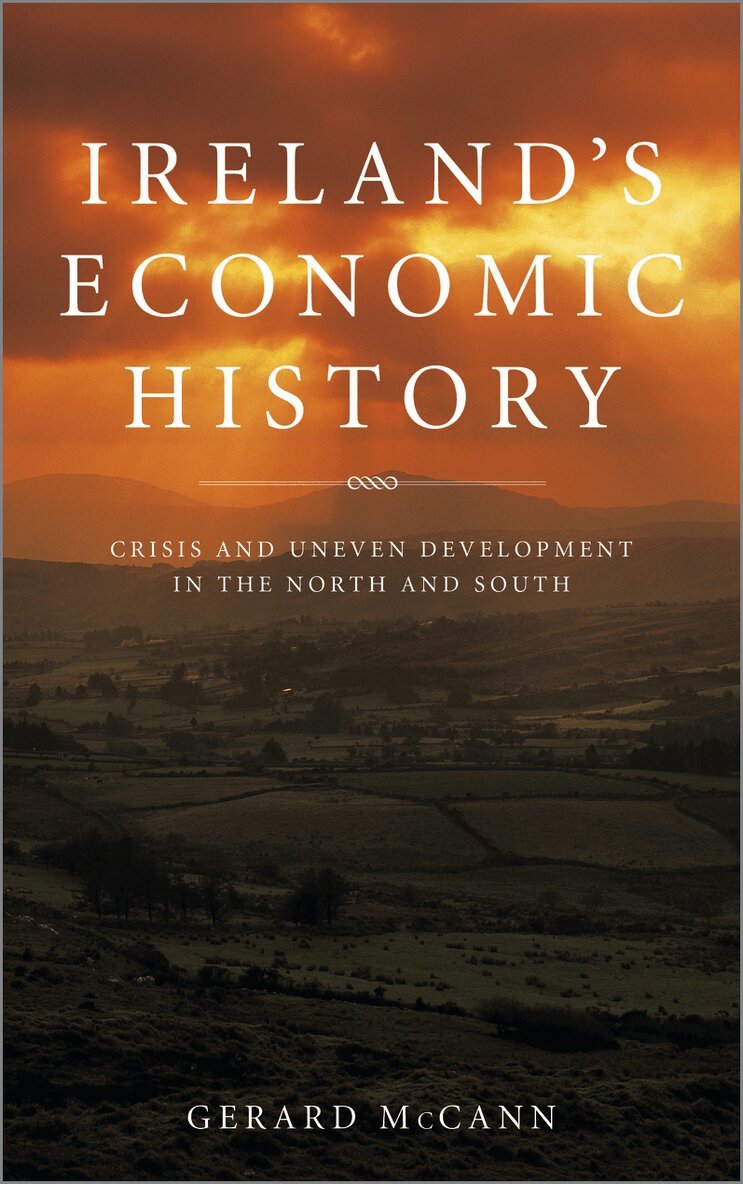
    Ireland's Economic History

    Crisis and Development in the North and South

    AvGerard McCann

    Häftad, Engelska, 2011

    303 kr

    Beställningsvara. Skickas inom 5-8 vardagar. Fri frakt över 249 kr.

    Fler format och utgåvor

    E-bok

    352 kr

    Beskrivning

    This book explores the complex developments that have shaped Ireland's economic development, north and south, and led to recurring crises and instability. The Irish economy has been traditionally portrayed as a product of its political divisions and the colonial legacy, divided and analysed in terms of the hegemonic tensions that exist on the island. Influenced by these divisions, academics have tended to look at a two-region approach to economic development, without adequately acknowledging the interactive nature of the island economy as a source of the crises or as a solution to systemic divergence.McCann's definitive and dynamic history of the Irish economy circumvents conventional analyses and investigates the economic development of the island economy as a whole, highlighting where aggressive differentiation has been divisive and destabilising. He concludes by considering an alternative integrated and cohesive process of economic development.

    Produktinformation

    • Utgivningsdatum:2011-09-12
    • Mått:135 x 215 x 15 mm
    • Vikt:335 g
    • Format:Häftad
    • Språk:Engelska
    • Antal sidor:260
    • Förlag:Pluto Press
    • ISBN:9780745330303

    Utforska kategorier

    • Ekonomisk historia inom Ekonomi och Ledarskap

    Mer om författaren

    Gerard McCann is a Senior Lecturer in International Studies at St Mary's University College (Queen's University, Belfast). He is Director of the Global Dimension in Education project and co-ordinates partnership initiatives with universities in Sub-Saharan Africa and the Middle East. He has written extensively on the European Union's development and education policies. He is the author of Ireland's Economic History (Pluto, 2011) and editor of From the Local to the Global (Pluto, 2015).

    Recensioner i media

    'An outstanding critique of the management of the Irish economy over two centuries. For anyone interested in understanding why Ireland is in the state it is in: read it'

    Innehållsförteckning

    • AcknowledgementsIntroduction 1. The colonial economy (1831–1860) Land and laissez-faire The famine economy 2. Post-famine adjustment and industrialization(1861–1921) The new reality War as stimulus 3. Partition and depression (1921–1939) The northern ‘dominion’Economic war 4. The impact of war (1939–1957)War economy in the north Post-war reconstruction5. Modernisation and the conflict economy (1958–1987) Opening the northInto the European Economic CommunityThe conflict economy in the north The bleak 1980s 6. The peace dividend (1988–2001) Integrating the border as an answerRegionalisation as developmentThe Agreement 7. Neoliberal Ireland From model to miracle The collapse Conclusion BibliographyIndexBibliographyIndex