• Fri frakt över 249 kr
  • •
  • Snabba leveranser
  • •
  • Billiga böcker
Kundservice

Du är på sajten för privatpersoner.

Företag, bibliotek eller offentlig verksamhet?

Du handlar på classic.bokus.com, där alla dina funktioner finns intakta.
Till classic.bokus.com
Bokus logotyp. Gå till startsidan.
  • Erbjudanden
  • Nyheter
  • Student
  • Topplistor
  • Barn & ungdom
  • Bokus Play
  • E-böcker
  • Pocketböcker
  • Spel & pussel

10% rabatt på allt med kod: NYSTART10 →

Sidfot

Mina sidor

    Hjälp

    • Kundservice
    • Vanliga frågor och svar
    • Frakt och leverans
    • Retur vid ångerrätt
    • Reklamera vara
    • Betalning
    • Köpvillkor
    • Allmänna villkor
    • Information om webbplatsens tillgänglighet

    Om Bokus

    • Om oss
    • Pressrum
    • För studenter
    • För företag
    • För bibliotek och offentlig verksamhet
    • För leverantörer
    • Hållbarhet

    Populärt

    • Aktuella erbjudanden
    • Presentkort
    • Studentlitteratur
    • Nya böcker
    • Topplistor
    • Signerade böcker
    • Engelska böcker

    Inspiration

    • Boktips
    • BookTok
    • Populära bokserier
    • Barnbokskaraktärer
    • Populära författare
    Logotyp för Bokus
    Följ oss på Facebook (extern länk)Följ oss på Instagram (extern länk)Följ oss på YouTube (extern länk)Följ oss på TikTok (extern länk)
    bokus @ CookiesAnpassa cookiesIntegritetspolicyKöpvillkor
    Till Citymail hemsida (extern länk)Till Budbee hemsida (extern länk)Till Postnord hemsida (extern länk)Till Schenker hemsida (extern länk)Till Early Bird hemsida (extern länk)Till Walleys hemsida (extern länk)
    1. Kultur
    2. Konstböcker
    3. Konstteori

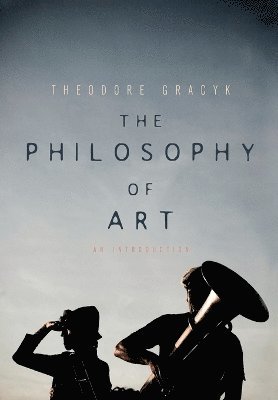
    Philosophy of Art

    An Introduction

    AvTheodore Gracyk

    Häftad, Engelska, 2011

    322 kr

    Beställningsvara. Skickas inom 5-8 vardagar. Fri frakt över 249 kr.

    Fler format och utgåvor

    Inbunden

    766 kr

    E-bok

    363 kr

    Beskrivning

    The Philosophy of Art is a highly accessible introduction to current key issues and debates in aesthetics and philosophy of art. Chapters on standard topics are balanced by topics of interest to today's students, including creativity, authenticity, cultural appropriation, and the distinction between popular and fine art. Other topics include emotive expression, pictorial representation, definitional strategies, and artistic value. Presupposing no prior knowledge of philosophy, Theodore Gracyk draws on three decades of teaching experience to provide a balanced and engaging overview, clear explanations, and many thought-provoking examples.All chapters have a strong focus on current debates in the field, yet historical figures are not neglected. Major current theories are set beside key ideas from Plato, Aristotle, Kant, Marx, and Hegel. Chapters conclude with advice on further readings, and there are recommendations of films that will serve as a basis for further reflection and discussion. Key ideas are immediately accompanied by exercises that will test students' reactions and understanding. Many chapters call attention to ideology, prejudices, and common clichés that interfere with clear thinking.Beautifully written and thoroughly comprehensive, The Philosophy of Art is the ideal resource for anyone who wants to explore recent developments in philosophical thinking about the arts. It is also provides the perfect starting point for anyone who wants to reflect on, and challenge, their own assumptions about the nature and value of art.

    Produktinformation

    • Utgivningsdatum:2011-10-21
    • Mått:170 x 262 x 13 mm
    • Vikt:431 g
    • Format:Häftad
    • Språk:Engelska
    • Antal sidor:284
    • Förlag:John Wiley and Sons Ltd
    • ISBN:9780745649160

    Utforska kategorier

    • Konstteori inom Kultur
    • Filosofiska discipliner inom Filosofi och religion

    Mer om författaren

    Theodore Gracyk is department chair and professor of philosophy at Minnesota State University.

    Recensioner i media

    "A valuable introduction which is unusual in both offering students extremely clear accounts of philosophers’ efforts in the field and also highly provocative and relevant questions for them to use as ways of digesting the material."Consciousness, Literature and the Arts "Gracyk's Philosophy of Art mingles deft presentation of philosophical positions with insightful examples of artworks that illustrate or challenge those positions. This clear and methodical introduction considers fine art as well as popular culture, and the text is interspersed with thought-provoking exercises. An excellent read for students and professionals alike."Carolyn Korsmeyer, University at Buffalo (SUNY) "Gracyk's book introduces classical questions in philosophy of art and fresh contemporary issues that will capture the interest of undergraduates. Written in a clear, accessible style, it is replete with examples drawn from the fine arts and popular culture. Gracyk succeeds in being both rigorous and engaging. Highly recommended."James O. Young, University of Victoria"With its fresh and even-handed approach to the most recent developments, its delightful use of example, and its clean prose, this book is the perfect introduction to how to use philosophy to think clearly, creatively, and deeply about art and the aesthetic."Dominic McIver Lopes, University of British Columbia

    Innehållsförteckning

    • AcknowledgementsPreface1 Meaning, Interpretation, and Picturing1 Representations and pictures2 Theories of picturing3 Intentions and transparency in pictures and photographs4 Indiscernible counterparts5 Fine art2 Art as Expression1 Overview of expression theories2 Tolstoy's account of expressive art3 Collingwood's account of expressive art4 The expressive persona 5 Expression as arousal6 Revising the arousal theory7 Expression as cognitive recognition3 Meaning and Creativity1 Plato on creativity2 Kant on genius3 Metaphorical exemplification4 Hegel and Marx5 Material bases of creativity6 Feminism and creativity4 Fakes, Originals, and Ontology1 Multiples and singularities2 Abstract objects3 Problems and implications4 Fakes and originals5 Objections and alternatives5 Authenticity and Cultural Origins1 Two kinds of contextualism2 Four kinds of appropriation3 Moral concerns4 Culture5 Authenticity6 Modernity and authenticity6 Defining Art1 Philosophical definition2 Historical background 3 Functional definitions4 Institutional definitions 5 Historical definitions6 The cluster account7 Aesthetics1 Aesthetic judgments and properties2 Supervenience3 Two complications4 Aesthetics and nature 5 Formalism and detachment 6 Making special 7 Pleasure and appreciation8 Beyond the Fine Arts1 Popular and mass art2 Standard criticisms of popular art3 Social consequences of popular culture4 Gender and race5 Everyday aesthetics9 Artistic and aesthetic value1 Three kinds of value2 The uniqueness thesis3 Value empiricism4 Instrumental value 5 An alternative analysis6 Appreciation7 Cognitive value10 ConclusionReferencesIndex