Theodore Gracyk - Böcker
Visar alla böcker från författaren Theodore Gracyk. Handla med fri frakt och snabb leverans.
13 produkter
13 produkter
3 280 kr
Skickas inom 10-15 vardagar
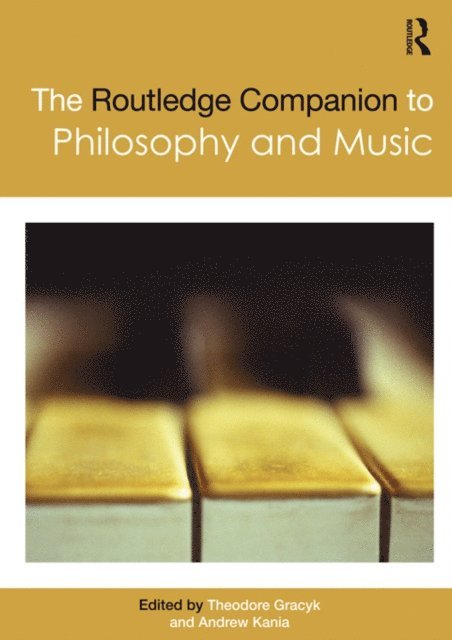
The Routledge Companion to Philosophy and Music is an outstanding guide and reference source to the key topics, subjects, thinkers and debates in philosophy and music. Over fifty entries by an international team of contributors are organised into six clear sections:general issues emotionhistoryfigureskinds of musicmusic, philosophy and related disciplinesThe Routledge Companion to Philosophy and Music is essential reading for anyone interested in philosophy, music and musicology.
2 098 kr
Skickas inom 10-15 vardagar
Opinionated and example-filled, this extremely concise and accessible book provides a survey of some fundamental and longstanding debates about the nature of music. The central arguments and ideas of historical and contemporary philosophers are presented with the goal of making them as accessible as possible to general readers who have no background in philosophy. The emphasis is on instrumental music, but examples are drawn from many cultures as well as from Western classical, jazz, folk, and popular music.
565 kr
Skickas inom 10-15 vardagar
Opinionated and example-filled, this extremely concise and accessible book provides a survey of some fundamental and longstanding debates about the nature of music. The central arguments and ideas of historical and contemporary philosophers are presented with the goal of making them as accessible as possible to general readers who have no background in philosophy. The emphasis is on instrumental music, but examples are drawn from many cultures as well as from Western classical, jazz, folk, and popular music.
960 kr
Skickas inom 10-15 vardagar
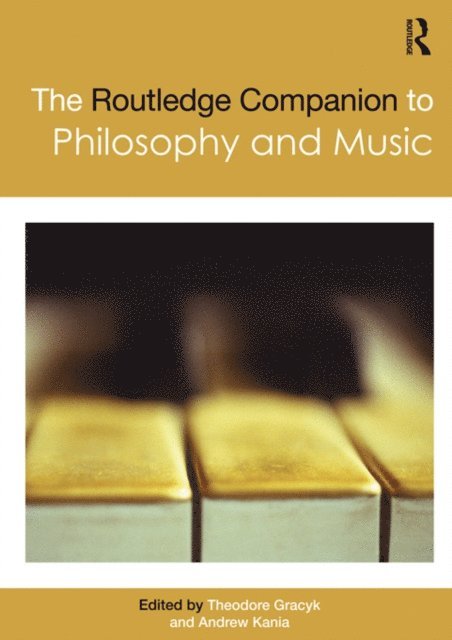
The Routledge Companion to Philosophy and Music is an outstanding guide and reference source to the key topics, subjects, thinkers and debates in philosophy and music. Over fifty entries by an international team of contributors are organised into six clear sections:general issues emotionhistoryfigureskinds of musicmusic, philosophy and related disciplinesThe Routledge Companion to Philosophy and Music is essential reading for anyone interested in philosophy, music and musicology.
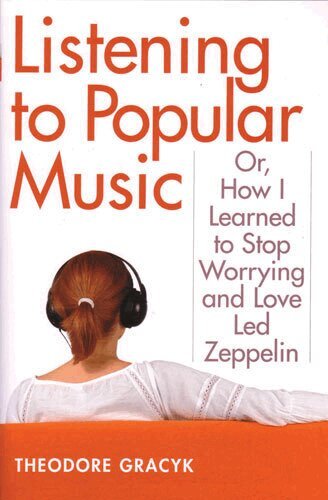
Listening to Popular Music
Or, How I Learned to Stop Worrying and Love Led Zeppelin
Häftad, Engelska, 2007
334 kr
Skickas inom 7-10 vardagar
It has long been assumed that people who prefer Led Zeppelin to Mozart live aesthetically impoverished lives. But why? In Listening to Popular Music, award-winning popular music scholar Theodore Gracyk argues that aesthetic value is just as important in popular listening as it is with “serious” music. And we don’t have to treat popular music as art in order to recognize its worth. Aesthetic values are realized differently in different musical styles, and each requires listening skills that people must learn. Boldly merging insights from popular music studies, aesthetic theory, cognitive science, psychology, identity theory, and cultural studies, Gracyk crafts an innovative study that argues that understanding aesthetic value is crucial to the enjoyment of all forms of music. Listening to Popular Music thusoffers a new, general framework for understanding what it means to appreciate music, showing that an informed preference for popular music is a response to real values of the music, including aesthetic values. "Finally, a book on aesthetics that's philosophically grounded, anti-elitist, and tailored to popular music. Much needed and deftly achieved."—William Echard, Department of Music, and Institute for Comparative Studies in Literature, Art, and Culture, Carleton University "A sophisticated account of aesthetic value in popular music that revealingly challenges orthodoxies of cultural studies and traditional aesthetics."—Stephen Davies, Department of Philosophy, University of Auckland, and author of The Philosophy of Art "Gracyk's arguments are thoughtful, clear, and persuasive, and it's refreshing to see him expose the flaws in commonly repeated critiques of popular music. This book will challenge open-minded doubters to take popular music seriously."—Mark Katz, Assistant Professor of Music, University of North Carolina at Chapel Hill, and author of Capturing Sound: How Technology Has Changed MusicTheodore Gracyk is Department Chair and Professor of Philosophy at Minnesota State University Moorhead. He is the author of Rhythm and Noise: An Aesthetics of Rock and I Wanna Be Me: Rock Music and the Politics of Identity, which won the 2002 IASPM-US Woody Guthrie Book Award.
753 kr
Skickas
The Philosophy of Art is a highly accessible introduction to current key issues and debates in aesthetics and philosophy of art. Chapters on standard topics are balanced by topics of interest to today's students, including creativity, authenticity, cultural appropriation, and the distinction between popular and fine art. Other topics include emotive expression, pictorial representation, definitional strategies, and artistic value. Presupposing no prior knowledge of philosophy, Theodore Gracyk draws on three decades of teaching experience to provide a balanced and engaging overview, clear explanations, and many thought-provoking examples.All chapters have a strong focus on current debates in the field, yet historical figures are not neglected. Major current theories are set beside key ideas from Plato, Aristotle, Kant, Marx, and Hegel. Chapters conclude with advice on further readings, and there are recommendations of films that will serve as a basis for further reflection and discussion. Key ideas are immediately accompanied by exercises that will test students' reactions and understanding. Many chapters call attention to ideology, prejudices, and common clichés that interfere with clear thinking.Beautifully written and thoroughly comprehensive, The Philosophy of Art is the ideal resource for anyone who wants to explore recent developments in philosophical thinking about the arts. It is also provides the perfect starting point for anyone who wants to reflect on, and challenge, their own assumptions about the nature and value of art.
311 kr
Skickas inom 7-10 vardagar
The Philosophy of Art is a highly accessible introduction to current key issues and debates in aesthetics and philosophy of art. Chapters on standard topics are balanced by topics of interest to today's students, including creativity, authenticity, cultural appropriation, and the distinction between popular and fine art. Other topics include emotive expression, pictorial representation, definitional strategies, and artistic value. Presupposing no prior knowledge of philosophy, Theodore Gracyk draws on three decades of teaching experience to provide a balanced and engaging overview, clear explanations, and many thought-provoking examples.All chapters have a strong focus on current debates in the field, yet historical figures are not neglected. Major current theories are set beside key ideas from Plato, Aristotle, Kant, Marx, and Hegel. Chapters conclude with advice on further readings, and there are recommendations of films that will serve as a basis for further reflection and discussion. Key ideas are immediately accompanied by exercises that will test students' reactions and understanding. Many chapters call attention to ideology, prejudices, and common clichés that interfere with clear thinking.Beautifully written and thoroughly comprehensive, The Philosophy of Art is the ideal resource for anyone who wants to explore recent developments in philosophical thinking about the arts. It is also provides the perfect starting point for anyone who wants to reflect on, and challenge, their own assumptions about the nature and value of art.
375 kr
Skickas inom 7-10 vardagar
You know it when you hear it, but can you say what it is? How you know? Why you either love or loathe it? What makes it original or derivative? To a music that tends to render its aficionados and detractors equally inarticulate, Theodore Gracyk brings a rare critical clarity. His book tells us once and for all what makes rock music rock. A happy marriage of aesthetic theory and the aesthetic practice that moved a generation, Rhythm and Noise is the only thorough-going account of rock as a distinct artistic medium rather than a species of popular culture.What’s in a name? “Rock” or “Rock ’n’ Roll?” Grayck argues that rock and roll is actually a performance style, one in a number of musical styles comprising rock. What distinguishes rock, Gracyk tells us, is how it is mediated by technology: The art is in the recording. The lesson is a heady one, entailing a tour through the history of rock music from Elvis Presley’s first recordings in 1954 to Kurt Cobain’s suicide in 1994. Gracyk takes us through key recordings, lets us hear what rock musicians and their critics have to say, shows us how other kinds of music compare, and gives us the philosophical background to make more than passing sense of the medium. His work takes up the common myths and stereotypes about rock, popular and academic, and focuses on the features of the music that electrify fans and consistently generate controversy. When Elvis came to town, did southern sheriffs say that rock was barbaric and addictive? Well so did Theodor Adorno, in his way, and Allan Bloom, in his, and Gracyk takes aim at this charge as it echoes through the era of recorded music. He looks at what rock has to do with romanticism and, even more, with commercialism. And he questions the orthodoxy of making grand distinctions between “serious” and “popular” art.Keenly attuned to the nuances of music and of all the ways that we can think about it, this exhilarating book tunes us in, as no other has, to the complex role of rock in American culture.
1 808 kr
Skickas
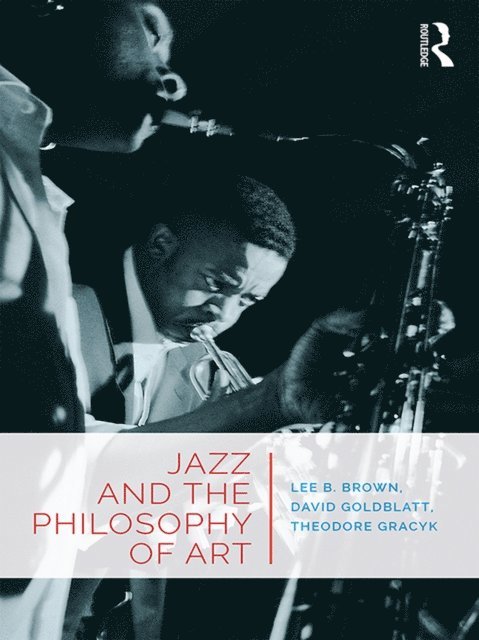
Co-authored by three prominent philosophers of art, Jazz and the Philosophy of Art is the first book in English to be exclusively devoted to philosophical issues in jazz. It covers such diverse topics as minstrelsy, bebop, Voodoo, social and tap dancing, parades, phonography,musical forgeries, and jazz singing, as well as Goodman’s allographic/autographic distinction, Adorno’s critique of popular music, and what improvisation is and is not. The book is organized into three parts. Drawing on innovative strategies adopted to address challenges that arise for the project of defining art, Part I shows how historical definitions of art provide a blueprint for a historical definition of jazz. Part II extends the book’s commitment to social-historical contextualism by exploring distinctive ways that jazz has shaped, and been shaped by, American culture. It uses the lens of jazz vocals to provide perspective on racial issues previously unaddressed in the work. It then examines the broader premise that jazz was a socially progressive force in American popular culture. Part III concentrates on a topic that has entered into the arguments of each of the previous chapters: what is jazz improvisation? It outlines a pluralistic framework in which distinctive performance intentions distinguish distinctive kinds of jazz improvisation.This book is a comprehensive and valuable resource for any reader interested in the intersections between jazz and philosophy.
579 kr
Skickas inom 10-15 vardagar
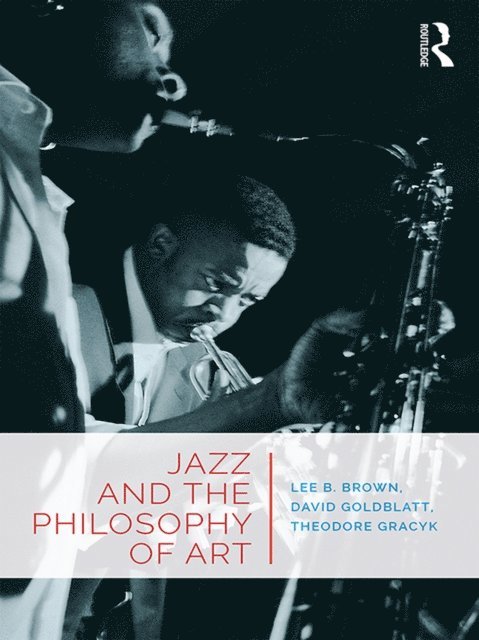
Co-authored by three prominent philosophers of art, Jazz and the Philosophy of Art is the first book in English to be exclusively devoted to philosophical issues in jazz. It covers such diverse topics as minstrelsy, bebop, Voodoo, social and tap dancing, parades, phonography,musical forgeries, and jazz singing, as well as Goodman’s allographic/autographic distinction, Adorno’s critique of popular music, and what improvisation is and is not. The book is organized into three parts. Drawing on innovative strategies adopted to address challenges that arise for the project of defining art, Part I shows how historical definitions of art provide a blueprint for a historical definition of jazz. Part II extends the book’s commitment to social-historical contextualism by exploring distinctive ways that jazz has shaped, and been shaped by, American culture. It uses the lens of jazz vocals to provide perspective on racial issues previously unaddressed in the work. It then examines the broader premise that jazz was a socially progressive force in American popular culture. Part III concentrates on a topic that has entered into the arguments of each of the previous chapters: what is jazz improvisation? It outlines a pluralistic framework in which distinctive performance intentions distinguish distinctive kinds of jazz improvisation.This book is a comprehensive and valuable resource for any reader interested in the intersections between jazz and philosophy.
1 276 kr
Skickas inom 10-15 vardagar
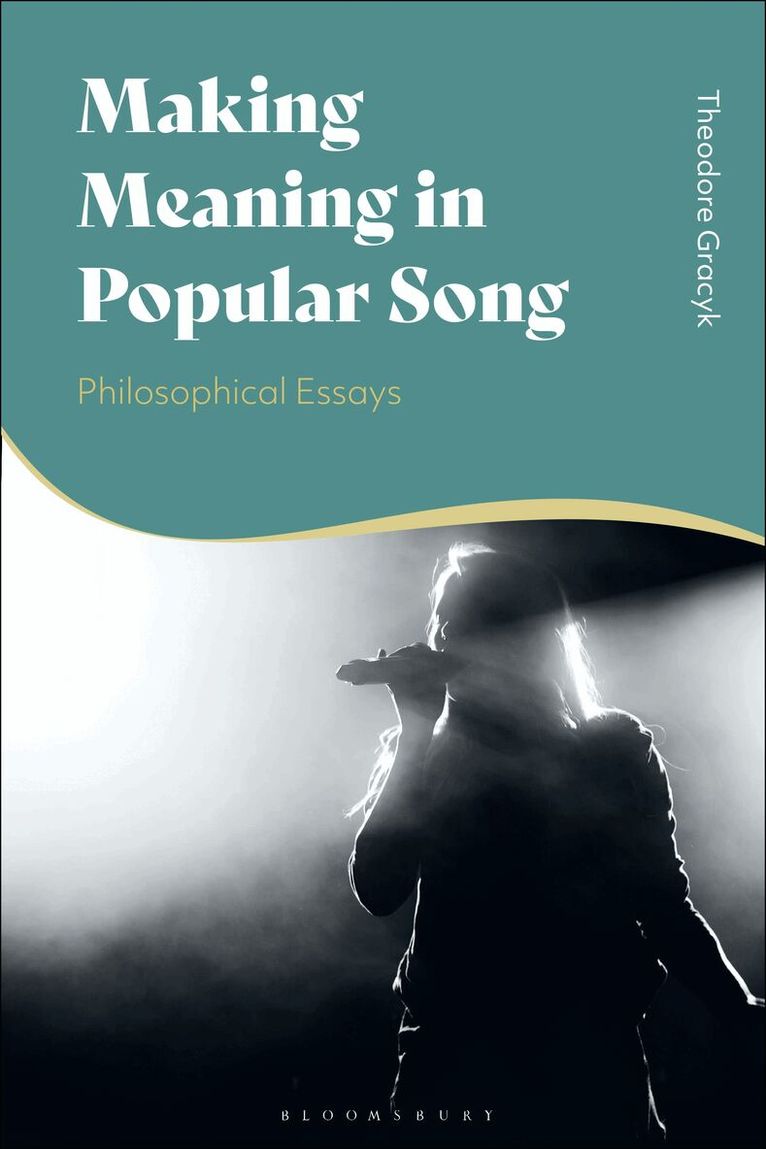
Winner, ASA (American Society for Aesthetics) 2023 Outstanding Monograph PrizeFor Theodore Gracyk meaning in popular music depends as much on the context of reception and performer’s intentions as on established musical and semantic practices. Songs are structures that serve as the scaffolding for meaning production, influenced by the performance decisions of the performer and their intentions.Arguing against prevailing theories of meaning that ignore the power of the performance, Gracyk champions the contextual relevance of the performer as well as novel messaging through creative repurposing of recordings. Extending the philosophical insight that meaning is a function of use, Gracyk explains how both the performance persona and the personal life of a song’s performer can contribute to (or undercut) ethical and political aspects of a performance or recording.Using Carly Simon’s “You’re So Vain”, Pink Floyd, the emergence of the musical genre of post-punk and the practice of “cover” versions, Gracyk explores the multiple, sometimes contradictory, notions of authenticity applied to popular music and the conditions for meaningful communication. He places popular music within larger cultural contexts and examines how assigning a performance or recording to one music genre rather than another has implications for what it communicates.Informed by a mix of philosophy of art and philosophy of language, Gracyk's entertaining study of popular music constructs a theoretical basis for a philosophy of meaning for songs.
408 kr
Skickas inom 10-15 vardagar
Winner, ASA (American Society for Aesthetics) 2023 Outstanding Monograph PrizeFor Theodore Gracyk meaning in popular music depends as much on the context of reception and performer’s intentions as on established musical and semantic practices. Songs are structures that serve as the scaffolding for meaning production, influenced by the performance decisions of the performer and their intentions.Arguing against prevailing theories of meaning that ignore the power of the performance, Gracyk champions the contextual relevance of the performer as well as novel messaging through creative repurposing of recordings. Extending the philosophical insight that meaning is a function of use, Gracyk explains how both the performance persona and the personal life of a song’s performer can contribute to (or undercut) ethical and political aspects of a performance or recording.Using Carly Simon’s “You’re So Vain”, Pink Floyd, the emergence of the musical genre of post-punk and the practice of “cover” versions, Gracyk explores the multiple, sometimes contradictory, notions of authenticity applied to popular music and the conditions for meaningful communication. He places popular music within larger cultural contexts and examines how assigning a performance or recording to one music genre rather than another has implications for what it communicates.Informed by a mix of philosophy of art and philosophy of language, Gracyk's entertaining study of popular music constructs a theoretical basis for a philosophy of meaning for songs.
318 kr
Skickas inom 11-20 vardagar
As someone who feels the emotional power of rock and who writes about it as an art form, Theodore Gracyk has been praised for launching "plainspoken arguments destined to change the future of rock and roll," (Publishers Weekly). In I Wanna Be Me, his second book about the music he cares so much about, Gracyk grapples with the ways that rock shapes-limits and expands-our notions of who we can be in the world. Gracyk sees rock as a mass art, open-ended and open to diverse (but not unlimited) interpretations. Recordings reach millions, drawing people together in communities of listeners who respond viscerally to its sound and intellectually to its messages. As an art form that proclaims its emotional authenticity and resistance to convention, rock music constitutes part of the cultural apparatus from which individuals mold personal and political identities. Going to the heart of this relationship between the music's role in its performers' and fans' self-construction, Gracyk probes questions of gender and appropriation. How can a feminist be a Stones fan or a straight man enjoy the Indigo Girls?Does borrowing music that carries a "racial identity" always add up to exploitation, a charge leveled at Paul Simon's Graceland? Ranging through forty years of rock history and offering a trove of anecdotes and examples, I Wanna Be Me, like Gracyk's earlier book, "should be cherished, and read, by rockers everywhere" (Salon).