• Fri frakt över 249 kr
  • •
  • Snabba leveranser
  • •
  • Billiga böcker
Kundservice

Du är på sajten för privatpersoner.

Företag, bibliotek eller offentlig verksamhet?

Du handlar på classic.bokus.com, där alla dina funktioner finns intakta.
Till classic.bokus.com
Bokus logotyp. Gå till startsidan.
  • Erbjudanden
  • Nyheter
  • Student
  • Topplistor
  • Barn & ungdom
  • Bokus Play
  • E-böcker
  • Pocketböcker
  • Spel & pussel

10% rabatt på allt med kod: NYSTART10 →

Sidfot

Mina sidor

    Hjälp

    • Kundservice
    • Vanliga frågor och svar
    • Frakt och leverans
    • Retur vid ångerrätt
    • Reklamera vara
    • Betalning
    • Köpvillkor
    • Allmänna villkor
    • Information om webbplatsens tillgänglighet

    Om Bokus

    • Om oss
    • Pressrum
    • För studenter
    • För företag
    • För bibliotek och offentlig verksamhet
    • För leverantörer
    • Hållbarhet

    Populärt

    • Aktuella erbjudanden
    • Presentkort
    • Studentlitteratur
    • Nya böcker
    • Topplistor
    • Signerade böcker
    • Engelska böcker

    Inspiration

    • Boktips
    • BookTok
    • Populära bokserier
    • Barnbokskaraktärer
    • Populära författare
    Logotyp för Bokus
    Följ oss på Facebook (extern länk)Följ oss på Instagram (extern länk)Följ oss på YouTube (extern länk)Följ oss på TikTok (extern länk)
    bokus @ CookiesAnpassa cookiesIntegritetspolicyKöpvillkor
    Till Citymail hemsida (extern länk)Till Budbee hemsida (extern länk)Till Postnord hemsida (extern länk)Till Schenker hemsida (extern länk)Till Early Bird hemsida (extern länk)Till Walleys hemsida (extern länk)
    1. Samhälle och politik
    2. Samhälle och kultur
    3. Kultur och medier
    4. Medievetenskap

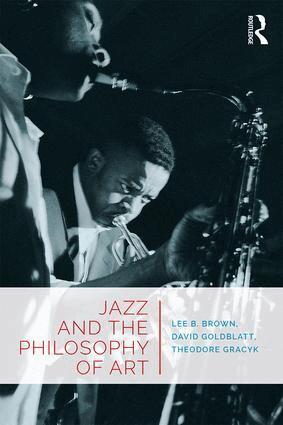
    Jazz and the Philosophy of Art

    AvLee B. Brown,David Goldblatt

    Häftad, Engelska, 2018

    624 kr

    Beställningsvara. Skickas inom 10-15 vardagar. Fri frakt över 249 kr.

    Fler format och utgåvor

    Inbunden

    1 841 kr

    Beskrivning

    Co-authored by three prominent philosophers of art, Jazz and the Philosophy of Art is the first book in English to be exclusively devoted to philosophical issues in jazz. It covers such diverse topics as minstrelsy, bebop, Voodoo, social and tap dancing, parades, phonography,musical forgeries, and jazz singing, as well as Goodman’s allographic/autographic distinction, Adorno’s critique of popular music, and what improvisation is and is not. The book is organized into three parts. Drawing on innovative strategies adopted to address challenges that arise for the project of defining art, Part I shows how historical definitions of art provide a blueprint for a historical definition of jazz. Part II extends the book’s commitment to social-historical contextualism by exploring distinctive ways that jazz has shaped, and been shaped by, American culture. It uses the lens of jazz vocals to provide perspective on racial issues previously unaddressed in the work. It then examines the broader premise that jazz was a socially progressive force in American popular culture. Part III concentrates on a topic that has entered into the arguments of each of the previous chapters: what is jazz improvisation? It outlines a pluralistic framework in which distinctive performance intentions distinguish distinctive kinds of jazz improvisation.This book is a comprehensive and valuable resource for any reader interested in the intersections between jazz and philosophy.

    Produktinformation

    • Utgivningsdatum:2018-02-12
    • Mått:152 x 229 x 18 mm
    • Vikt:400 g
    • Format:Häftad
    • Språk:Engelska
    • Antal sidor:302
    • Förlag:Taylor & Francis Ltd
    • ISBN:9781138241367

    Utforska kategorier

    • Medievetenskap inom Samhälle och politik
    • Filosofiska discipliner inom Filosofi och religion
    • Populärmusik inom Kultur

    Mer om författaren

    Lee B. Brown was Professor of Philosophy at The Ohio State University and a specialist in the history of modern philosophy, general aesthetics, and the philosophy of music. Contemporaneously, he also worked as a professional jazz critic in Columbus, Ohio. His publications span 45 years in major philosophy journals. With David Goldblatt, he was co-editor of the highly successful textbook Aesthetics: A Reader in Philosophy of the Arts, now in its 4th Edition (Routledge, 2017)David Goldblatt is Emeritus Professor of Philosophy at Denison University and the author of Art and Ventriloquism (2006) in the Routledge series Critical Voices in Art, Theory and Culture. He is co-editor of Aesthetics: A Reader in Philosophy of the Arts, with Lee B. Brown and Stephanie Patridge, now in its 4th edition (Routledge, 2017) and is co-editor with Roger Paden of The Aesthetics of Architecture: Philosophical Investigation into the Art of Building (2011). Theodore Gracyk is Professor of Philosophy at Minnesota State University Moorhead and, since 2013, co-editor of the Journal of Aesthetics and Art Criticism. His book I Wanna Be Me: Rock Music and the Politics of Identity (2001) was selected as co-winner of the 2002 Woody Guthrie Award and he is the author of four other books on the aesthetics of music, as well as co-editor of two books, including The Routledge Companion to Philosophy and Music (2011).

    Recensioner i media

    "It would be a treat just to have Lee Brown’s philosophical writings on jazz collected in one volume, but David Goldblatt and Ted Gracyk have gone one step further, transforming these essays into a continuous argument by uniting them with Brown’s unpublished work and extensively revising and updating them. The result is an essentially historical collaborative creation that stands as a nice metaphor for the view of jazz these authors defend."--Andrew Kania, Trinity University, San Antonio, Texas"Counteracting the regrettable tendency in anglophone aesthetics to treat jazz as an afterthought, this book devotes sustained attention to jazz in its evolving sociohistorical context. Brown, Goldblatt, and Gracyk defend a pluralistic account of jazz and the aesthetic intentions that shape it, stressing the music’s diversity and its complicated embeddedness in American racial politics. This book is a must-read not only for those concerned with musical aesthetics, but for anyone interested in the powerful contribution that jazz has made and continues to make in American life."--Kathleen M. Higgins, University of Texas at Austin"Jazz now is much like film a generation or two ago: it is beginning to receive the serious and sustained attention that it warrants in the world of philosophical aesthetics. This fascinating volume, by a trio of writers all of whom have what jazz players call "big ears", inventively and insightfully explores questions of the definition of this art form, its special and surprisingly unobvious relation to dance and what the authors call the architecture of jazz, the nature of scat singing, what improvisation is – and equally interesting, what it is not, the significance of the non-repeatability of an improvised solo, the role of phonography and recording in spontaneous art, formalist versus historical and social-political interpretations of jazz, and what is involved in learning an improvisational "language". Selected earlier writers – Hodeir, Schuller, Adorno, Goodman -- are enlighteningly re-examined, and the discussion is rich with well-chosen examples from the jazz masters. We see here why the identification and the subtle transgression of stylistic limits matter so much in this music, and we come to understand how unexpected rewards can be found when skilled players take risks. A masterful investigation into a complex, intricate, and easily-misunderstood art."--Garry L. Hagberg, Bard College

    Innehållsförteckning

    • Foreword - Lee Brown: A RecollectionAcknowledgementsIntroductionPART I How is Jazz Distinctive? Essence and Definition1 Dancing, Dwelling, and Rhythmic Swing2 A Theory of Jazz Music: "It Don't Mean a Thing ..."3 Defining Jazz HistoricallyPART II Jazz and American Culture4 Jazz Singing and Taking Wing5 Race, Jazz, and Popular Music: The Legacy of Blackface Minstrelsy6 Jazz and the Culture IndustryPART III Music Ontology7 Improvisations and Spontaneity8 Musical Forgeries, Improvisation, and the Principle of Continuity9 Phonography, Repetition, and Spontaneity10 Jazz Improvisation and its Vicissitudes: A Plea for ImperfectionIndex