• Fri frakt över 249 kr
  • •
  • Snabba leveranser
  • •
  • Billiga böcker
Kundservice

Du är på sajten för privatpersoner.

Företag, bibliotek eller offentlig verksamhet?

Du handlar på classic.bokus.com, där alla dina funktioner finns intakta.
Till classic.bokus.com
Bokus logotyp. Gå till startsidan.
  • Erbjudanden
  • Nyheter
  • Student
  • Topplistor
  • Barn & ungdom
  • Bokus Play
  • E-böcker
  • Pocketböcker
  • Spel & pussel

10% rabatt på allt med kod: NYSTART10 →

Sidfot

Mina sidor

    Hjälp

    • Kundservice
    • Vanliga frågor och svar
    • Frakt och leverans
    • Retur vid ångerrätt
    • Reklamera vara
    • Betalning
    • Köpvillkor
    • Allmänna villkor
    • Information om webbplatsens tillgänglighet

    Om Bokus

    • Om oss
    • Pressrum
    • För studenter
    • För företag
    • För bibliotek och offentlig verksamhet
    • För leverantörer
    • Hållbarhet

    Populärt

    • Aktuella erbjudanden
    • Presentkort
    • Studentlitteratur
    • Nya böcker
    • Topplistor
    • Signerade böcker
    • Engelska böcker

    Inspiration

    • Boktips
    • BookTok
    • Populära bokserier
    • Barnbokskaraktärer
    • Populära författare
    Logotyp för Bokus
    Följ oss på Facebook (extern länk)Följ oss på Instagram (extern länk)Följ oss på YouTube (extern länk)Följ oss på TikTok (extern länk)
    bokus @ CookiesAnpassa cookiesIntegritetspolicyKöpvillkor
    Till Citymail hemsida (extern länk)Till Budbee hemsida (extern länk)Till Postnord hemsida (extern länk)Till Schenker hemsida (extern länk)Till Early Bird hemsida (extern länk)Till Walleys hemsida (extern länk)
    1. Samhälle och politik
    2. Samhälle och kultur
    3. Kultur och medier
    4. Kulturvetenskap

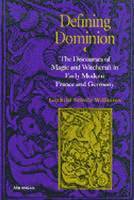
    Ways of Knowing in Early Modern Germany

    Johannes Praetorius as a Witness to his Time

    AvGerhild Scholz Williams

    Inbunden, Engelska, 2006

    Del i serien Literary and Scientific Cultures of Early Modernity

    1 829 kr

    Tillfälligt slut

    Fler format och utgåvor

    E-bok

    805 kr

    E-bok

    805 kr

    Beskrivning

    Gerhild Scholz Williams's Ways of Knowing in Early Modern Germany: Johannes Praetorius as a Witness to His Time, reviews key discourses in eight of Praetorius's works. She introduces the modern reader to the kinds of subjects, the intellectual and spiritual approaches to them, and the genres that this educated and productive German scholar and polymath presented to his audience in the seventeenth century. By relating these individual works to a number of contemporaneous writings, Williams shows how Praetorius constructed a panorama in print in which wonders, the occult, the emerging scientific way of thinking, family and social mores are recurrent themes. Included in Praetorius's portrait of the mid-seventeenth-century are discussions of Paracelsus's scientific theories and practice; early modern German theories on witchcraft and demonology and their applications in the seventeenth century. Furthermore, we read about the early modern beginnings of ethnography, anthropology, and physical geography; gender theory, early modern and contemporary notions of intellectual property, and competing and sometimes conflicting early modern scientific and theological explanations of natural anomalies. Moreover, throughout his work and certainly in those texts chosen for this study, Praetorius appears before us as an assiduous reporter of contemporary European and pan-European events and scientific discoveries, a critic of common superstitions, as much a believer in occult causes and signs and in God's communication with His people. In his writings, in his way of telling, he offers strategies by which to comprehend the political, social, and intellectual uncertainties of his century and, in so doing, identifies ways to confront the diverse interpretive authorities and the varieties of structures of knowledge that interacted and conflicted with each other in the public arena of knowing.

    Produktinformation

    • Utgivningsdatum:2006-04-25
    • Mått:153 x 219 x undefined mm
    • Vikt:476 g
    • Format:Inbunden
    • Språk:Engelska
    • Serie:Literary and Scientific Cultures of Early Modernity
    • Antal sidor:260
    • Förlag:Taylor & Francis Ltd
    • ISBN:9780754655510

    Utforska kategorier

    • Kulturvetenskap inom Samhälle och politik
    • Litteraturvetenskap inom Skönlitteratur

    Mer om författaren

    Gerhild Scholz Williams is Barbara Schaps Thomas and David M. Thomas Professor in the Humanities and Associate Vice Chancellor at Washington University in St. Louis, USA.

    Recensioner i media

    'Gerhild Scholz Williams's learned and elegantly written study provides a beautifully coherent analysis of Paetorius's thought and of the seventeenth-century intellectual culture that informed it... Williams's skillful analysis of a broad selection of his writings provides numerous examples of his diverse 'ways of knowing' as it also provides fascinating insight into the lives of early modern men and women in the area of Leipzig. This exemplary study includes extensive, carefully-composed footnotes after each chapter and a blibliography.' Renaissance Quarterly ’... lively and engagingly written study... Scholz Williams does an admirable job of bringing Praetorius's work and world to life in all its 'exuberant incoherence'. In doing so, she gives us a vibrant picture of a man who was arguably more representative of his age than the 'revolutionary' thinkers more familiar to historians of science.’ Isis ’... a highly accessible book that provides an intellectually satisfying and often entertaining read... Williams's book, in short, is highly recommended reading as a contribution that allows us to attempt to understand Praetorius in his context without having to 'make sense' of him except on his own terms.’ H-Net Review ’Scholz Williams is to be commended for capturing [...] the breadth and depth of Praetorius's vision... This is a book worth reading and worth reading closely. Gerhild Scholz Williams, in placing before our eyes a largely forgotten body of literature, poses some significant questions about the nature of historical and scientific knowledge, about the task of the scholar, and about the construction of knowledge. It is a far more ambitious book than the title might suggest. And consequently, few books that I have read so call out for answers to the unanswered questions that stalk its pages like Rübezahl in the mountains of Silesia.’ Sixteenth Century Journal

    Innehållsförteckning

    • Contents: Introduction; Wondrous people: early modern diversity (Anthropodemus plutonic); Demonology and topography: locating giants and witches; The global and the local: wonders in the news; Gender and class: the woman's lot; Conclusion; Bibliography; Index.