• Fri frakt över 249 kr
  • •
  • Snabba leveranser
  • •
  • Billiga böcker
Kundservice

Du är på sajten för privatpersoner.

Företag, bibliotek eller offentlig verksamhet?

Du handlar på classic.bokus.com, där alla dina funktioner finns intakta.
Till classic.bokus.com
Bokus logotyp. Gå till startsidan.
  • Erbjudanden
  • Nyheter
  • Student
  • Topplistor
  • Barn & ungdom
  • Bokus Play
  • E-böcker
  • Pocketböcker
  • Spel & pussel

10% rabatt på allt med kod: NYSTART10 →

Sidfot

Mina sidor

    Hjälp

    • Kundservice
    • Vanliga frågor och svar
    • Frakt och leverans
    • Retur vid ångerrätt
    • Reklamera vara
    • Betalning
    • Köpvillkor
    • Allmänna villkor
    • Information om webbplatsens tillgänglighet

    Om Bokus

    • Om oss
    • Pressrum
    • För studenter
    • För företag
    • För bibliotek och offentlig verksamhet
    • För leverantörer
    • Hållbarhet

    Populärt

    • Aktuella erbjudanden
    • Presentkort
    • Studentlitteratur
    • Nya böcker
    • Topplistor
    • Signerade böcker
    • Engelska böcker

    Inspiration

    • Boktips
    • BookTok
    • Populära bokserier
    • Barnbokskaraktärer
    • Populära författare
    Logotyp för Bokus
    Följ oss på Facebook (extern länk)Följ oss på Instagram (extern länk)Följ oss på YouTube (extern länk)Följ oss på TikTok (extern länk)
    bokus @ CookiesAnpassa cookiesIntegritetspolicyKöpvillkor
    Till Citymail hemsida (extern länk)Till Budbee hemsida (extern länk)Till Postnord hemsida (extern länk)Till Schenker hemsida (extern länk)Till Early Bird hemsida (extern länk)Till Walleys hemsida (extern länk)
    1. Naturvetenskap och teknik
    2. Teknik och industri
    3. Teknik: allmänt

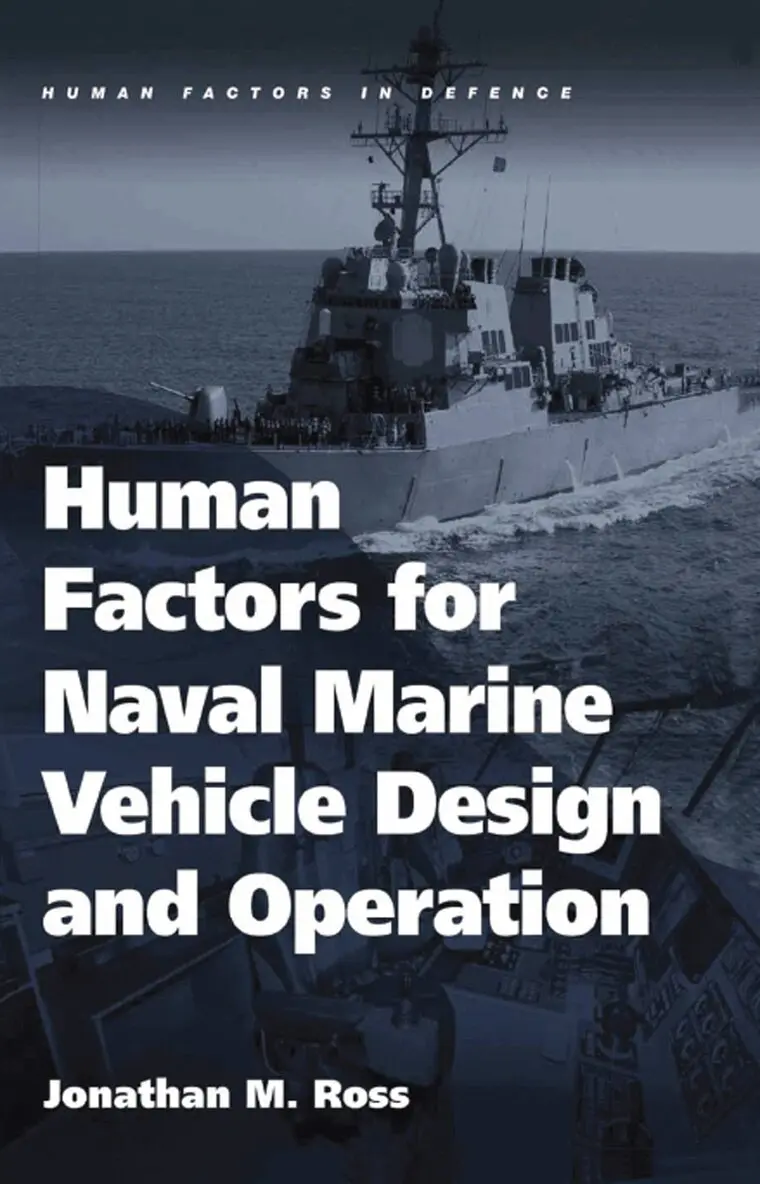
    Human Factors for Naval Marine Vehicle Design and Operation

    AvJonathan M. Ross

    Inbunden, Engelska, 2009

    Del i serien Human Factors in Defence

    2 645 kr

    Beställningsvara. Skickas inom 10-15 vardagar. Fri frakt över 249 kr.

    Fler format och utgåvor

    E-bok

    2 976 kr

    E-bok

    3 056 kr

    Beskrivning

    There is a driving need for naval professionals to focus on human factors issues. The number of maritime accidents is increasing and the chief cause is human error, both by the designer and the operator. Decreasing crew size, lack of experienced operators, operations in higher sea states and fatigue worsen the situation. Automation can be a partial solution, but flawed automated systems actually contribute to accidents at sea. Up to now, there has been no overarching resource available to naval marine vehicle designers and human factors professionals which bridges the gap between the human and the machine in this context. Designers understand the marine vehicle; human factors professionals understand how a particular environment affects people. Yet neither has a practical understanding of the other's field, and thus communicating requirements and solutions is difficult. This book integrates knowledge from numerous sources as well as the advice of a panel of eight recognized experts in the fields of related research, development and operation. The result is a reference that bridges the communications gap, and stands to help enhance the design and operation of all naval marine vehicles.

    Produktinformation

    • Utgivningsdatum:2009-01-28
    • Mått:156 x 234 x 22 mm
    • Vikt:594 g
    • Format:Inbunden
    • Språk:Engelska
    • Serie:Human Factors in Defence
    • Antal sidor:244
    • Förlag:Taylor & Francis Ltd
    • ISBN:9780754676256

    Utforska kategorier

    • Teknik: allmänt inom Naturvetenskap och teknik
    • Sjöfart och skeppsbyggnad inom Naturvetenskap och teknik
    • Människa – datorinteraktion inom Data och IT

    Mer om författaren

    Jonathan M. Ross is Manager of Proteus Engineering Department of Alion Science and Technology, where he provides consultancy services, mainly to naval customers. He holds an MSE in Naval Architecture and Marine Engineering from the University of Michigan and is a registered Professional Engineer (US) as well as a Chartered Engineer (UK). He gained operational naval experience in the Atlantic and Pacific Oceans on a submarine, bathyscaphe and nuclear submarine tender. He has written and presented more than thirty technical papers in the US and internationally on human factors, computer-aided ship design, the environmentally sound warship, condition-based maintenance, and cost estimation.

    Recensioner i media

    'This is a great book. Why? Because ... it addresses the cause of many design and operational failures; ... it fills a gap, being the first to cover broadly the issue of human factors for ships; ... it is well written, explaining complex, diverse disciplines in a highly readable way. The author is to be congratulated for the publication of this book.' Volker Bertram, Germanischer Lloyd AG, Germany 'This book fills a niche and belongs as a reference in every naval architect's library, and it probably belongs on the desk of every human factor specialist working in the maritime business as well. While there are many books on naval architecture and ship design and just as many on human factors, this is quite likely the only book of its kind that speaks to the naval architect or marine engineer about human factors and to the human factor specialist about the elements of ship design.' Marine Technology, July 2009 'In naval operations, as in all forms of transportation, human error is cited approximately 80% of the time as the cause or contributing factor in accidents and incidents. A human-centered design approach to naval architecture and marine engineering is essential to improve human performance and safety in marine operations. This book is an excellent step in that direction. In this era of reduced crew size and increased automation, the role of human operators is changing to one of supervisory control. Humans are not inherently good at tasks requiring vigilance and supervisory control. Mr. Ross identifies many human factors issues that will help the naval architect and marine engineer to design marine vehicles that are more effective, efficient, and safer. This book would be an excellent textbook for students of ship design and maritime operations. It bridges the longstanding gap between two disciplines - naval architecture and human factors. Since World War II, the primary focus for human factors has been in aviation. A book like this one is long overdue.'Human Factors for Naval Marine Vehicle Design and Operation offers an excellent discussion of the importance and process of incorporating human factors into ship design from an application-oriented perspective. The book, suitable for a wide audience, discusses issues relevant to the acquisitions community, operators and maintainers.' Ergonomics in Design, Fall 2010

    Innehållsförteckning

    • Contents: Foreword; Preface; Introduction; Marine vehicle types; Marine vehicles by function; Marine vehicle limitations and solutions; Symptomatic areas of concern; Human stressors; Human-machine interface; Human factors enhancement; Design considerations; Future trends; Appendices; References; Index.